Home Fitness · Strength
Best Adjustable Kettlebell (2026) — Top Picks
The best adjustable kettlebell for 2026: Bowflex SelectTech 840, PowerBlock and Yes4All compared on weight range, adjustment speed and build.
Read Review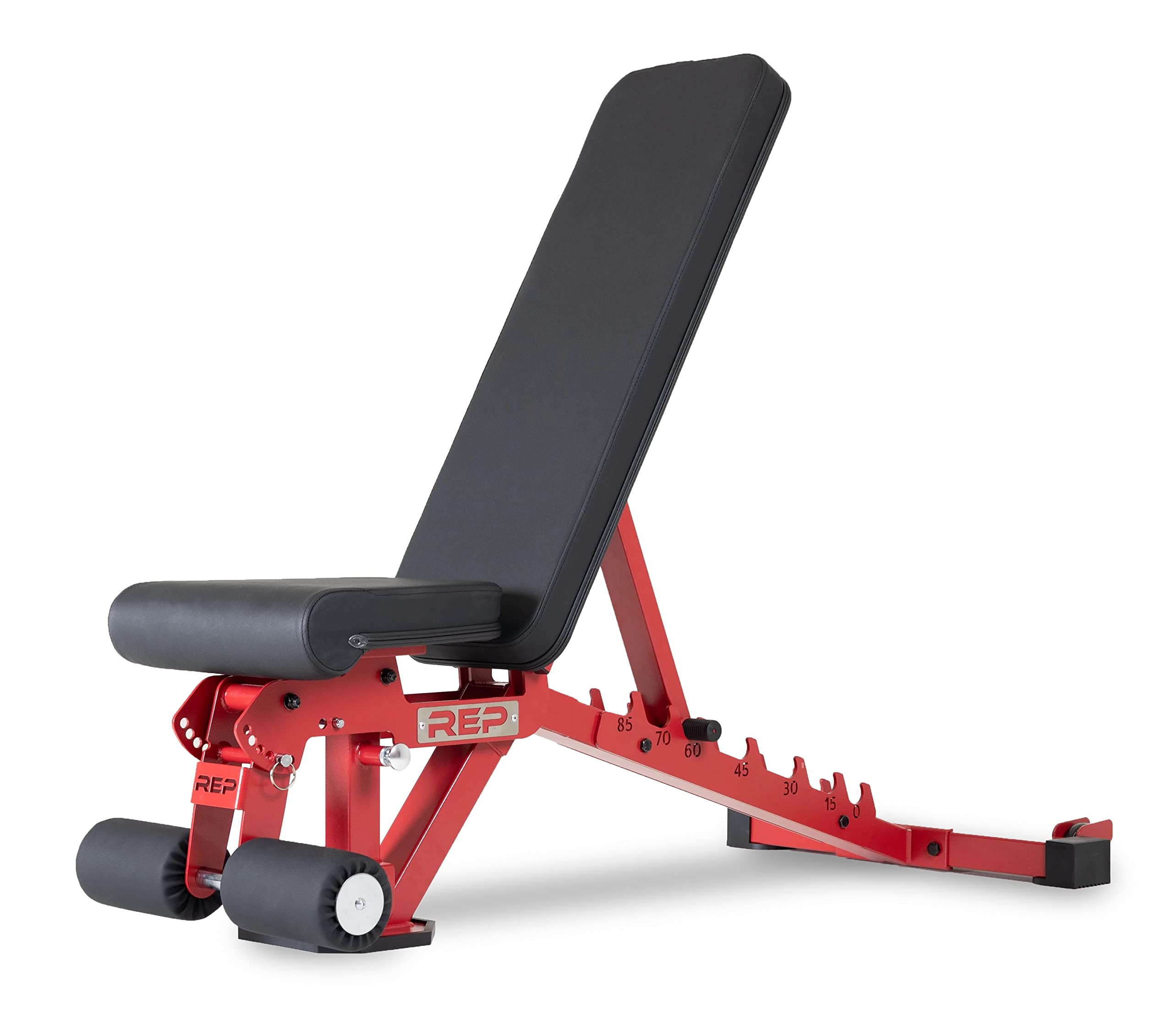
| Product | Best For | Key Feature | Price Range | |
|---|---|---|---|---|
| REP AB-3000 Adjustable Bench | Best adjustable bench overall | FID -12° to 85°, 1,000 lb, 8 back + 5 seat positions | $300–$400 | Check Price on Amazon |
 Rogue Adjustable Bench 3.0 | Best premium adjustable bench | 3×3" 11-gauge steel, 10 back positions, 1" pad gap | $500–$600 | Check Price on Amazon |
 Flybird Adjustable Weight Bench | Best budget adjustable bench | 800 lb capacity, 8 back positions, folds to ~30" | $100–$150 | Check Price on Amazon |
Prices are ranges at time of writing and change frequently — check Amazon for the current price.
We compared manufacturer specifications, expert reviews and verified owner feedback across the adjustable bench market, weighting weight capacity and frame strength (30%), adjustment range and positions (25%), stability and pad quality (25%) and value (20%). This is a research-based comparison of published specs and owner feedback, not a hands-on test. A bench is the one piece of equipment you lie on under a loaded barbell, so capacity and stability outrank every other feature: the REP AB-3000 2.0 is rated for 1,000 lb, the Flybird for 800 lb, and Rogue does not publish a capacity figure for the 3.0 — BarBend estimates around 1,000 lb based on its 11-gauge steel frame.
Adjustment range is the second filter. A true FID (flat-incline-decline) bench covers every pressing angle: the REP drops to a -12° decline across eight back positions with five independent seat positions, and the Flybird drops to -30° across eight back positions. The Rogue 3.0 is a flat-incline bench only — ten back positions from 0° to 85° with three seat positions and no decline — which is fine for pressing but rules out decline work. Pad gap is the third filter: the gap between the seat and back pads is about 1 inch on the Rogue and 2.1 inches on the REP, and a wide gap can be felt on flat presses. For the dumbbells that pair with any of these benches, see our best adjustable dumbbells guide.
The REP AB-3000 2.0 is the bench we would put in almost any home gym. According to REP, it is rated to 1,000 lb, and owner reviews describe it staying planted under heavy incline dumbbell presses where lighter benches rock. The 2.0 version adds an independently adjustable seat pad across five positions and an eighth back position over the original AB-3000, and the built-in leg roller locks into six positions for decline presses and sit-ups without buying an add-on. At $349.99 with free shipping it undercuts comparable commercial-style benches by $100 or more, and the 10-year frame warranty is solid. The trade-offs are the 2.1-inch pad gap, which is wider than premium benches, and an 89.3 lb build that is a chore to carry upstairs.
The Rogue Adjustable Bench 3.0 is the premium pick: a 3×3-inch 11-gauge steel frame made in the USA, a ladder-style adjustment that locks positively into ten back positions, a pad gap of about 1 inch, and a 125 lb build that does not move under load. It costs $595 ($535 on sale) and has no decline setting, so decline pressers should look elsewhere — and Rogue's silence on capacity is a gap in an otherwise complete spec sheet. The Flybird FB149 is the budget champion: an 800 lb ASTM-certified capacity, eight back angles from -30° decline to 90° upright, three seat positions, and a frame that folds to about 30 inches and weighs roughly 26–29 lb, so it slides under a bed or stands in a closet. Its 14-gauge steel frame and narrow 10-inch pad are not built for 500 lb bench presses, but for general training under $150 nothing else comes close. For the rest of a small-space home gym, our best home gym gifts guide covers the accessories that complete a bench setup.
An adjustable weight bench is a padded bench whose back pad — and usually the seat pad — can be locked at different angles, so one bench serves as a flat bench, an incline bench, a decline bench and a seated support for shoulder presses and rows. The back pad pivots on a hinge and locks into a ladder or a pop-pin: a ladder system (Rogue, REP) drops a steel support into notched rungs for a positive lock, while a pin system (Flybird) pushes a steel pin through holes in the support arm. The seat pad adjusts separately on the better benches, which keeps you from sliding forward on steep inclines.
The training case is simple: a flat bench does one thing, while an adjustable bench covers flat, incline and decline presses, seated dumbbell work, supported rows, step-ups and decline sit-ups — five exercises that would otherwise need three benches or a whole gym membership. The safety case matters too: a bench rated for 1,000 lb gives a heavy bencher a wide margin, because the rating covers your body weight plus the barbell and plates combined. And because a bench is the platform for barbell benching inside a rack, it should be bought with the rack in mind — the 17.1-inch pad height of the REP and the 17.5-inch height of the Rogue both sit close to competition bench height, so the bar path feels right. For recovery after heavy bench days, our best massage gun gifts guide covers the tools that help.
The REP AB-3000 2.0 is the best adjustable weight bench for most home gyms — a 1,000 lb rating, true flat-incline-decline range and a 10-year frame warranty for $349.99. The Rogue Adjustable Bench 3.0 is the best premium build, and the Flybird is the best budget bench at around $100 to $150.
FID stands for flat, incline and decline — a bench whose back pad adjusts below flat as well as above it. The REP AB-3000 2.0 is a true FID bench, dropping to a -12 degree decline, and the Flybird drops to -30 degrees. The Rogue Adjustable Bench 3.0 is a flat-incline bench only: it adjusts from 0 to 85 degrees with no decline.
The REP AB-3000 2.0 is rated for 1,000 lb, and the Flybird FB149 is rated for 800 lb. Rogue does not publish a capacity figure for the Adjustable Bench 3.0, but BarBend estimates around 1,000 lb based on its 11-gauge steel frame. The rating covers your body weight plus the barbell and plates combined, so a 1,000 lb bench gives a heavy bencher plenty of margin.
A dedicated flat bench is more stable for maximum-effort barbell benching, because it has no adjustment mechanism and no pad gap. An adjustable bench is far more versatile: one bench covers flat, incline and decline presses, seated shoulder work, supported rows and step-ups. Most home gyms are better served by one good adjustable bench than by a flat bench plus a separate incline bench.
Buy the REP AB-3000 2.0 if you want the best adjustable bench for the money: a 1,000 lb rating, a true FID range, a built-in leg roller and a 10-year frame warranty for $349.99. Buy the Rogue Adjustable Bench 3.0 if you want the most solid bench made — 3×3-inch 11-gauge steel, a 1-inch pad gap and zero wobble — and you do not need decline. Buy the Flybird if your budget is tight and your space is tighter: 800 lb capacity, eight back positions and fold-flat storage for around $100–$150. Whichever you choose, check the capacity, lie on it flat, and make sure the pad height lets your feet stay planted — a bench is the platform every press starts from.
Home Fitness · Strength
The best adjustable kettlebell for 2026: Bowflex SelectTech 840, PowerBlock and Yes4All compared on weight range, adjustment speed and build.
Read ReviewHome Fitness · Strength
The best home gym gifts for 2026: PowerBlock and NÜOBELL adjustable dumbbells, a TRX Home2 and a foldable WalkingPad — premium fitness gifts that fit real homes.
Read ReviewHome Fitness · Strength
The best massage gun gifts for 2026: Theragun PRO, Hypervolt 2 Pro and the Ekrin B37 — premium recovery gifts compared on amplitude, force, noise and battery.
Read Review