Home Fitness · Ellipticals
Best Elliptical Machine for Home (2026)
Low-impact cardio without leaving the house. We compared stride length, flywheel, resistance and warranties to pick the best for every budget.
Read Review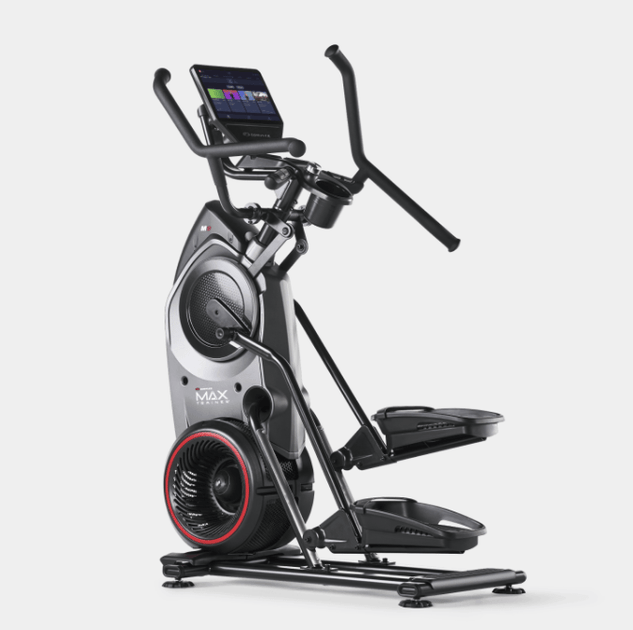
| Product | Best For | Key Feature | Price Range | |
|---|---|---|---|---|
| Bowflex Max Trainer M9 | Best overall home climber | 20 resistance levels, 10-inch touchscreen, 300 lb capacity | $1,800–$2,000 | Check Price on Amazon |
 StairMaster SM3 StepMill | Best real stepmill | Revolving 8-inch steps, fits 8-ft ceilings | $2,500–$5,000 | Check Price on Amazon |
 Echelon Stair Climber Sport | Best mid-range climber | Connected stair climber, compact footprint | $700–$900 | Check Price on Amazon |
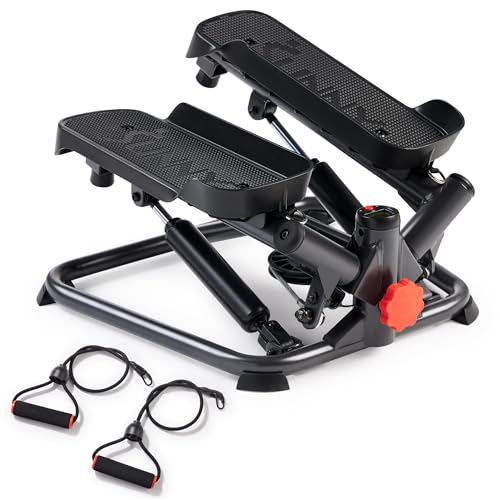 Sunny Health & Fitness Mini Stair Stepper | Best budget starter | Compact mini stepper, stores anywhere | $100–$200 | Check Price on Amazon |
"Stair climber" is one search term covering four genuinely different machines, and the price gap between the cheapest and the most expensive is a factor of fifty — so the first job is knowing which type you are actually shopping for. The four types are the revolving stepmill, the hybrid stepper-elliptical, the pedal stepper and the mini stepper, and each one suits a different home and a different goal.
A revolving stepmill, like the StairMaster SM3, is a rotating staircase: real 8-inch steps that revolve endlessly, so every step is a genuine step up. It is the closest thing to climbing real stairs, and the machine you will find in nearly every commercial gym. Nothing else replicates the hip extension and glute activation of a true stepmill, which is why it is the gold standard for serious training — and also why it is the biggest, heaviest and most expensive type, and the one with the ceiling problem explained below.
A hybrid stepper-elliptical, like the Bowflex Max Trainer M9, blends a stepping motion with moving handlebars, so the upper body works alongside the legs. The pedal motion does not replicate true stair climbing — the stepping arc is shorter, so glute activation per step is lower than on a stepmill — but it burns calories fast, is low-impact, and fits in a normal room under a normal ceiling. For most home gyms this is the sweet spot. A pedal stepper is the simpler version of the same idea: two independent pedals, often with resistance bands, no screen, no subscription. And a mini stepper, like the Sunny Health & Fitness model, is a compact hydraulic pedal unit small enough to slide under a bed — the budget entry point, and a fair one for light daily stepping, though its short motion will never feel like a staircase.
The practical upshot: if you want the authentic stair-climbing workout and have the ceiling for it, buy a stepmill. If you want the best all-round home cardio machine that happens to climb, buy a hybrid. If you want to try stair stepping for the least money and the least space, buy a mini stepper and upgrade later if the habit sticks. Our best elliptical machine for home guide covers the closest alternative to a hybrid climber, and our best rowing machine for home guide covers the other great low-impact cardio option for a home gym.
Before comparing prices, measure your ceiling — it eliminates more machines than your budget does. On a revolving stepmill you stand 33 to 36 inches taller than your own height, because you are standing on steps above the floor. A six-foot person on a stepmill needs roughly nine feet of clearance, which is why specialist retailers warn that standard 8-foot residential ceilings rarely work with a commercial stepmill, and why the larger StairMaster SM5 requires a 10-foot ceiling.
The StairMaster SM3 is the exception that makes a real stepmill viable at home: it is engineered to fit under 8-foot ceilings, with a compact frame designed to pass through a standard doorway. That single design choice is why it is the most recommended stepmill for home gyms in 2026 — it is the only revolving-staircase machine in its class that does not demand a vaulted ceiling. StairMaster's newer 4G StepMill, launched in 2026, is also designed for 8-foot ceilings, but at roughly $5,999–$7,229 it is priced for serious dedicated home gym builds rather than a first cardio machine. The rule for any stepmill purchase is simple: add your height plus about three feet, and compare that with your ceiling. If it does not clear, no discount makes the machine worth buying.
Hybrids, pedal steppers and mini steppers have no such problem. The Bowflex Max Trainer M9 stands 65.1 inches tall — about five and a half feet — and works comfortably under a standard ceiling, as does the Echelon Stair Climber Sport and every mini stepper. If your gym is a spare bedroom or a basement with a low ceiling, the hybrid route is not a compromise; it is the only route that works, and the M9 is the best machine on it.
Bowflex Max Trainer M9 — our top pick. The M9 is the best all-round stair climber for most home gyms because it packs the most training into the smallest space. It combines a stepping motion with moving handlebars for a full-body, low-impact workout, with 20 resistance levels, a 10-inch HD touchscreen, and a 15-inch stride. Its footprint is 49.2 inches long by 30.8 inches wide, its maximum user weight is 300 lb, and it ships with a JRNY membership trial for adaptive workouts, on-demand classes and global routes that auto-adjust to your speed. Johnson Fitness lists it at $1,999, down from $2,599, and it is the machine our research keeps finding recommended as the premium home pick. The honest trade-off is the one already noted: the pedal motion is a step-and-stride hybrid, not a true staircase, so if authentic stair climbing is the goal, the StairMaster below is the better machine. And the JRNY subscription is required for the streaming and adaptive features after the trial ends, so factor that into the real cost.
StairMaster SM3 StepMill — the real stepmill pick. If you have the ceiling and the budget, nothing else replicates climbing real stairs. The SM3 is a revolving staircase with 8-inch steps, a speed range of 26 to 162 steps per minute, and a compact frame engineered for 8-foot ceilings and standard doorways. Its list price is $4,949, but specialist retailers frequently sell it for around $2,497, which is the price to watch for. It is a commercial-grade machine with commercial-grade durability, and its maximum user weight is about 275 lb. The downsides are real: it is heavy, it needs a dedicated spot, and even at the sale price it costs more than most home gyms' entire cardio budget. But for buyers who want the genuine stepmill workout at home, it is the only machine in this guide that delivers it. Our best treadmill for home under $1000 guide covers the alternative if the stepmill price is out of reach.
Echelon Stair Climber Sport — the mid-range pick. At $799, the Echelon Stair Climber Sport is the best mid-range option for buyers who want a connected stair climber without paying for a stepmill or a premium hybrid. It is a compact, dedicated stair-climbing machine designed for home use under standard ceilings, with app-connected classes and tracking through Echelon's platform. It sits in the gap between the $150 mini steppers and the $1,999 Bowflex: a real climbing motion, a proper console and guided workouts, for less than half the price of the M9. The trade-off is that it is a simpler machine — fewer resistance levels and a smaller screen than the Bowflex — and its app subscription is a separate cost. For a buyer who knows they want stair climbing specifically, rather than a hybrid cardio machine, it is the value pick.
Sunny Health & Fitness Mini Stair Stepper — the budget pick. At around $150, the Sunny mini stepper is the value call in this guide and the right first step for anyone unsure whether stair stepping will stick. It is a compact hydraulic stepper with resistance bands, small enough to use in front of the television and store under a bed or in a closet. It will not replicate a staircase — the stepping motion is short and the resistance is light compared with a full machine — but for light daily cardio, warm-ups and getting started, it is a fair machine at a fair price. If you use it daily for a month and want more, that is the signal to step up to the Echelon or the Bowflex rather than buying a second mini stepper.
First, measure twice: your ceiling height and your floor space. Add your height plus three feet and compare it with the ceiling before you even look at a stepmill, and tape out the machine's footprint on the floor — the Bowflex M9 needs about 49 by 31 inches, a stepmill needs more, and a mini stepper needs barely any. Second, decide which type you actually want: a true stepmill, a hybrid, or a mini stepper. The wrong type is the most common regret in this category, and no feature list fixes it. Third, check the maximum user weight and the assembled weight of the machine itself — a 150 lb hybrid can be moved by one person, a stepmill cannot, and delivery and assembly matter.
Fourth, look at the subscription. Connected machines like the Bowflex M9 and the Echelon Sport offer their best features — adaptive workouts, classes, global routes — through a paid app membership after a free trial. If you will not pay for it, compare the machines on what they do without a subscription, not on what the trial shows you. Fifth, check the warranty: the Bowflex M9 carries a 3-year frame and parts warranty with 1 year on electronics, which is a useful benchmark for the category. Finally, think about noise and neighbours. Stepmills and hybrids are quieter than treadmills, but they still thud on hard floors — a rubber mat under the machine protects the floor and the downstairs. And if you have a knee injury or condition, check with a doctor or physiotherapist before buying, and start on the lowest resistance.
A stair climber is a machine that simulates climbing stairs. The term covers four different designs: a revolving stepmill with real rotating stairs, a hybrid stepper-elliptical like the Bowflex Max Trainer, a pedal stepper with two independent pedals, and a compact mini stepper. A stepmill is the closest to real stairs; a mini stepper is the cheapest and smallest but gives the shortest stepping motion.
It depends on the type. Hybrid and mini steppers work under standard 8-foot ceilings. A true revolving stepmill raises you 33 to 36 inches above your own height, so most commercial stepmills need a 10-foot ceiling. The StairMaster SM3 is engineered to fit under 8-foot ceilings, which is why it is the most practical real stepmill for a home gym — always measure your ceiling and add your height plus about 3 feet before buying a stepmill.
Stair climbing is generally lower impact than running because there is no pounding footstrike, and hybrid machines like the Bowflex Max Trainer spread the work across the upper body as well. But stair climbing still loads the knees, especially on steep settings, so anyone with a knee injury or condition should check with a doctor or physiotherapist before buying, and start on the lowest resistance.
A hybrid like the Bowflex Max Trainer M9 needs about 49 by 31 inches of floor space, roughly the footprint of a small armchair. A mini stepper needs barely more than a doormat and can be stored under a bed. A revolving stepmill needs the most room — check the manufacturer's footprint and remember you also need clearance above you, not just around you.
The best stair climber for home is the Bowflex Max Trainer M9: a hybrid stepper-elliptical with 20 resistance levels, a 10-inch touchscreen, a 300 lb capacity and a footprint that fits a normal room under a normal ceiling, for around $1,999. It is the machine our research points to for most home gyms, because it delivers the hardest cardio workout of any machine that does not demand a vaulted ceiling. If you want the authentic experience of climbing real stairs and your ceiling allows it, the StairMaster SM3 is the stepmill to buy — watch for it around $2,497 on sale. The Echelon Stair Climber Sport is the smart mid-range buy at $799, and the Sunny mini stepper is the right $150 starting point if you are still finding out whether stair stepping is for you. Measure your ceiling first, pick the type second, and the machine third — in that order.
Home Fitness · Ellipticals
Low-impact cardio without leaving the house. We compared stride length, flywheel, resistance and warranties to pick the best for every budget.
Read ReviewHome Fitness · Rowers
Full-body cardio in a small footprint. We compared air, magnetic and connected rowers to find the best rowing machine for your home.
Read ReviewHome Fitness · Treadmills
A solid home treadmill under $1,000 is possible — if you pick the right motor and deck. We compared the best budget home treadmills.
Read Review