Home Comfort · Air Quality
Best Air Purifier for Large Rooms (2026)
Big rooms need real airflow. We compared CADR, room coverage and filter costs to find the best air purifiers for large spaces.
Read Review
| Product | Best For | Key Feature | Price Range | |
|---|---|---|---|---|
| Coway Airmega AP-1512HH Mighty | Best overall for allergies | True HEPA, CADR 246 dust, 360 sq ft | $160–$240 | Check Price on Amazon |
 Winix 5500-2 | Best for pet owners & odors | True HEPA, PlasmaWave, washable pre-filter | $150–$250 | Check Price on Amazon |
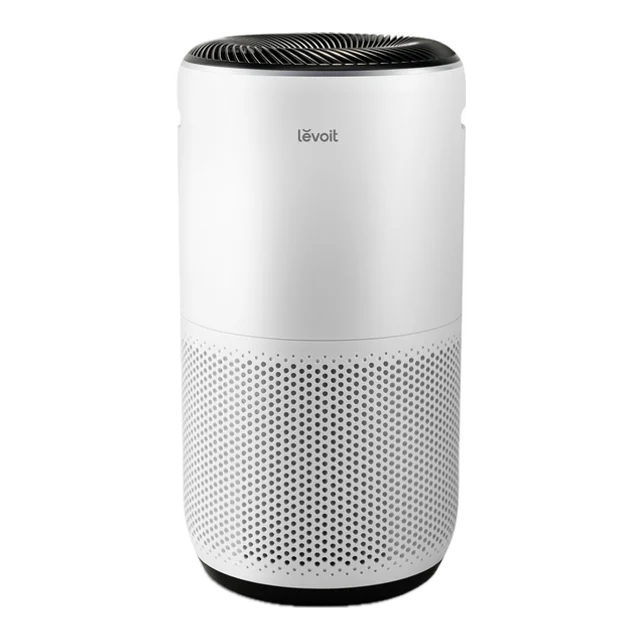 Levoit Core 400S | Best smart purifier | True HEPA, app & Alexa control, 403 sq ft | $150–$220 | Check Price on Amazon |
 Blueair Blue Pure 211i Max | Best for large rooms | HEPASilent, 3,048 sq ft coverage, quiet | $300–$350 | Check Price on Amazon |
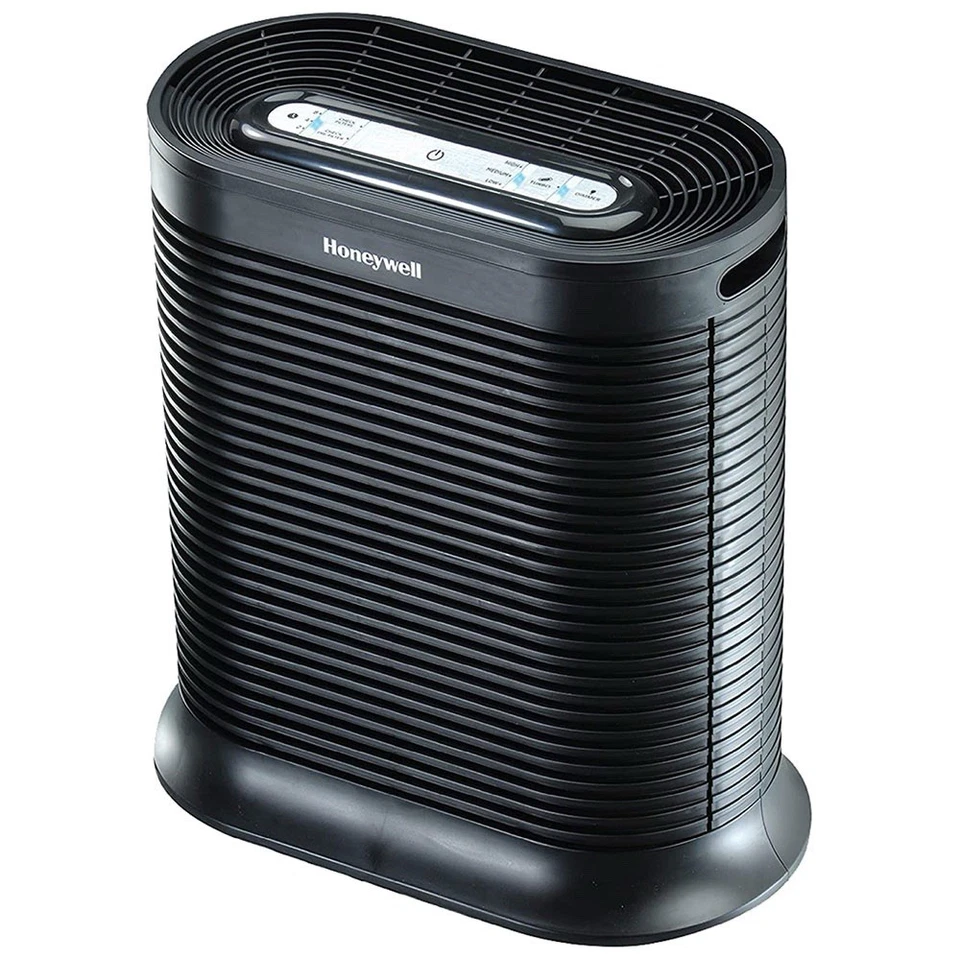 Honeywell HPA300 | Best for extra-large spaces | True HEPA, CADR 300, 465 sq ft | $200–$280 | Check Price on Amazon |
Prices are ranges at time of writing and change frequently — check Amazon for the current price.
We compared manufacturer specifications, AHAM-verified CADR figures, aggregated verified buyer feedback and expert coverage of the late-2026 air purifier market, weighting five criteria: filtration performance and CADR (35%), room coverage (20%), noise on sleep settings (15%), annual filter cost (15%), and smart features and build quality (15%). This is a research-based comparison of specs, verified buyer feedback and expert coverage — not a hands-on test. An air purifier can reduce allergy symptoms, but it is not a medical treatment; if your allergies are severe, talk to a doctor about a full management plan.
The single most important rule in this category is simple: only True HEPA counts. A filter labelled "HEPA-type" or "HEPA-like" is not the same thing and is not held to the same standard. True HEPA is rated to capture 99.97% of particles 0.3 microns and larger, which covers pollen, dust mite waste, most pet dander and mold spores. Every purifier in this roundup uses True HEPA or Blueair's equivalent HEPASilent filtration, so you can compare them on performance rather than marketing claims.
The second rule is to shop by CADR, not by the square footage printed on the box. CADR — Clean Air Delivery Rate — is independently verified by AHAM and measures how much clean air the machine actually produces. A good rule of thumb is that the dust or pollen CADR should be at least two-thirds of your room's area in square feet. Our best air purifier for large rooms guide goes deeper on sizing for open-plan spaces, and if your home is dry in winter as well as dusty, our best humidifier for bedroom guide pairs well with this one.
The Coway Airmega AP-1512HH Mighty has been the default recommendation of independent testers for the better part of a decade, and the numbers explain why. Its AHAM-verified CADR is 233 for smoke, 246 for dust and 240 for pollen, covering rooms up to about 360 square feet. Its four-stage system — washable pre-filter, activated carbon, True HEPA and a switchable ionizer — handles pollen, pet dander, dust mites, smoke and odors. The air quality indicator is a color-coded LED that shows real-time particle levels and ramps the fan up automatically when air quality drops. At street prices that commonly run well under the $240 list price, and with annual filter costs of roughly $50, its total cost of ownership is hard to beat.
The Winix 5500-2 is the Coway's closest rival and the better choice if odors are part of the problem. Its CADR figures are nearly identical — 232 smoke, 243 dust, 246 pollen — for the same 360-square-foot coverage, but it adds a washable activated-carbon filter and PlasmaWave technology aimed at odors and VOCs. Pet owners consistently rate it higher for smell control, and its washable pre-filter saves money over time. The trade-off is a slightly higher price and slightly higher annual filter costs, around $80 a year for the replacement set. If your main complaint is dust and pollen, buy the Coway. If your home smells of pets or cooking, buy the Winix.
For larger spaces, the Blueair Blue Pure 211i Max and Honeywell HPA300 take over. The Blueair uses HEPASilent filtration — an electrostatic charge that helps trap particles — and covers up to 3,048 square feet on paper, though realistic allergy-grade coverage is a large living room or open-plan area. It is remarkably quiet for its size, which matters when the unit runs all day. The Honeywell HPA300 offers the highest CADR in this roundup at 300, covering 465 square feet, and is a straightforward, no-nonsense workhorse with a turbo mode for wildfire smoke or heavy pollen days. The Levoit Core 400S rounds out the list as the smart pick: app and Alexa control, a laser particle sensor and coverage for rooms up to 403 square feet, at a mid-range price.
Noise is the factor most buyers underestimate. A purifier on its highest setting can reach 55–60 decibels — about the level of a normal conversation — while sleep mode on the Coway drops to around 24 decibels, quieter than a whisper. The practical lesson is to buy a purifier rated for a larger room than you need, so you can run it on low or medium and still get enough air changes. Allergy guidance generally aims for 4 to 5 air changes per hour in the bedroom, which a 360-square-foot-rated purifier can deliver in a 200-square-foot bedroom on a quiet setting.
Filter costs are the real long-term expense. Budget roughly $50 a year for the Coway, $80 for the Winix, and $70–$100 for the larger Blueair and Honeywell models. Skipping replacements is the most common mistake in this category: a clogged filter drops CADR sharply and can make the purifier louder as the fan works harder. Most models have a filter-change indicator; treat it as a deadline, not a suggestion. Pre-filters that can be washed or vacuumed, like those on the Coway and Winix, extend the life of the expensive HEPA element.
Placement and habits matter as much as the machine. Put the purifier in the bedroom, where you spend eight hours breathing the same air, and run it continuously rather than in bursts. Keep it a few feet from the wall with the intake unobstructed, and close the windows during high-pollen hours — a purifier cannot keep up with an open window in spring. If you use the ionizer or PlasmaWave feature, consider switching it off if anyone in the household has asthma, since these features can produce trace ozone. The mechanical HEPA filtration does the real work on its own.
Yes, when they use a True HEPA filter. True HEPA captures 99.97 percent of particles 0.3 microns and larger, including pollen, dust mite waste and pet dander. A purifier will not cure allergies, but running one in the bedroom typically reduces symptoms and improves sleep.
CADR, or Clean Air Delivery Rate, measures how much clean air a purifier actually produces, in cubic feet per minute. For allergies, compare the pollen and dust CADR figures and choose a purifier whose CADR is at least two-thirds of your room's square footage.
For a typical bedroom of 150 to 250 square feet, a purifier rated for 300 to 360 square feet is ideal, because it can deliver 4 to 5 air changes per hour on a quiet setting. Sizing up lets you run the fan slower and quieter while still cleaning the air.
Yes. Air purifiers are heavily discounted during Black Friday Week in late November, and the Coway Mighty in particular regularly drops to its lowest price of the year. Winter is also peak indoor allergy season, so buying now gets the benefit immediately.
For most allergy sufferers, the Coway Airmega AP-1512HH Mighty is the best air purifier for allergies: verified CADR, True HEPA, a sensitive auto mode and the lowest long-term cost in this roundup. Choose the Winix 5500-2 if pets or odors are part of the problem, the Levoit Core 400S if you want smart controls, the Blueair Blue Pure 211i Max for large open rooms, and the Honeywell HPA300 for maximum raw cleaning power in a big space. Whichever you pick, buy during Black Friday Week, put it in the bedroom, run it continuously, and replace the filter on schedule — that is what turns a good purifier into real allergy relief. For whole-home comfort in dry winter air, see our best humidifier for bedroom guide.
Home Comfort · Air Quality
Big rooms need real airflow. We compared CADR, room coverage and filter costs to find the best air purifiers for large spaces.
Read ReviewHome Comfort · Air Quality
Quieter sleep, easier breathing. We compared tank size, runtime, mist type and smart controls to find the best bedroom humidifiers.
Read ReviewHome Comfort · Vacuums
Vacuum and mop in one run. We compared the best robot vacuum-mop combos — cleaning power, docks and obstacle avoidance.
Read Review