Home Comfort · Air Quality
Best Air Purifier for Allergies (2026)
Pollen, dust and dander — gone. We compared True HEPA filtration, CADR and room coverage to find the purifiers that actually cut allergens.
Read Review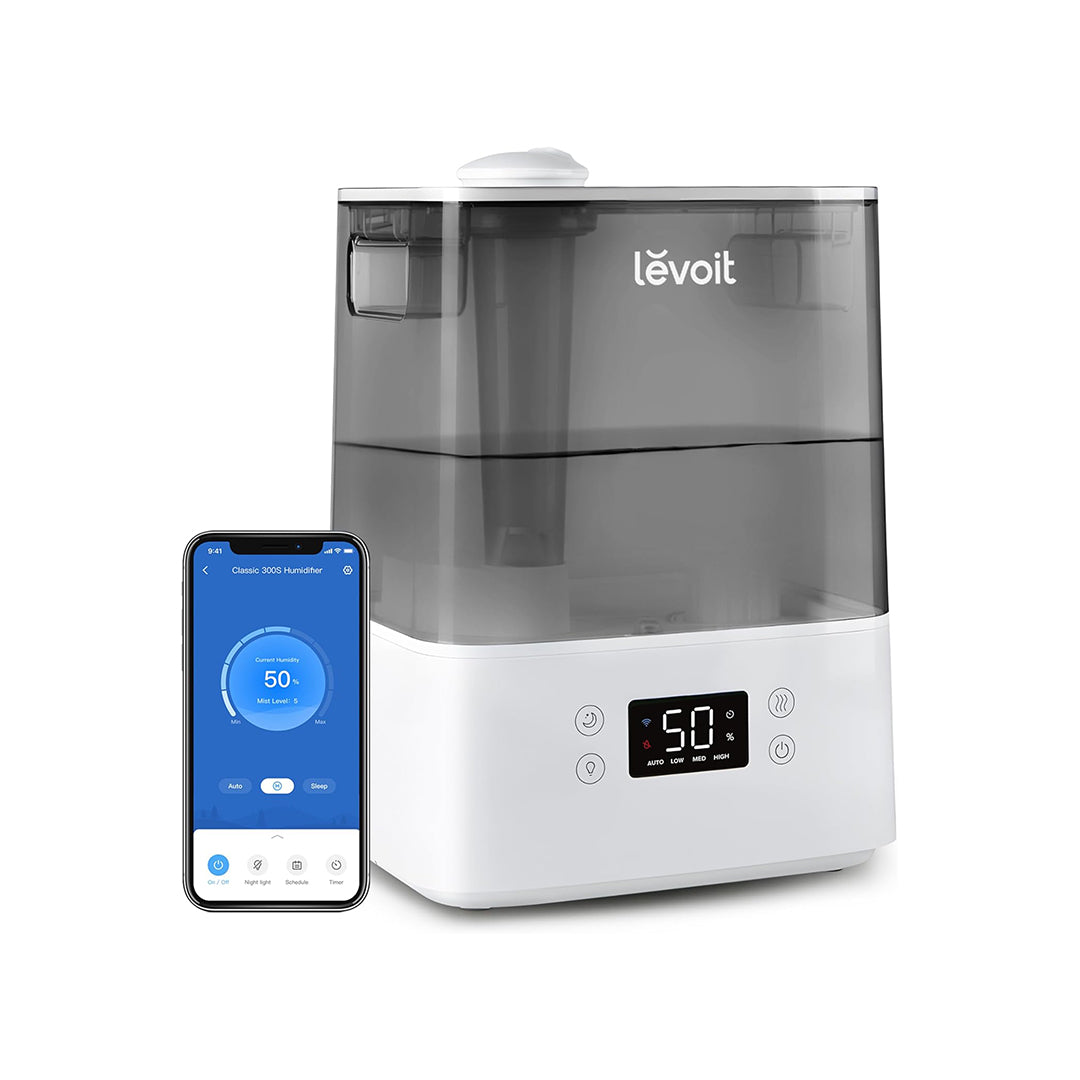
| Product | Best For | Key Feature | Price Range | |
|---|---|---|---|---|
| Levoit Classic 300S Ultrasonic | Best overall | 6L tank, up to 60 hrs, app control, top-fill | $70–$100 | Check Price on Amazon |
 Dreo Smart Humidifier | Best smart control | Precise humidity target, large display, 6L tank | $80–$130 | Check Price on Amazon |
 Canopy Humidifier | Easiest to clean | Dishwasher-safe parts, evaporative, no white dust | $125–$150 | Check Price on Amazon |
 Honeywell Cool Moisture Humidifier | Best budget evaporative | Large tank, wicking filter, quiet fan | $50–$90 | Check Price on Amazon |
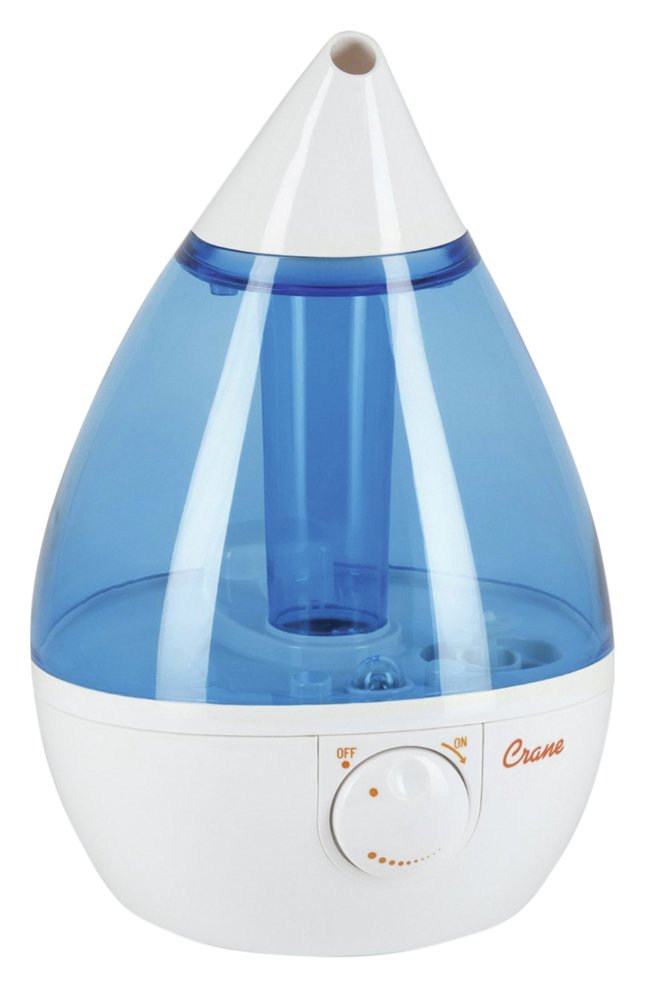 Crane Drop Ultrasonic | Best for nurseries & small rooms | Compact 1-gallon tank, whisper quiet, cute design | $40–$60 | Check Price on Amazon |
Prices are ranges at time of writing and change frequently — check Amazon for the current price.
We compared manufacturer specifications, aggregated verified buyer feedback and expert coverage of the late-2026 humidifier market, weighting five criteria: runtime and tank size (30%), noise level (25%), ease of cleaning (20%), humidity control accuracy (15%), and value (10%). This is a research-based comparison of specs, verified buyer feedback and expert coverage — not a hands-on test. A humidifier helps with dry-air discomfort, but it is not a medical device; if you have asthma or a respiratory condition, check with your doctor about the right humidity level for you.
Winter is when a bedroom humidifier earns its keep. Heating systems dry indoor air to 20–30% humidity, well below the 30–50% range most health guidance recommends, and the symptoms are familiar: dry skin, chapped lips, irritated sinuses, a scratchy throat and more snoring. A good humidifier restores the balance quietly overnight. The target is 40–45% humidity — comfortable for skin and airways, and low enough to avoid mold and dust mites.
Our five picks cover the main approaches. The Levoit Classic 300S and Dreo are ultrasonic cool-mist models with large tanks and smart controls. The Canopy and Honeywell are evaporative models that cannot over-humidify and are easier to keep hygienic. The Crane Drop is the compact pick for nurseries and small bedrooms. If dry winter air is also making your allergies worse, pair a humidifier with a purifier from our best air purifier for allergies guide, and if your sleep setup needs an upgrade, our best mattress for back pain guide covers the sleep surface itself.
The most practical spec on a bedroom humidifier is runtime: how long it runs before the tank empties. A humidifier that runs dry at 3 a.m. is worse than useless, because you wake up in dry air again. The Levoit Classic 300S leads here with a 6-liter tank that runs up to 60 hours on low, and around 25–30 hours on a medium setting — easily enough for several nights between refills. The Dreo matches it with a 6-liter tank and similar runtime. Both have top-fill designs, so you can pour water in from the top without removing the tank, which sounds minor until you are refilling it half asleep.
Smaller tanks have their place. The Crane Drop holds about a gallon and runs roughly 24 hours, which is fine for a nursery or a small bedroom if you refill it daily. The Honeywell evaporative models come in several sizes; the larger ones hold over a gallon and run a full day or more. The Canopy humidifier holds 2.5 liters and runs about 36 hours. When comparing runtimes, remember that manufacturers quote the maximum on the lowest setting — real-world runtime on a medium mist setting is typically half the headline figure, so always size up.
Noise is the second overnight test. Ultrasonic humidifiers like the Levoit and Dreo are nearly silent, producing only a faint hum that most sleepers do not notice. Evaporative models like the Honeywell use a fan, so they produce a soft white noise that some people actually prefer for sleep. Either way, check the decibel rating: anything under 30 decibels on low is effectively silent, while 35–40 decibels is a gentle background hum. Avoid humidifiers with bright displays or beeping buttons — the Levoit and Dreo both offer a sleep mode that dims the display, which matters in a dark bedroom.
Ultrasonic humidifiers use a vibrating diaphragm to create a fine cool mist. They are quiet, energy-efficient and fast, which is why they dominate the bedroom category. Their weakness is white dust: if your tap water is hard, minerals in the mist settle on furniture as a fine white powder. Using distilled water or a demineralization cartridge solves this, and the Levoit 300S includes a filter for that purpose. Ultrasonic models also need more careful cleaning, because the fine mist can carry bacteria if the tank is left dirty.
Evaporative humidifiers work differently: a fan blows air through a wet wick or filter, and the water evaporates naturally. They cannot over-humidify a room, because evaporation slows as humidity rises, which makes them self-regulating and safe to leave running. The Canopy takes this further with dishwasher-safe parts — you can put the tank and water tray in the dishwasher — which solves the biggest complaint about humidifiers: cleaning. The Honeywell Cool Moisture uses a wicking filter that needs replacing every month or two, adding a small running cost, but the trade-off is a machine that is very hard to get wrong.
Smart features are genuinely useful in this category. The Levoit 300S and Dreo both connect to an app and to Alexa or Google Assistant, letting you set a target humidity and have the machine hold it automatically using a built-in sensor. That closed loop is the real benefit: instead of guessing a mist level, you set 45% and the humidifier adjusts itself. Auto shut-off when the tank empties is standard on all our picks and is a safety feature worth confirming on any model you buy. A timer and a humidity display round out the useful extras; aroma diffusing trays are a nice bonus but should never replace proper cleaning.
Most health guidance recommends keeping indoor humidity between 30 and 50 percent, with 40 to 45 percent the sweet spot for sleep. Below 30 percent you get dry skin, irritated sinuses and static; above 50 percent you risk mold and dust mites.
Cool mist ultrasonic humidifiers are the best choice for most bedrooms: they are quieter, use less electricity and are safe around children and pets. Warm mist models can feel cozy in winter and may help with congestion, but they use more power and the hot water is a burn risk.
Rinse and wipe the tank every day, and do a deep clean with vinegar or citric acid once a week. Standing water breeds bacteria and mold quickly, and a dirty humidifier can make air quality worse instead of better. Choose a model with a wide tank opening to make cleaning easy.
Yes. Humidifiers are popular winter gifts and are often discounted during Black Friday Week in late November, right as heating season dries out indoor air. Buying now means you get the benefit through the whole winter.
For most people, the Levoit Classic 300S is the best humidifier for bedroom use: the large tank, long runtime, quiet operation and app control cover everything a bedroom needs at a fair price. Choose the Dreo Smart Humidifier if you want the most precise humidity control, the Canopy if easy cleaning is your top priority, the Honeywell Cool Moisture if you prefer the self-regulating safety of evaporative mist on a budget, and the Crane Drop for a nursery or small room. Whichever you pick, buy during Black Friday Week, use distilled water if your tap water is hard, and clean the tank every week — a clean humidifier is the difference between better sleep and worse air. For cleaner air alongside better humidity, see our best air purifier for allergies guide.
Home Comfort · Air Quality
Pollen, dust and dander — gone. We compared True HEPA filtration, CADR and room coverage to find the purifiers that actually cut allergens.
Read ReviewHome Comfort · Air Quality
Big rooms need real airflow. We compared CADR, room coverage and filter costs to find the best air purifiers for large spaces.
Read ReviewHome Comfort · Vacuums
Clean bare floors without a scratch. We compared suction, mopping, scratch safety and navigation to find the best bots for hardwood floors.
Read Review