
Home Comfort · Air Quality
Best Air Purifier for Allergies (2026)
Pollen, dust and dander — gone. We compared True HEPA filtration, CADR and room coverage to find the purifiers that actually cut allergens.
Read Review
| Product | Best For | Key Feature | Price Range | |
|---|---|---|---|---|
| Winix 5500-2 | Best overall for dust | 243 CFM dust CADR, 360 sq ft, washable carbon filter | $150–$250 | Check Price on Amazon |
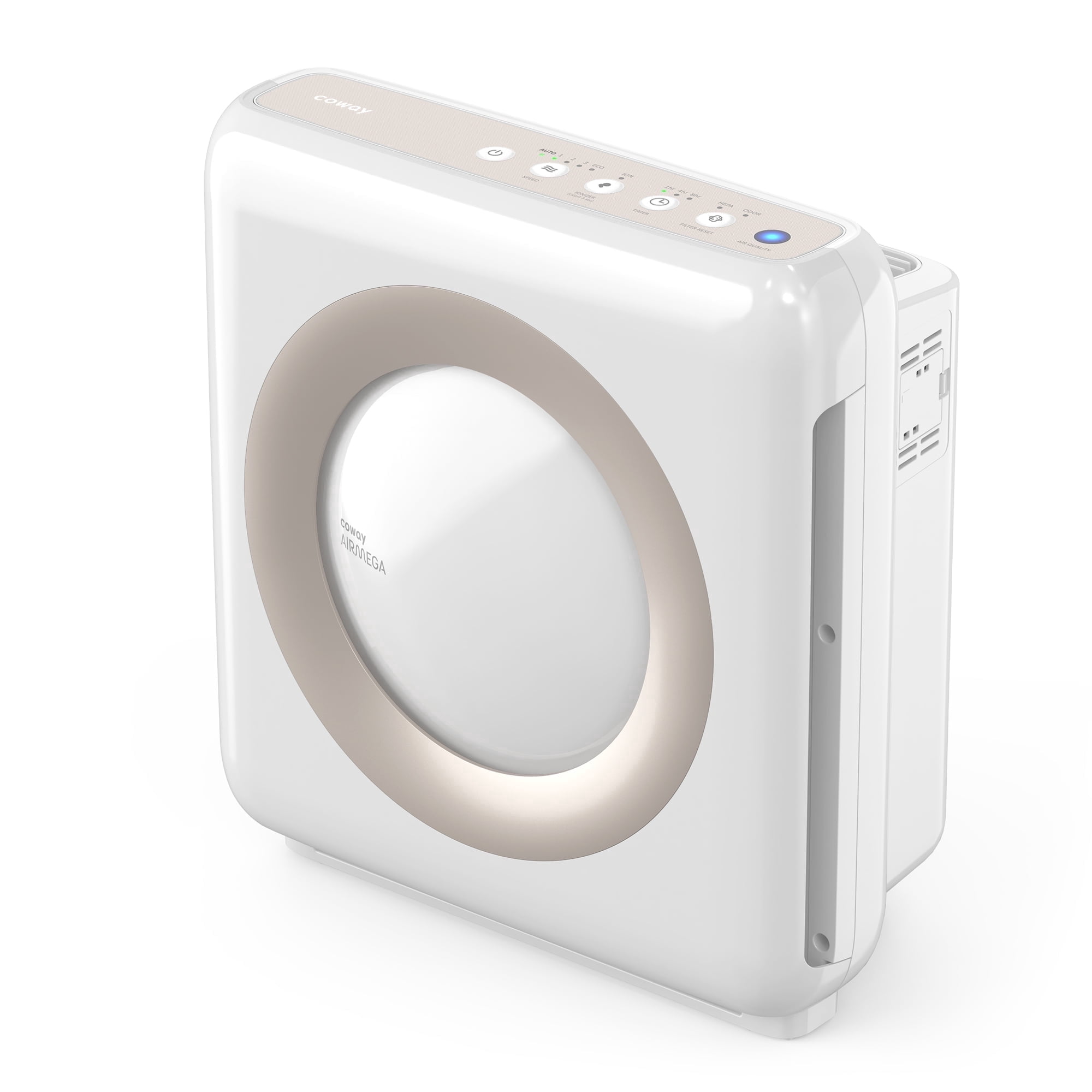 Coway Airmega AP-1512HH Mighty | Best mid-size for dust | 246 CFM dust CADR, 361 sq ft, washable pre-filter | $180–$250 | Check Price on Amazon |
 Levoit Core 600S | Best for large dusty rooms | 398 CFM dust CADR, ~606 sq ft, smart controls | $250–$300 | Check Price on Amazon |
 Blueair Blue Pure 211i Max | Best maximum dust clearing | 452 CFM dust CADR, ~674 sq ft, HEPASilent | $230–$350 | Check Price on Amazon |
Household dust is not one thing. It is a mix of shed skin cells, fabric fibres from clothes and bedding, pet dander, pollen blown in from outside, soil tracked in on shoes, and the waste of dust mites that feed on all of it. The particles range from visible lint and hair down to fine particles smaller than 2.5 microns (PM2.5) that stay airborne for hours and reach deep into the lungs. That range is exactly why dust is hard to fight: the big stuff settles on shelves within minutes, while the fine stuff floats, gets stirred up every time someone walks across a room, and settles again somewhere else.
This is also why a purifier alone is never the whole answer, and honest guides say so. A True HEPA purifier captures 99.97% of particles 0.3 microns and larger, which covers most household dust — but only the dust that is still in the air and passes through the machine. Dust that has already settled stays put until it is vacuumed or damp-dusted. The US Environmental Protection Agency (EPA) makes the same point in its guidance on air cleaners: they can reduce airborne particles, but they work best alongside source control and cleaning, not instead of them. The purifier's real job is to catch dust while it is airborne, before it settles — and to keep doing it continuously, because a home generates new dust every day.
Two design details matter more for dust than for any other pollutant. The first is the pre-filter: a coarse first stage that catches hair, lint and large dust before it reaches the HEPA layer. In a dusty home the pre-filter clogs first, and a washable one — like the Winix 5500-2's washable carbon filter or the Coway Mighty's washable pre-filter — saves real money, because you rinse it instead of buying a new filter. The second is airflow. Dust is heavy compared with smoke particles, so it needs strong, steady airflow to stay suspended long enough to be pulled into the purifier. That is why dust CADR, not the headline smoke CADR, is the figure to compare — and why the models in this guide are ranked on it.
If dust is only part of your problem, our best air purifier for allergies guide covers pollen and dander in depth, and our best air purifier for pets guide focuses on homes where pet hair and dander drive the dust load.
CADR — Clean Air Delivery Rate — is measured separately for smoke, dust and pollen, in cubic feet per minute, and verified independently by the Association of Home Appliance Manufacturers (AHAM). The dust figure is the one that predicts how fast a purifier clears a dusty room, and it is the number this guide is built on. The Winix 5500-2 delivers a dust CADR of 243 CFM; the Coway Airmega Mighty delivers 246 CFM; the Levoit Core 600S delivers 398 CFM; and the Blueair Blue Pure 211i Max delivers 452 CFM. Those are published, comparable figures — not marketing claims — and the gap between them is the gap between a purifier that keeps up in a bedroom and one that keeps up in an open-plan living room.
To size a purifier for dust, use the same rule as for any pollutant: multiply the smoke CADR by 1.55 to get the largest room the purifier can clean at 4.8 air changes per hour, the AHAM standard. The Winix and Coway, at 232–233 CFM smoke CADR, cover about 360 sq ft. The Levoit Core 600S, at 391 CFM, covers about 606 sq ft. The Blueair 211i Max, at 435 CFM, covers about 674 sq ft. If your room is bigger than the figure, the purifier will still help, but it will not cycle the air often enough to keep dust levels genuinely low — and in a dusty home that shortfall shows up as a film on furniture within days. Buyers who are unsure should size up rather than down: a purifier running on medium in a room it can handle is quieter and more effective than a smaller one straining on high.
One more number deserves attention: the filter. In a dusty home the HEPA filter works harder than in a clean one, so its life shortens. The Winix 5500-2's HEPA filter lasts about 12 months, the Coway Mighty's up to 12 months, and the Levoit Core 600S's about 8 months. Budget one replacement a year, and check the pre-filter monthly — a clogged pre-filter is the single most common reason a purifier stops keeping up with dust.
Winix 5500-2 — our top pick. The 5500-2 has been the value pick in this category for years, and our research shows why: a dust CADR of 243 CFM covering about 360 sq ft, a four-stage system with a washable pre-filter, a washable activated carbon filter, a True HEPA filter and an optional PlasmaWave stage, and a price that often falls to around $180 on sale. Its standout for dust is the washable carbon filter — it grabs the coarse dust, hair and lint first, so you rinse it instead of replacing it, and the HEPA filter behind it stays cleaner and lasts longer. Independent reviewers have measured it clearing smoke from a test room in about 20 seconds, and its air-quality sensor drives an auto mode that reacts to dust in the air. Two caveats: its sensor detects odours rather than particles, so auto mode may not react to dust as quickly as a PM2.5 sensor would, and the PlasmaWave stage produces a small amount of ozone — buyers with asthma or pets generally switch it off, and the HEPA and carbon stages work independently of it. Note also that Winix has introduced the newer 5510 as its successor, so the 5500-2 is worth buying while stock lasts.
Coway Airmega AP-1512HH Mighty — the mid-size pick. The Mighty matches the Winix almost exactly on dust performance — a dust CADR of 246 CFM and the same 361 sq ft coverage — but packages it differently. Its four-stage system (washable pre-filter, activated carbon, True HEPA, switchable ionizer) is built around a filter rated for up to 12 months, and its compact tower design fits easily in a bedroom or office. It draws 77 W, more than the Winix, and it is the pick for buyers who want the longest filter life and a proven track record rather than the lowest price. As with the Winix, switch the ionizer off if you prefer ozone-free operation.
Levoit Core 600S — the large-room pick. For open-plan living rooms and large bedrooms where dust has room to spread, the Core 600S is the step up. Its smoke CADR of 391 CFM and dust CADR of 398 CFM cover about 606 sq ft at the AHAM standard, with an H13 True HEPA filter, an activated carbon stage, a VeSync app with schedules and voice control, and a PM2.5 sensor with auto mode. It is a smart purifier in a way the Winix and Coway are not, and buyers report the app's air-quality history is genuinely useful for spotting when dust spikes — after vacuuming, for instance. The trade-off is filter cost: the filter lasts about 8 months, so running costs are higher than the Coway's. If your dust problem lives in a room bigger than 400 sq ft, this is the model to buy.
Blueair Blue Pure 211i Max — maximum dust clearing. The 211i Max is the most powerful purifier in this guide, with a dust CADR of 452 CFM and coverage of about 674 sq ft — the pick for large, dusty, open-plan homes, or for buyers who want the fastest dust clearing money can buy in this class. Its HEPASilent filtration combines electrostatic and mechanical capture, and Blueair states it removes 99.97% of airborne particles down to 0.1 microns. Like the smaller 411i Max, it uses a washable fabric pre-filter and a PM2.5 sensor with auto mode. The honest caveat is the same as for its smaller sibling: HEPASilent is Blueair's proprietary design rather than a certified True HEPA filter, so allergy buyers who want the certified standard should weigh that. For raw dust-clearing airflow, though, nothing else in this guide comes close. Our best air purifier for smoke guide covers the 211i Max's smoke performance in the same detail.
Start with the dust CADR, not the smoke CADR and not the marketing room size. Check the AHAM-verified dust figure on the manufacturer's spec sheet, then compare it with your room: a 300 sq ft living room needs a dust CADR of roughly 190 CFM or more to cycle the air properly, and a 500 sq ft open plan needs roughly 320 CFM. Second, look at the pre-filter. In a dusty home the pre-filter is the part you will touch most often, so a washable one — like the Winix's washable carbon filter or the Coway's washable pre-filter — saves money and keeps airflow high. Third, check the filter replacement cost and interval, and budget it honestly: a purifier that costs $50 a year in filters is a different purchase from one that costs $30.
Fourth, think about sensors. A PM2.5 sensor and auto mode let the purifier react when dust spikes — after vacuuming, changing bedding or opening a window on a dusty day — instead of running at a fixed speed. The Winix 5500-2's sensor detects odours rather than particles, so buyers whose main problem is dust may prefer the Levoit or Blueair models with true particle sensors. Fifth, check the energy rating and noise: a purifier that runs all day in a living room should be efficient and quiet on medium speed, not just on its lowest setting. Finally, remember the purifier is only half the system. Vacuum with a sealed HEPA vacuum, damp-dust shelves instead of dry-dusting, and wash bedding regularly — the purifier catches what is airborne, and cleaning removes what has settled. Together they are what actually keeps a dusty home clean.
Dust CADR is the Clean Air Delivery Rate measured specifically for dust particles, in cubic feet per minute. It is the figure that predicts how fast a purifier clears dust from a room, and it is verified independently by AHAM. Two purifiers can have the same smoke CADR but different dust CADRs, so for a dust problem always compare the dust figure, not the headline number.
Yes, for airborne dust. A True HEPA purifier captures 99.97% of particles 0.3 microns and larger, which covers most household dust, and a good pre-filter catches the larger visible dust and hair first. But a purifier cannot remove dust that has already settled on shelves and floors — that still needs vacuuming and damp dusting. The purifier's job is to catch dust while it is still in the air, before it settles.
Because dust is constantly generated: skin cells, fabric fibres, pet dander, pollen from outside and soil tracked in on shoes all add to it every day. A purifier sized too small for the room, run only for an hour a day, or placed behind furniture will not keep up. Running a correctly sized purifier continuously, with a clean pre-filter, is what keeps airborne dust levels down.
In a dusty home, check the pre-filter monthly and wash or vacuum it if it is washable — a clogged pre-filter chokes airflow and shortens the HEPA filter's life. HEPA filters generally last 6 to 12 months, and carbon filters 3 to 6 months, but heavy dust can shorten that. The Winix 5500-2's washable carbon pre-filter and the Coway Mighty's washable pre-filter both help here, because you rinse them instead of buying replacements.
The best air purifier for dust is the Winix 5500-2: a dust CADR of 243 CFM, a washable carbon pre-filter that catches coarse dust before it reaches the HEPA layer, and a price around $150–$250 make it the best value for most dusty rooms up to about 360 sq ft. If your room is bigger, step up to the Levoit Core 600S for spaces up to about 600 sq ft, or the Blueair Blue Pure 211i Max for the largest open-plan homes. And if you want the longest filter life in a mid-size room, the Coway Airmega Mighty is the proven alternative. Whichever you choose, size it by dust CADR, keep the pre-filter clean, and run it continuously — and pair it with regular vacuuming and damp dusting, because a purifier catches dust in the air, and cleaning removes the dust that has already settled.
Home Comfort · Air Quality
Pollen, dust and dander — gone. We compared True HEPA filtration, CADR and room coverage to find the purifiers that actually cut allergens.
Read ReviewHome Comfort · Air Quality
Wildfire or cigarette smoke indoors? Best air purifiers for smoke 2026 — True HEPA, smoke CADR and room coverage from Coway, Levoit, Blueair and Winix.
Read ReviewHome Comfort · Air Quality
The best air purifier for pets in 2026: Levoit Core P350, Winix 5500-2 and Blueair 211i Max compared on pet dander, odour and room coverage.
Read Review