Sleep · Pillows
Best Pillow for Neck Pain (2026) — Top Picks
The best pillow for neck pain in 2026: TEMPUR-Cloud, Coop Original Adjustable and Eli & Elm compared on loft, support and adjustability.
Read Review
If you wake up warm, flip your pillow to the cool side, and flip it again an hour later, you already know the problem a cooling pillow is trying to solve. A standard pillow traps the heat your head gives off all night, and dense memory foam is the worst offender: it moulds beautifully around your head and then holds that warmth against your skin. A good cooling pillow does not turn your bed into a refrigerator. Instead, it changes how heat moves through the pillow — absorbing it, conducting it away, or letting air carry it off — so the surface under your head stays closer to comfortable for longer.
This guide compares four well-known cooling pillows, each built around a different cooling idea. Our research draws on manufacturer specification pages, published expert reviews, and buyer feedback — not on hands-on testing. We looked for pillows with a documented cooling mechanism, a clear loft and firmness story, and a trial period long enough to judge them fairly. Every price in this guide is a range, because pillow prices move with sales and sizes, and the price you see at checkout is the one that counts.
Cooling is only half the decision. A pillow that sleeps cold but leaves your neck aching is a bad pillow, so we also weighed support, loft, adjustability, and care. If heat is your main complaint across the whole bed, not just the pillow, our guide to the best mattress for hot sleepers covers the mattress side of the same problem.
| Product | Best For | Key Feature | Price Range | |
|---|---|---|---|---|
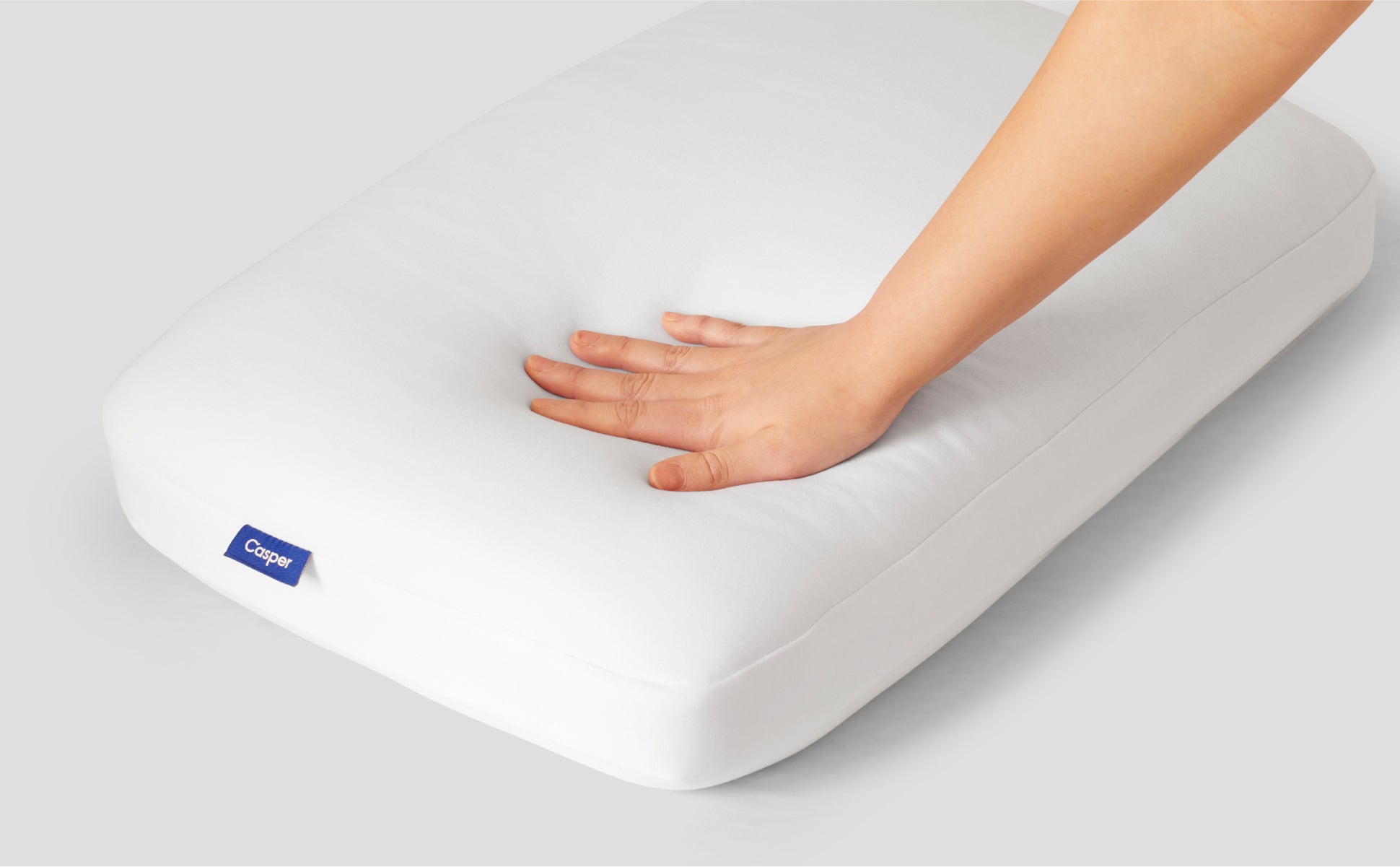 Casper Foam Pillow with Snow Technology | Hot sleepers who want structured foam support | HeatDelete bands + phase-change material, 12+ hours of cooling per Casper | $130–$170 | Check Price on Amazon |
 Coop EdenCool+ Adjustable Pillow | Sleepers who want to adjust loft and firmness | Cool-touch cover, phase-change gel layer, fully adjustable fill | $130–$180 | Check Price on Amazon |
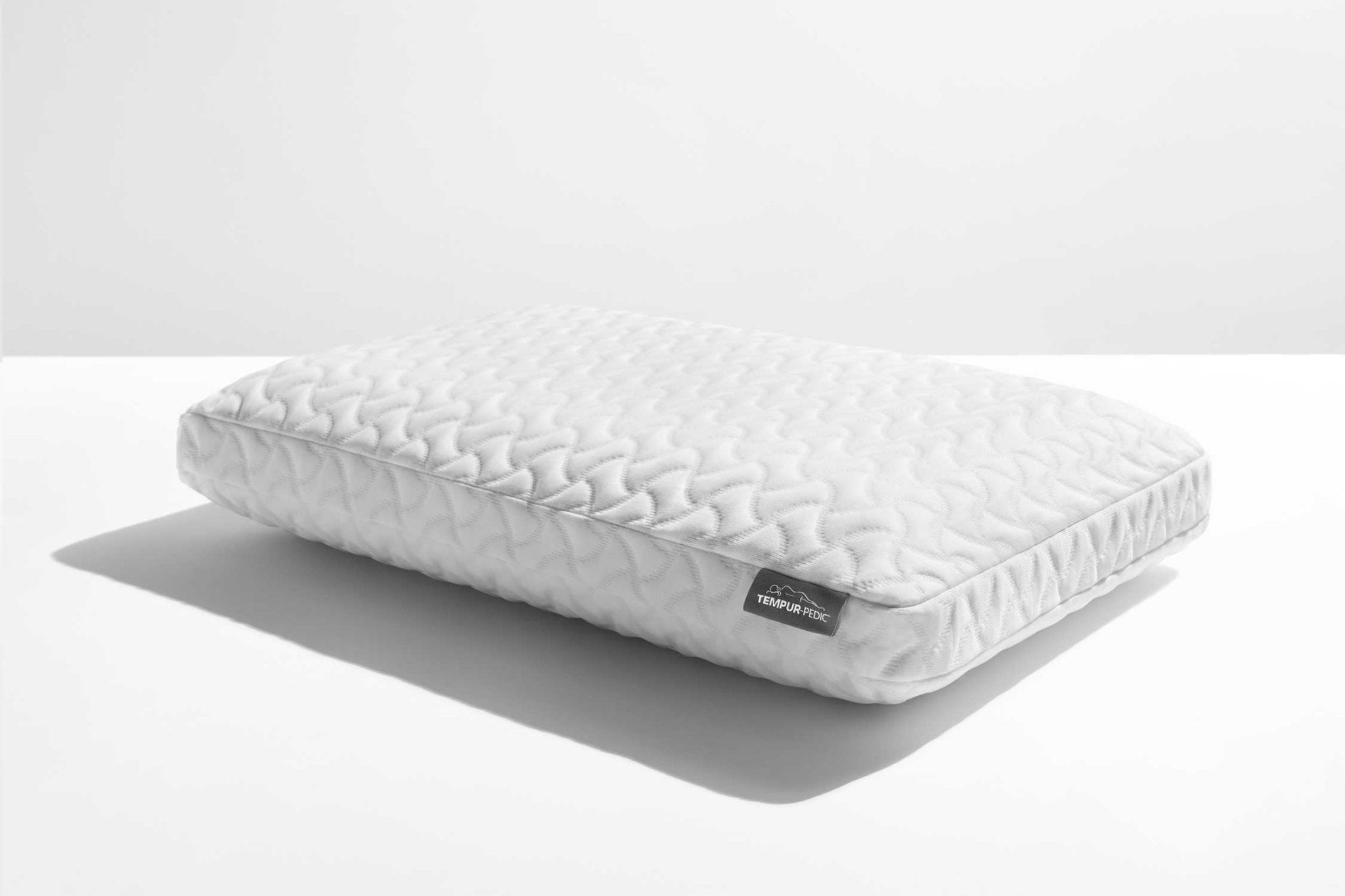
 Tempur-Pedic TEMPUR-Cloud Breeze Dual Cooling Pillow | Memory-foam lovers who want gel on both sides | Cooling gel layers on both sides of solid TEMPUR material | $140–$170 | Check Price on Amazon |
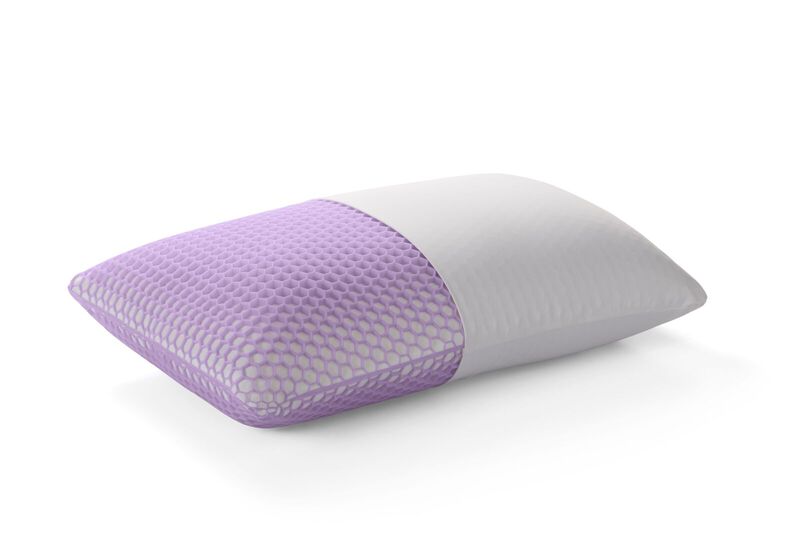 Purple Harmony Pillow | Hot sleepers who want airflow and a bouncy feel | 360° GelFlex Grid around a ventilated Talalay latex core | $180–$270 | Check Price on Amazon |
Cooling pillows are not one technology. They are several different answers to the same problem, and understanding the difference is the fastest way to pick the right one — because the pillow that feels coldest in the first five minutes is not always the one that stays comfortable at 3 a.m.
Cool-to-the-touch covers are the first thing you feel. Some fabrics are engineered to conduct heat away from your skin quickly, which your brain reads as "cool" the moment your cheek touches the pillow. Coop measures this with a Q-max score — a standard test of how cool a material feels on contact — and states that the EdenCool+ cover scores 0.48 out of a maximum of 0.50. That instant cool feeling is real, but it fades as the cover warms to skin temperature, which is why a good cover is a starting point, not the whole cooling system.
Phase-change material (PCM) works differently. It is a coating or layer that absorbs heat as it changes state, holding the surface near a target temperature while it does so. Casper applies a phase-change coating to the top layer of its Snow pillow, and Coop builds a ventilated phase-change gel memory foam layer into the EdenCool+. Think of PCM as a heat sponge: it soaks up warmth for a while, then stops helping once it is saturated. That is why PCM pillows feel wonderfully cool at bedtime and merely comfortable later in the night.
Conductive bands and gel layers move heat rather than storing it. Casper's HeatDelete bands are strips of aluminium graphite placed through the foam, engineered to continuously pull excess heat away from your head; the manufacturer states the system is designed to keep working for 12 or more hours. Tempur-Pedic takes a simpler approach with the Breeze pillow: a layer of cooling gel on both sides of the foam, so flipping the pillow gives you a fresh cool surface and the gel absorbs heat on either side.
Airflow design is the quietest cooling mechanism and, for all-night comfort, often the most important. Heat builds up fastest in a sealed block of foam with nowhere for warm air to go. Shredded foam, ventilated latex and open grid structures all create channels for air to move. The Purple Harmony's GelFlex Grid is a honeycomb of hyper-elastic polymer wrapped around a ventilated Talalay latex core, leaving open channels around the pillow, and its moisture-wicking mesh cover is designed to let that air keep moving. The Coop EdenCool+ uses the same idea in a different form: plus-shaped pieces of gel-infused foam mixed with microfiber, which Coop says delivers 50% more breathability than its standard fill, plus a heat-wicking inner liner.
One honest caveat runs through all four designs: a pillow can only manage the heat it receives. Room temperature, your mattress, your bedding and even your pillowcase matter. A thick, non-breathable pillowcase can undo much of what a cooling pillow does, and a pillow cannot compensate for a bedroom that stays warm all night. Buyers who report the best results pair a cooling pillow with a breathable case and a cool room, and treat the pillow as one part of a cooler sleep setup.
Casper Foam Pillow with Snow Technology — our top pick. Casper starts with its most supportive foam pillow — three layers of foam, including an ergonomically curved memory foam layer — and adds its Snow Technology on top. The system has three parts: a cool-to-the-touch cover, a phase-change material coating, and four HeatDelete bands made of aluminium graphite that Casper says pull heat away for 12 or more hours. It is the most complete cooling stack in this guide, addressing the first touch, the first hours, and the long stretch of the night. The pillow is medium-firm with a medium profile, which Casper says suits side sleepers in particular, and the curved inner layer is designed to keep the head and neck aligned. In standard size it measures 16 by 24 inches with an uncompressed height of 5.5 inches. The cover unzips and machine washes cold; the foam itself should not be washed. Casper offers a 30-day return window and a one-year limited warranty. At a list value of $169 for a standard size, it sits in the middle of this guide's price range, and it is the pick our research points to for hot sleepers who want a structured, supportive foam pillow rather than an adjustable one. The trade-off is loft: this is a fixed-profile pillow, so if its medium height does not suit your shoulders, there is no fill to add or remove.
Coop EdenCool+ Adjustable Pillow — best for fine-tuning. If you have ever bought a pillow that was almost right, the EdenCool+ is built for you. It is Coop's coolest pillow, aimed at the hottest sleepers, and it is fully adjustable: you add or remove the gel-infused memory foam and microfiber fill until the loft and firmness match your sleep position, with extra fill included in the box. The cooling comes from several directions at once. The outer cover is cool to the touch, with a Q-max score of 0.48 out of 0.50 according to Coop. Inside, a heat-wicking liner holds a ventilated phase-change gel memory foam layer — firmer and supercooled on one side, softer on the other — so flipping the pillow changes both the feel and the cooling. The plus-shaped foam pieces and microfiber blend are designed for 50% more breathability. It comes in Queen and King sizes and in three shapes — Classic, Crescent and Cut-Out — with the shaped versions aimed at side and back sleepers. Coop backs it with a 100-night sleep guarantee and a five-year warranty, the most generous trial in this guide. That combination of adjustability and trial makes it the safest choice if you are unsure about loft, though buyers report it is not quite as actively cold through the night as its long list of cooling features might suggest.
Tempur-Pedic TEMPUR-Cloud Breeze Dual Cooling Pillow — best classic memory foam. Some sleepers simply like the feel of solid memory foam: the slow, even contouring, the way it holds its shape without clumping or shifting fill. The Breeze pillow is that pillow, cooled. A single piece of extra-soft TEMPUR material supports the head, neck and shoulders, with a layer of cooling gel on both sides so either side starts the night cool and the gel absorbs excess heat. The Queen measures 27 by 19 by 6.4 inches, with a medium feel that Tempur-Pedic says suits all sleep positions. The cover is 100% cotton, removable and machine washable; the foam core is spot clean only. It carries a five-year limited warranty. The honest trade-offs are the ones that come with solid foam: the loft is fixed, the pillow is heavy for its size compared with shredded-fill designs, and the slow-responding foam feel will not suit sleepers who want a bouncy, responsive pillow. But for sleepers who already know they love TEMPUR material and want the most refined version of it with cooling added, our research found nothing else in this guide that matches its consistency night after night.
Purple Harmony Pillow — best airflow and bounce. The Harmony takes a completely different route from the foam pillows above. Its core is ventilated Talalay latex — springy and responsive rather than slow-sinking — wrapped in a 360-degree layer of Purple's honeycomb GelFlex Grid, a hyper-elastic polymer that flexes under pressure points while leaving open air channels around the pillow. The moisture-wicking mesh cover, listed by Purple as 92% nylon and 8% spandex, is designed to keep that air moving. The result, according to the manufacturer, is a pillow that stays cool all night by letting heat escape rather than by storing it in gel. It comes in three fixed heights — Low at 5.5 inches, Medium at 6.5 inches and Tall at 7.5 inches — in Standard and King sizes, with the Tall recommended for side sleepers and larger frames. That choice of height matters more here than with any other pillow in this guide, because there is no adjustability: pick the wrong loft and the grid cannot compensate. The cover machine washes cold and air dries; the latex core is spot clean only. Purple offers a 30-night trial and a one-year limited warranty, and lists the Harmony at $229–$269, making it the most expensive pillow here. For hot sleepers who dislike the sinking feel of memory foam and want a lifted, bouncy pillow that breathes, it is the strongest option in this guide.
Side sleepers deserve a specific note, because loft matters more for them than for anyone else: the pillow must fill the gap between shoulder and head. The Casper's medium profile and the Purple Harmony's Tall height are both aimed at that need, while the Coop EdenCool+ lets you build the loft yourself. If side sleeping is your main position, our guide to the best pillow for side sleepers compares loft and shoulder support in more depth, and if neck discomfort is part of the picture, see our best pillow for neck pain guide as well.
A cooling pillow is worth the money if you regularly wake up warm, flip your pillow looking for a cool spot, or sleep in a warm room or a warm climate. It is also worth considering if you sleep hot because of a dense memory foam pillow: switching to a ventilated or gel-cooled design can change the feel of the whole bed without replacing the mattress. Night sweats are a related but different problem — a cooling pillow can help with comfort, but persistent night sweats are worth discussing with a clinician, since no pillow treats their cause.
A cooling pillow is probably not worth it if you usually sleep cool and simply want a new pillow: the cooling features add cost without adding anything you will notice. It is also the wrong fix if your real problem is support — a pillow that is too low or too high will hurt your neck whether it is cool or not, and in that case loft and firmness matter far more than gel. Finally, keep expectations honest. Buyers report that cooling pillows delay warming and reduce flipping, not that they feel refrigerated at dawn. If a product promises all-night cold, that promise is doing more work than the pillow can.
Match the cooling mechanism to your problem. If you overheat in the first hour, a phase-change or gel layer will help most, because that is when those materials do their best work. If you wake up warm at 3 a.m., look for conductive bands or open airflow — the Casper's HeatDelete system or the Purple's grid — which are designed to keep managing heat through the night. If you are not sure which problem you have, the Coop EdenCool+ covers the most bases in one pillow.
Get the loft right. Loft is the height of the pillow under your head, and it is set by your sleep position and shoulder width. Side sleepers generally need the highest loft, back sleepers a medium loft, and stomach sleepers the lowest. Fixed-loft pillows such as the Casper, Tempur-Pedic and Purple require you to choose correctly up front — Purple's three heights exist precisely for this reason — while the Coop EdenCool+ lets you adjust after the pillow arrives. When in doubt, choose the pillow with the longer trial.
Check the trial and the return terms. A pillow cannot be judged in a shop. Coop's 100-night guarantee is the longest here; Casper and Purple offer 30 nights each. Confirm whether the trial starts on delivery and whether returns are free before you buy, and keep the packaging until you are sure. Warranties vary too: Coop and Tempur-Pedic offer five years, while Casper and Purple offer one year.
Read the care label before you buy. Every pillow in this guide has a removable, washable cover and a core that must only be spot cleaned. If you want a fully washable pillow, none of these four is the right choice — look at a fibre-fill design instead. Also check the pillowcase: a breathable cotton or bamboo-derived case preserves the cooling effect, while a heavy synthetic case can trap the heat the pillow is trying to shed.
Compare prices as ranges, and watch for sales. Pillow prices move with promotions, sizes and shapes. The ranges in this guide — roughly $130–$170 for the Casper and Tempur-Pedic, $130–$180 for the Coop EdenCool+, and $180–$270 for the Purple Harmony — reflect list and sale prices found in our research, but the price at checkout is the one that matters. Buying a pair or a bundle can also change the per-pillow cost, so check the product page before deciding.
Yes, within limits. A cooling pillow cannot refrigerate your head, but the technologies in this guide do measurably change how heat behaves at the pillow surface. Phase-change material and gel layers absorb heat when you first lie down, conductive bands such as Casper's HeatDelete bands move heat away from your head, and open structures such as Purple's GelFlex Grid and shredded foam let air circulate instead of trapping warm air. Buyers report that the best designs delay the moment the pillow warms up and reduce pillow-flipping, but no pillow can overcome a hot bedroom on its own.
There is no single coolest material, because cooling comes from a combination of surface feel, heat conduction and airflow. Latex and open-grid designs such as the Purple Harmony tend to stay cooler through the night because air can move through them, while gel and phase-change materials feel coldest at first touch but warm up as they absorb heat. Shredded foam with a breathable cover, as in the Coop EdenCool+, sits in the middle: it breathes better than solid memory foam but does not feel as instantly cold as a gel layer.
It depends on the technology. Cool-to-the-touch covers and phase-change coatings deliver their strongest effect in the first part of the night, as they absorb heat until they reach equilibrium with your body. Conductive bands and open-airflow structures are designed to keep working longer: Casper states its Snow Technology is engineered to pull heat away for 12 or more hours. In practice, buyers report that most cooling pillows feel noticeably cooler at bedtime and somewhat cooler than a standard pillow through the night, rather than cold all night.
Usually only the cover. Most cooling pillows in this guide have a removable, machine-washable cover, while the foam, latex or gel core must only be spot cleaned. The Casper Snow pillow's cover unzips and machine washes cold, the Tempur-Pedic Breeze cover is removable and machine washable, and the Purple Harmony cover machine washes cold while its latex core is spot clean only. Never put a foam or latex pillow core in a washing machine unless the manufacturer explicitly says you can, and always check the care label first.
The best cooling pillow in 2026, for most hot sleepers, is the Casper Foam Pillow with Snow Technology. Its three-part system — cool-touch cover, phase-change material and HeatDelete bands designed for 12 or more hours of cooling — is the most complete answer to overnight heat in this guide, and its medium-firm, medium-profile foam suits the side and back sleepers who make up most buyers. If you need to dial in your loft, the Coop EdenCool+ is the better buy: its fully adjustable fill, dual-feel phase-change layer and 100-night trial make it the most forgiving choice. Memory-foam loyalists should choose the Tempur-Pedic Breeze for its familiar solid-foam feel with cooling gel on both sides, and sleepers who hate sinking foam should spend more on the Purple Harmony, whose latex core and open grid breathe better than any foam pillow here. Whichever you choose, pair it with a breathable pillowcase, keep the bedroom cool, and give the trial its full run — the right cooling pillow is the one that still feels comfortable at 3 a.m., not just at bedtime.
Sleep · Pillows
The best pillow for neck pain in 2026: TEMPUR-Cloud, Coop Original Adjustable and Eli & Elm compared on loft, support and adjustability.
Read ReviewSleep · Mattresses
The best mattress for hot sleepers in 2026: Brooklyn Bedding Aurora Luxe, Saatva Classic and Purple RestorePremier compared on cooling and comfort.
Read ReviewSleep · Pillows
The best pillow for side sleepers in 2026: Coop Original, Eli & Elm and Saatva Latex compared on loft, shoulder support and adjustability.
Read Review
