Sleep · Pillows
Best Pillow for Side Sleepers (2026) — Top Picks
The best pillow for side sleepers in 2026: Coop Original, Eli & Elm and Saatva Latex compared on loft, shoulder support and adjustability.
Read Review
| Product | Best For | Key Feature | Price Range | |
|---|---|---|---|---|
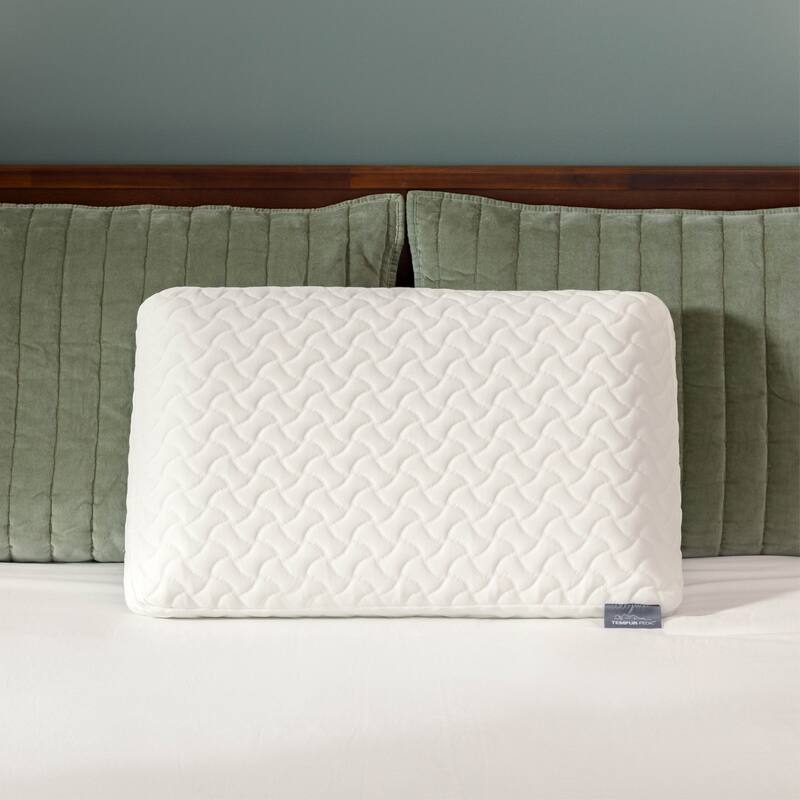 Tempur-Pedic TEMPUR-Cloud Pillow | Best pillow for neck pain (back sleepers) | Solid TEMPUR foam slab, low loft, 5-year warranty | $89–$109 | Check Price on Amazon |
 Coop Original Adjustable Pillow | Best adjustable pillow for neck pain | Adjustable fill, 100-night trial, 5-year warranty | $85–$99 | Check Price on Amazon |
 Eli & Elm Side Sleeper Pillow | Best pillow for side sleepers with neck pain | U-shaped shoulder cutout, latex or foam fill, up to 6 in loft | $115–$136 | Check Price on Amazon |
Prices are ranges at time of writing and change frequently — check Amazon for the current price.
We compared manufacturer specifications, independent review testing and verified buyer feedback across the neck-pain pillow market, weighting neck alignment and loft fit (35%), adjustability (25%), material quality and durability (20%) and trial, warranty and value (20%). This is a research-based comparison of specs and published test results, not a hands-on test. Morning neck pain usually has a simple mechanical cause: the pillow holds the head at the wrong height, so the cervical spine spends the night bent instead of neutral. A pillow that is too tall pushes the chin toward the chest for back sleepers and tilts the head upward for stomach sleepers; a pillow that is too flat lets a side sleeper's head drop toward the mattress, which strains the neck on the other side. The right loft depends on sleep position and body size, which is why the single most useful feature in this category is adjustability — and why two of our three picks let you change the fill.
Evidence from sleep research supports the same point: pillows around 10 centimetres tall (about 4 inches) are best for maintaining the natural curve in the necks of back sleepers and for reducing neck muscle activity in side sleepers. That is a useful anchor, but it is not a prescription — shoulder width, mattress firmness and body weight all shift the ideal height by an inch or two. A back sleeper on a firm mattress needs less loft than a back sleeper on a soft one, because the head sinks less. A broad-shouldered side sleeper needs more loft than a narrow-shouldered one. The practical approach is to buy a pillow you can adjust, set it to the height that keeps your neck level with your spine, and give it a week. If your neck pain also comes with lower-back pain, the mattress is probably part of the problem too, and our best mattress for back pain guide covers that side of the equation.
The Tempur-Pedic TEMPUR-Cloud Pillow is the simplest pick and the most consistent one. It is a single rectangle of extra-soft TEMPUR-Material foam — the dense, contouring foam Tempur-Pedic is known for — with a low loft of about 5 inches and a hypoallergenic quilted polyester cover. There is no fill to shift and nothing to adjust: the solid core holds its shape night after night, which is exactly why it suits people whose necks punish them for an inconsistent pillow. Reviewers consistently report that it prevents the neck strain and shoulder aches a too-tall pillow causes, and that from the first night the low loft kept the neck aligned with the spine. It costs $89 for a queen and $109 for a king, with a cooling upgrade available for about $20 more, and it comes with a 5-year warranty and free shipping. The limitations are real: it has no sleep trial, so you cannot return it if the feel does not suit you, and it is designed for back and stomach sleepers — side sleepers will find the thin build lets the head angle downward, which causes the very neck strain the pillow is meant to prevent.
The Coop Original Adjustable Pillow is the most versatile pick and the one most experts recommend first. It arrives overfilled with a proprietary blend of cross-cut memory foam and microfiber, plus a spare bag of extra fill, and you add or remove fill through a zipper until the loft matches the gap between your head and your shoulder. It comes in three shapes — the rectangular Classic, a Crescent for gentle side-sleeper support, and a Cut-Out that leaves room for the shoulder — in queen and king sizes, and both the pillow and its Lulltra cover are machine washable. The foam is GREENGUARD Gold and CertiPUR-US certified, and the terms are the best in this comparison: a 100-night trial with a full refund and a 5-year warranty. A queen costs $89 at full price and is frequently discounted to around $67 during holiday sales. The honest trade-off is maintenance: the shredded fill compresses overnight and shifts as you move, so it needs re-fluffing in the morning, and finding the right amount of fill takes a few nights of trial and error. For side sleepers specifically, our best pillow for side sleepers guide compares the Coop against other side-sleeper options in more detail.
The Eli & Elm Side Sleeper Pillow is the specialist. Instead of solving neck pain with fill alone, it changes the shape: a U-shaped cutout at the bottom edge makes room for the shoulder, so the shoulder drops into the gap instead of pushing up against the pillow edge all night, and the neck stays level with the spine. You choose the fill when you order — a latex option (75% cooling Dunlop latex noodle, 25% polyester fiber) for responsive, cooler support, or a memory foam option (75% shredded memory foam, 25% polyester fiber) for a softer feel — and a zippered liner lets you add or remove fill up to a maximum loft of 6 inches. The queen measures 18 by 28 inches and costs around $115 on sale against a $135.99 list price, with free ground shipping and a 45-day return window. Independent test labs have scored it highly for side sleepers with shoulder pain, noting that sleeping with the shoulder on the mattress and the neck elevated improved alignment and reduced aches along the spine. The risk is the shape itself: the U-cutout is permanent, and if you roll onto your back often or the cutout does not suit your shoulder, no amount of fill adjustment turns it into a conventional pillow. For the mattress side of side-sleeper comfort, our best mattress for side sleepers guide covers the beds that pair well with it.
Morning neck pain is usually a positioning problem, not a disease. The cervical spine has a natural curve, and it needs support that holds that curve while you sleep. A pillow that is too high forces the neck into flexion all night; a pillow that is too low lets the head drop and stretches the muscles on one side. Either way, the small muscles along the neck spend the night working instead of resting, and you wake up stiff, sore, or with a headache that fades by midday. The mattress plays a part too: on a soft mattress the shoulders sink, which changes the height the pillow needs to fill, and on a firm mattress they do not. That is why a pillow that worked perfectly on your old bed can cause pain on a new one, and why adjustable pillows are so useful — the right loft is a relationship between your body, your sleep position and your mattress, not a fixed number.
There are limits to what a pillow can do. If your neck pain is sharp, radiates down an arm, comes with numbness or tingling in the fingers, or does not change after two weeks on a well-fitted pillow, see a clinician rather than buying another pillow — those symptoms can indicate a nerve issue that bedding cannot fix. Sleeping position matters as well: stomach sleeping is the hardest position for the neck, because it forces the head to turn to one side all night, and no pillow fully solves that. Back sleeping with a low-loft pillow is the kindest position for the neck, and side sleeping with a pillow that fills the shoulder gap is a close second. A pillow can also help indirectly: better neck alignment means fewer wake-ups, and fewer wake-ups mean deeper sleep, which is when the muscles actually recover. That is the real promise of a good pillow — not a cure, but a night where the neck gets to rest.
A pillow that keeps your neck in a neutral line with your spine. For back sleepers that usually means a low to medium loft of about 4 to 5 inches; for side sleepers it means a higher loft that fills the gap between head and shoulder. Adjustable pillows are the safest buy because you can tune the loft instead of guessing.
Yes, for back and stomach sleepers. The TEMPUR-Cloud is a single slab of extra-soft TEMPUR foam with a low loft of about 5 inches, so it cradles the head without angling the neck upward. Reviewers report it prevents the neck strain and shoulder aches that a too-tall pillow causes. It is less suited to side sleepers, who need more height.
Give it at least a week, and two weeks is better. Your neck muscles need time to relax into a new support shape, and an adjustable pillow needs a few nights of fill tuning before it feels right. If the pain is sharp, radiates down an arm, or does not change after two weeks, see a clinician rather than buying another pillow.
The Coop Original is better if you do not know your ideal loft yet, because you can add or remove fill freely and it suits all sleep positions. The Eli & Elm is better if you are a dedicated side sleeper with shoulder pain, because its U-shaped cutout makes room for the shoulder so the neck stays level. Choose the Coop for versatility and the Eli & Elm for side-sleeper specialisation.
Buy the TEMPUR-Cloud if you sleep on your back or stomach and want a simple, consistent pillow that never needs adjusting — the solid TEMPUR core holds its shape and keeps the neck aligned night after night. Buy the Coop Original if you sleep in more than one position or you do not know your ideal loft: the adjustable fill and 100-night trial make it the safest choice in this guide, and at $89 it is the best value here. Buy the Eli & Elm if you are a dedicated side sleeper whose neck pain comes with a sore shoulder — the U-shaped cutout solves a problem no amount of fill can fix. And whichever you choose, give it a week before you judge it: the neck you wake up with on night one is not the neck you will wake up with on night seven.
Sleep · Pillows
The best pillow for side sleepers in 2026: Coop Original, Eli & Elm and Saatva Latex compared on loft, shoulder support and adjustability.
Read ReviewSleep · Mattresses
Side sleepers need pressure relief at the shoulders and hips. We compared the best mattresses for side sleeping — comfort, support and cooling.
Read ReviewSleep · Mattresses
Wake up pain-free. We compared firmness, lumbar support and pressure relief across top hybrids to find the best mattresses for back pain.
Read Review