Home Comfort · Vacuums
Robot Vacuum vs Upright Vacuum (2026) — Which Cleans Better?
Robot vs upright vacuum 2026: suction, pet hair and running costs compared — Roborock S8 Pro Ultra, Roomba j9+, Shark Stratos, Dyson Ball Animal 3.
Read Review
| Product | Best For | Key Feature | Price Range | |
|---|---|---|---|---|
| Roborock S8 Pro Ultra Robot Vacuum | Best robot vacuum for carpet overall | 6,000 Pa suction, VibraRise mopping, self-wash dock | $1,200–$1,600 | Check Price on Amazon |
 iRobot Roomba j9+ Robot Vacuum | Best for pet hair on carpet | PrecisionVision navigation, 4-stage cleaning, self-empty base | $700–$900 | Check Price on Amazon |
 Shark AI Ultra Robot Vacuum AV2501AE | Best value carpet robot vacuum | Bagless 60-day base, Matrix Clean, LiDAR, HEPA | $450–$650 | Check Price on Amazon |
Prices are ranges at time of writing and change frequently — check Amazon for the current price.
We compared manufacturer specifications, suction ratings and verified buyer feedback across the robot vacuum market, weighting carpet cleaning performance (35%), navigation and obstacle avoidance (25%), self-emptying and maintenance (20%) and value (20%). This is a research-based comparison of specs and owner feedback, not a hands-on test. Carpet is the hardest surface for a robot vacuum: dirt hides deep in the pile, fibres resist suction, and a robot that cleans hardwood brilliantly can leave a carpet looking untouched.
Suction is the headline number, but it is not the whole story. The Roborock's 6,000 Pa leads the field, yet brush design matters as much as raw power — dual rubber brushes agitate carpet fibres and resist hair tangles better than a single bristle brush, which is why both the Roomba and the Shark use them. Carpet-boost modes, which raise suction automatically when the robot detects carpet, are now standard on good models. And navigation decides whether the robot actually covers the carpet or just wanders: LiDAR mapping beats random bouncing every time. If you want the robot-vs-upright comparison first, see our robot vacuum vs upright vacuum guide.
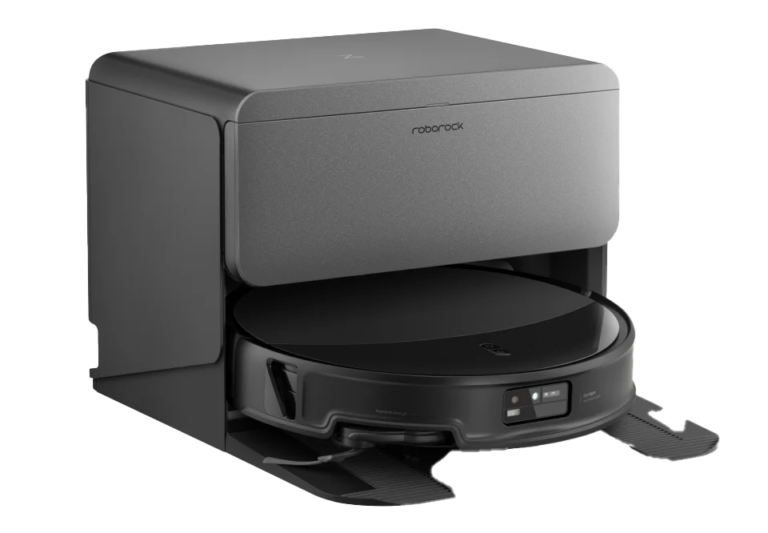
The Roborock S8 Pro Ultra is the flagship here, and it shows in the dock as much as the robot. Its 6,000 Pa of suction is the strongest of the three, its VibraRise 2.0 mopping system lifts the mop on carpet so it never drags a wet pad across your rug, and its RockDock Ultra empties the dustbin, washes and dries the mop, and refills the water tank by itself. Reactive 3D obstacle avoidance steers around shoes, cables and pet bowls. It is expensive, and the dock is big — but it is the closest a robot comes to a full cleaning system.
The Roomba j9+ is the pet owner's pick. Its PrecisionVision navigation recognises and avoids pet waste — iRobot even backs that with its Pet Owner Official Promise — and its 4-stage cleaning system with dual rubber brushes is designed for the hair that carpets collect. The self-empty Clean Base holds up to 60 days of dirt. The Shark AI Ultra is the value play: a bagless XL base that holds up to 60 days of dirt with true HEPA filtration and no bags to buy, Matrix Clean grid passes that cover carpet in multiple directions, and 360-degree LiDAR mapping — for roughly half the price of the Roborock. It is vacuum-only and its obstacle avoidance is less sophisticated than the Roomba's, but on carpet pickup per dollar it is hard to beat. For homes with pets specifically, our best robot vacuum for pet hair guide goes deeper.
A robot vacuum cleans carpet in three steps. First, a spinning side brush sweeps dirt from edges and corners into the cleaning path. Second, the main brush — a rubber roller, a bristle brush, or both — agitates the carpet fibres to loosen embedded dirt while the suction motor pulls it into the dustbin. Third, on good models, a carpet-boost mode raises suction automatically when carpet is detected, because carpet needs far more airflow than hard floors to lift the same dirt.
The reason robots struggle with thick pile is physics: suction drops with distance, and a robot's small motor and low clearance cannot match a full-size upright's deep-cleaning agitation. That is why the best robot strategy for carpet is frequency — a daily scheduled clean keeps dirt from settling deep, so the robot never has to do a deep clean at all. It also explains why self-empty bases matter: a robot that runs daily fills its bin fast, and a base that empties it for 60 days is what makes daily cleaning hands-free. For a robot that also mops, see our best robot vacuum and mop combo guide.
The Roborock S8 Pro Ultra is the best robot vacuum for carpet, with 6,000 Pa of suction, carpet-boost mode and a self-washing dock. The Roomba j9+ is best for pet hair on carpet, and the Shark AI Ultra is the best value carpet robot vacuum.
They work on low and medium pile, and high-pile carpet is their weak spot — no robot deep-cleans thick carpet as well as a full-size upright. The best strategy is daily scheduled cleaning, which stops dirt settling deep into the pile in the first place.
Look for at least 2,500–3,000 Pa for carpet, and more is better — the Roborock S8 Pro Ultra's 6,000 Pa is the strongest here. Brush design and carpet-boost modes matter as much as the raw number, though.
Yes. Carpet fills a robot's small dustbin fast, so a self-empty base that holds 60 days of dirt is what makes daily carpet cleaning hands-free. The Shark's bagless base is the cheapest to run, since it needs no replacement bags.
Buy the Roborock S8 Pro Ultra if you want the deepest carpet clean a robot can give, plus mopping and a dock that does the maintenance for you. Buy the Roomba j9+ if pets are the problem — its obstacle avoidance and tangle-free brushes are built for pet homes. Buy the Shark AI Ultra if you want most of the flagship experience for half the money, with no bag costs ever. And run it daily: frequency is the robot's real advantage on carpet.
Home Comfort · Vacuums
Robot vs upright vacuum 2026: suction, pet hair and running costs compared — Roborock S8 Pro Ultra, Roomba j9+, Shark Stratos, Dyson Ball Animal 3.
Read ReviewHome Comfort · Vacuums
Find the best robot vacuum for pet hair in 2026. We compared self-emptying docks, detangling brushes and suction to pick the best for dogs and cats.
Read ReviewHome Comfort · Vacuums
Looking for the best robot vacuum and mop combo? We compared flagship mopping, self-washing docks and suction to find the best 2-in-1 for 2026.
Read Review