Home Comfort · Air Quality
Best Air Purifier for Allergies (2026)
Pollen, dust and dander — gone. We compared True HEPA filtration, CADR and room coverage to find the purifiers that actually cut allergens.
Read Review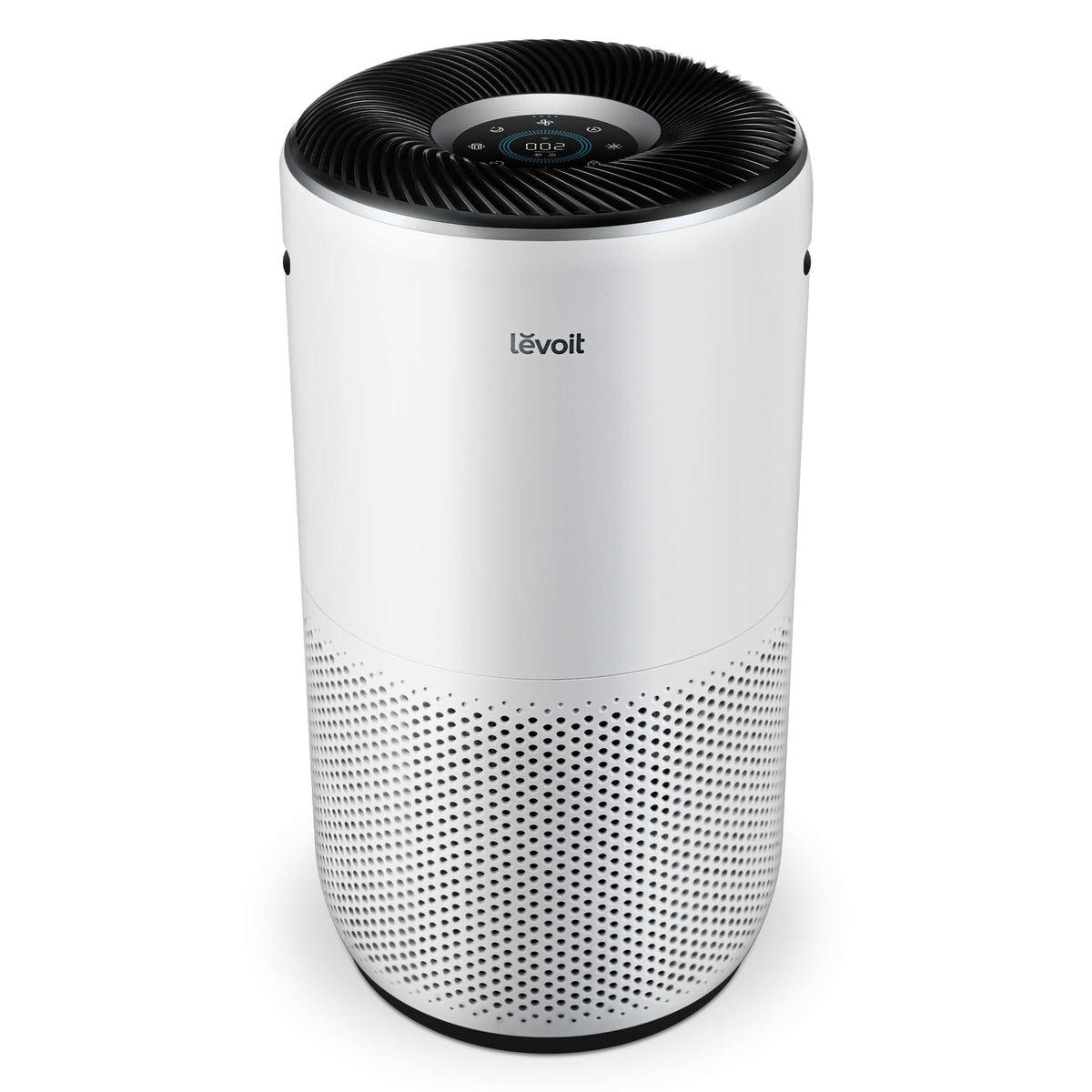
| Product | Best For | Key Feature | Price Range | |
|---|---|---|---|---|
| Levoit Core 400S | Best air purifier for bedroom overall | 231 cfm smoke CADR, 358 sq ft, 22–52 dB, ENERGY STAR, True HEPA | $170–$220 | Check Price on Amazon |
 Coway Airmega 250S | Best for odours and wall placement | 249 cfm smoke CADR, gas sensor, Max2 filter, 22–54 dB, IoCare app | $270–$450 | Check Price on Amazon |
 Blueair Blue Pure 211i Max | Best for large bedrooms | 435 cfm smoke CADR, 674 sq ft, 23–53 dB, ENERGY STAR Most Efficient | $200–$350 | Check Price on Amazon |
Prices are ranges at time of writing and change frequently — check Amazon for the current price.
We ranked bedroom purifiers on verified clean air delivery rate (30%), quiet-speed performance (25%), filter type and running cost (20%), sleep-mode design (15%) and smart features (10%). This is a research-based comparison built from public records — the ENERGY STAR certified room air cleaner database, the AHAM Verifide directory, the California Air Resources Board list and manufacturer manuals — not a hands-on test. The bedroom changes the ranking in one important way: a purifier that is powerful on paper but loud on its quietest setting is useless at 2 a.m., so noise on sleep mode counted almost as much as CADR.
The single most important idea in this guide comes from the U.S. Environmental Protection Agency: match the smoke CADR to the room using the two-thirds rule — the smoke CADR should be at least two-thirds of the floor area in square feet. A 12 by 15 ft bedroom (180 sq ft) needs a smoke CADR of at least 120 cfm, and for wildfire smoke the EPA recommends a CADR equal to the room size. Ignore the giant coverage number on the box: the Levoit claims up to 1,718 sq ft and the Blueair up to 3,235 sq ft, but those figures assume one air change per hour. At the 4.8 air changes per hour that ENERGY STAR and AHAM use, the Levoit covers 358 sq ft and the Blueair 674 sq ft — the honest numbers, and the ones in our table. If allergies are your main reason for buying, our best air purifier for allergies guide compares the same machines on allergen performance specifically.
The Levoit Core 400S is the bedroom sweet spot. Its AHAM-verified CADR is 231 cfm for smoke, 240 for dust and 259 for pollen, which works out to a 358 sq ft room at 4.8 air changes per hour — comfortably more than any standard bedroom needs, with headroom for a large primary bedroom. It runs 22–52 dB, draws 38 W, and its 3-stage True HEPA filtration (washable pre-filter, H13 HEPA, activated carbon) captures 99.97% of particles down to 0.3 microns. The VeSync app shows live PM2.5 from its laser sensor, and the unit is ENERGY STAR certified with a measured 0.00 ppb of ozone — there is no ionizer at all. The replacement filter costs $49.99, and Levoit lists a 2-year warranty. The trade-off is the top speed: at 52 dB it is audible, and independent measurements have put it higher still on turbo. But on sleep mode it is one of the quietest purifiers in its class, and that is the speed a bedroom actually runs at.
The Coway Airmega 250S is the pick for bedrooms where smells are the problem — cooking odours drifting upstairs, a litter tray in the corner, or a damp room. It is the only one of the three with a gas sensor as well as a particle sensor, so its auto mode responds to smells, not just dust. Its CADR is 249 cfm for smoke, 261 for dust and 230 for pollen, covering 465 sq ft at 4 air changes per hour (about 389 sq ft at 4.8). The Max2 filter combines activated carbon with Green True HEPA media, and Coway says it lasts a full year — though the fine print also says 6–12 months. The flat-panel shape is genuinely practical in a bedroom: at 18.5 inches wide, 19.7 tall and only 8.3 deep, it stands against a wall like a side table. The costs are weight (20.5 lb), power (64 W against the Levoit's 38 W) and the $89 replacement filter. Check the Coway Airmega 250S Price on Amazon
The Blueair Blue Pure 211i Max is the overkill option — and for a large bedroom, overkill is the point. Its AHAM-verified smoke CADR of 435 cfm covers 674 sq ft at 4.8 air changes per hour, which means that even on its quiet speeds it still moves enough air for a big room. It runs 23–53 dB, draws 46 W, and is on ENERGY STAR's Most Efficient list. The catch is the filtration: HEPASilent combines mechanical filtration with an electrostatic stage that cannot be switched off, so it is not True HEPA, and CARB lists it as an electronic air cleaner. ENERGY STAR measures its ozone at 2 ppb, well under the 50 ppb limit, so this is a disclosure rather than a danger — but if you want a purifier with no ionizer at all, buy the Levoit. The other catch is the warranty: 1 year unless you register within 60 days, which extends it to 3 years. At its November 2026 sale price of $199.99 against a $349.99 list, it is also the best clean air per dollar in this guide. Check the Blueair 211i Max Price on Amazon
CADR — clean air delivery rate — is the volume of filtered air a purifier delivers, in cubic feet per minute, measured separately for smoke, dust and pollen. Smoke particles are the smallest and hardest to catch, so read the smoke figure first: it is the strictest test of the machine. The EPA's sizing chart assumes an 8-foot ceiling and says a 100 sq ft room needs a minimum CADR of 65 cfm, a 200 sq ft room needs 130, and a 300 sq ft room needs 195. That is the two-thirds rule in table form, and it is the only sizing method in this guide that comes from a regulator rather than a manufacturer.
Two bedroom-specific traps are worth knowing. First, CADR is measured at the purifier's highest speed, and a bedroom purifier spends most of its life on sleep mode. A machine that covers 358 sq ft on turbo may cover only about 210 sq ft at a quiet speed, so buy more CADR than your room strictly needs — the margin is what keeps the air clean overnight without noise. Second, ceiling height matters: the EPA table assumes 8 feet, and a bedroom with a 10-foot ceiling holds 25% more air, so the same machine covers less floor. Measure the room, multiply length by width, and compare against the smoke CADR — not the box coverage. For whole-home sizing beyond the bedroom, our best air purifier for large rooms guide works through the same math for living rooms and open-plan spaces.
An air purifier is only one half of bedroom air. The EPA's guidance is clear that portable cleaners filter a single room and cannot remove all pollutants — gases and odours need activated carbon, and no CADR rating covers gas removal at all. If your bedroom air feels dry in winter, a purifier will not help; you need humidity. Our best humidifier for bedroom guide covers the machines that pair with a purifier for exactly this reason, and the combination — purifier for particles, humidifier for dry air — is the standard setup for allergy-prone sleepers.
Placement matters as much as the purchase. Put the purifier where air can circulate — not jammed against the wall or behind the bed — and keep it running overnight on sleep or auto mode rather than switching it off at bedtime. Particles and allergens rebuild within hours in a closed room, so the purifier earns its keep precisely while you sleep. Keep the bedroom door closed overnight so the machine filters one room instead of the hallway, change the filter on schedule (a clogged filter is a loud, inefficient filter), and vacuum the pre-filter regularly if it is washable. None of these picks has a CPSC recall on record through November 2026, which is worth checking for any purifier before you buy.
The Levoit Core 400S is the best air purifier for most bedrooms — an AHAM-verified smoke CADR of 231 cfm covers about 358 sq ft, it runs as quietly as 22 dB on sleep mode, and it is ENERGY STAR certified. The Coway Airmega 250S is the best choice if odours matter, thanks to its gas sensor and Max2 filter. The Blueair Blue Pure 211i Max suits large bedrooms and open-plan sleeping areas, with a 435 cfm smoke CADR covering 674 sq ft.
Look for a sleep or night mode rated at or below about 25 dB — roughly the sound of a quiet whisper — so the purifier does not disturb sleep. All three picks here start at 22–23 dB on their lowest setting. Note that CADR is measured at top speed, so a purifier running quietly overnight cleans less air than its headline figure; size the unit so its quiet speed still covers your room.
Use the EPA two-thirds rule: the smoke CADR should be at least two-thirds of the room floor area in square feet. A 12 by 15 ft bedroom (180 sq ft) needs a smoke CADR of at least 120 cfm, and more if the ceilings are high or the air is smoky. The Levoit Core 400S at 231 cfm covers bedrooms up to about 358 sq ft at 4.8 air changes per hour.
Yes — air purifiers work by continuously filtering room air, and stopping overnight lets particles and allergens build back up while you sleep. Run it on sleep or auto mode overnight: all three picks here have a sleep mode that dims the display and drops the fan to its quietest speed. Budget for the electricity and filter costs, which run roughly $50–$90 a year for a replacement filter depending on the model.
Buy the Levoit Core 400S for a standard or large bedroom: verified CADR, True HEPA with zero ozone, the quietest sleep mode here, and the cheapest filters. Buy the Coway Airmega 250S if odours are your problem — its gas sensor and carbon-heavy Max2 filter are the only ones in this guide that respond to smells — and if you want a slim panel that disappears against the wall. Buy the Blueair Blue Pure 211i Max for a big bedroom or open-plan sleeping area, especially at its $199.99 sale price: the extra CADR means it still cleans properly on quiet speeds, which is exactly what a bedroom needs. Whichever you choose, size it by smoke CADR, run it overnight, and change the filter on schedule — a purifier only works while it is running.
Home Comfort · Air Quality
Pollen, dust and dander — gone. We compared True HEPA filtration, CADR and room coverage to find the purifiers that actually cut allergens.
Read ReviewHome Comfort · Air Quality
Big rooms need real airflow. We compared CADR, room coverage and filter costs to find the best air purifiers for large spaces.
Read ReviewHome Comfort · Air Quality
Quieter sleep, easier breathing. We compared tank size, runtime, mist type and smart controls to find the best bedroom humidifiers.
Read Review