Home Comfort · Air Quality
Best Air Purifier for Large Rooms (2026)
Big rooms need real airflow. We compared CADR, room coverage and filter costs to find the best air purifiers for large spaces.
Read Review
| Product | Best For | Key Feature | Price Range | |
|---|---|---|---|---|
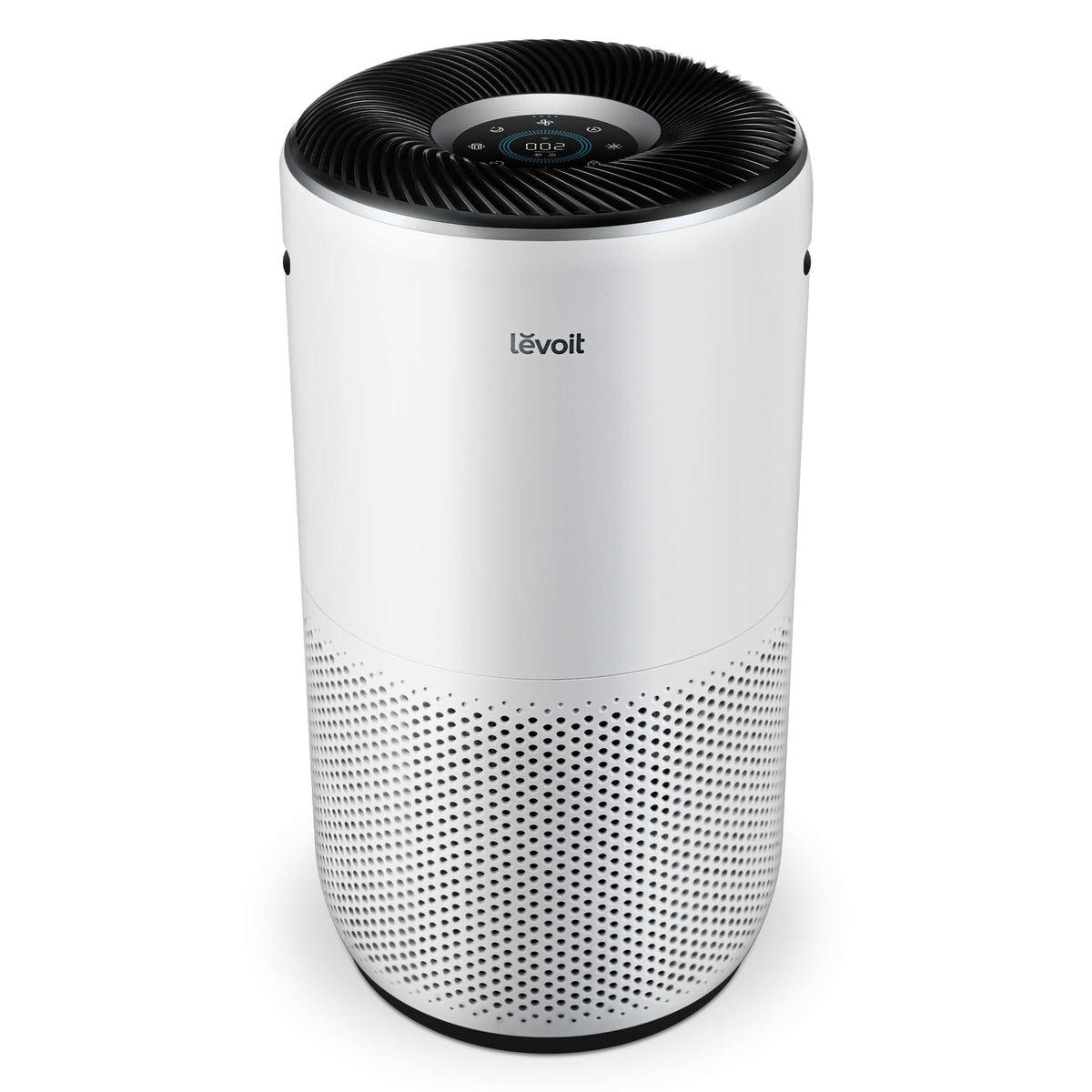
| Levoit Core 300S | Best overall small-room | 141 CFM CADR, 219 sq ft, H13 True HEPA | $100–$150 | Check Price on Amazon |
 Blueair Blue Pure 411i Max | Best quiet smart pick | 145 CFM smoke CADR, 18 dB low, PM2.5 sensor | $130–$180 | Check Price on Amazon |
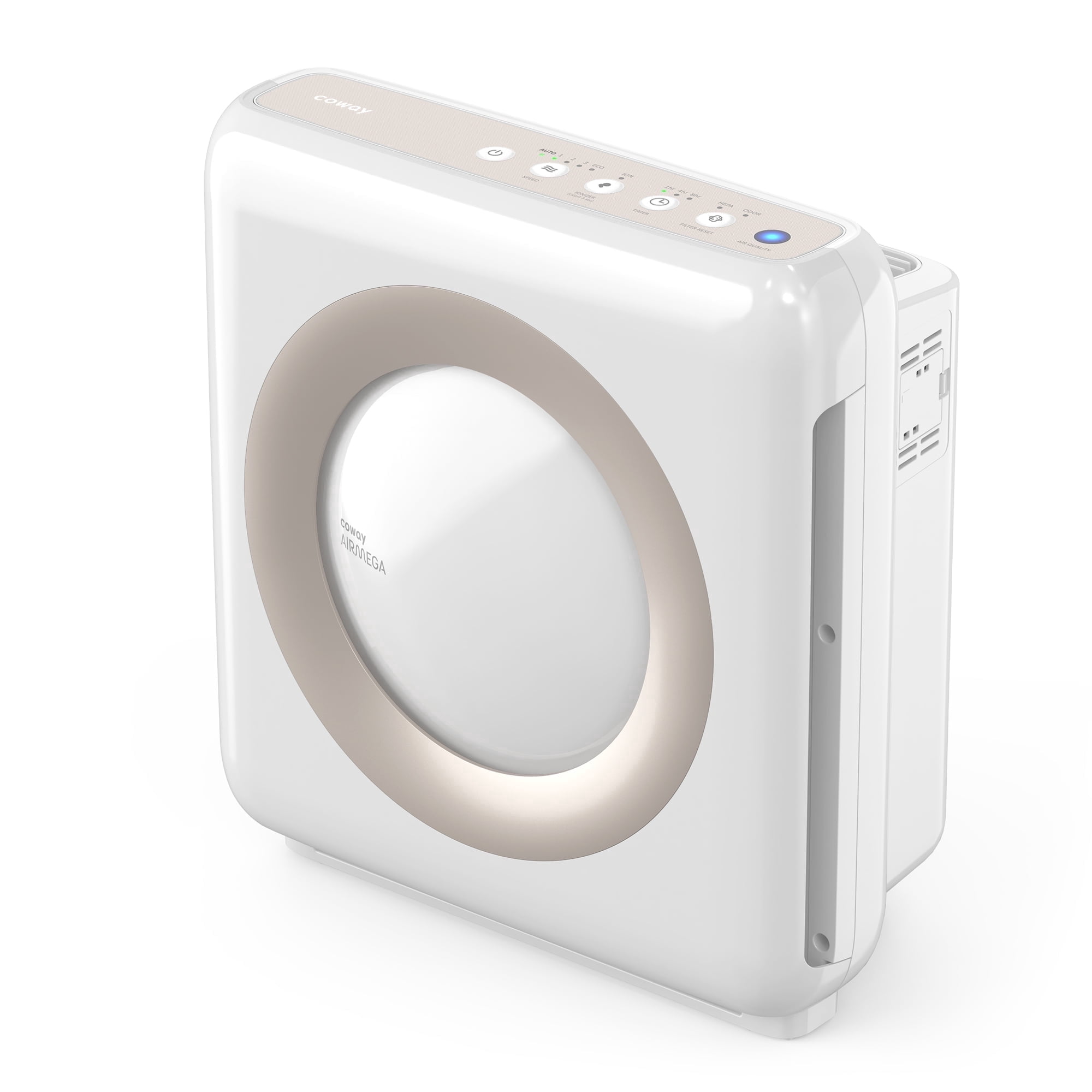 Coway Airmega AP-1512HH Mighty | Best for larger small rooms | 233 CFM smoke CADR, 361 sq ft, washable pre-filter | $180–$250 | Check Price on Amazon |
 Levoit Core 200S | Best budget pick | 90 CFM CADR, ~140 sq ft, compact footprint | $70–$100 | Check Price on Amazon |
A small room is usually a bedroom, home office, dorm room or nursery of roughly 100 to 250 square feet — and it is the easiest room in the house to get right, because the number that decides everything is printed on the box. That number is CADR, the Clean Air Delivery Rate, measured in cubic feet per minute (CFM) separately for smoke, dust and pollen. The Association of Home Appliance Manufacturers (AHAM) verifies CADR figures independently, and its rule of thumb is simple: multiply the smoke CADR by 1.55 to get the largest room the purifier can clean at 4.8 air changes per hour, the standard recommended for allergy and asthma relief.
Worked out, that means a 150 sq ft bedroom needs a smoke CADR of about 97 CFM, and a 200 sq ft room needs about 130 CFM. The Levoit Core 300S, with a smoke CADR of 141 CFM, covers about 219 sq ft at that standard — a typical 12 × 15 ft bedroom with room to spare. The Blueair Blue Pure 411i Max, at 145 CFM smoke CADR, covers about 225 sq ft on the same AHAM basis. Both are honest small-room machines. Be wary of the much larger coverage figures in marketing: Levoit and Coway both advertise room sizes based on a single air change per hour, which can be four or five times the AHAM figure. A purifier that claims 1,000 sq ft on that basis is really a 200 sq ft machine, and buying on the big number is how people end up with a unit that never quite clears the air.
There is also such a thing as too much purifier. A large-room unit in a 150 sq ft bedroom costs more up front, takes up floor space you do not have, and burns through a larger, pricier filter to do a job a compact cylinder could do. The exception is a shared room or a room with two people, pets or heavy cooking smells nearby — then the extra airflow of something like the Coway Airmega Mighty, rated for 361 sq ft, earns its keep. Our research also shows that placement matters as much as size: put the purifier where air can reach it, away from walls and curtains, with its intake unobstructed, and it will cycle the room's air far more effectively than the same machine squeezed behind a door.
If you want a deeper look at sizing for bigger spaces, our guide to the best air purifier for large rooms explains the same CADR maths at the other end of the scale, and our best air purifier for bedroom guide focuses specifically on overnight noise and sleep modes.
An air purifier is a fan pulling room air through a series of filters and pushing cleaned air back out. The stage that does the heavy lifting is the HEPA filter — a dense mat of randomly arranged fibres that traps particles as air passes through. A True HEPA filter captures 99.97% of particles 0.3 microns and larger, which covers dust, pollen, mould spores, pet dander and most smoke particles. That 0.3-micron figure is the hardest size to capture, so it is the benchmark the whole industry is measured against; smaller and larger particles are actually caught more easily.
Most good purifiers add two more stages around the HEPA core. A pre-filter catches hair, lint and large dust before it reaches the HEPA layer, which is why washable pre-filters — like the one on the Coway Mighty — extend filter life so noticeably. An activated carbon stage then adsorbs odours and some gases, which HEPA alone cannot remove. The US Environmental Protection Agency (EPA) is clear on this point: air cleaners can reduce airborne particles, but they do not remove gases, and they work best alongside source control and ventilation, not instead of them. If cooking smells or smoke odour are your main complaint, the carbon stage matters as much as the HEPA rating.
Two technologies deserve a note of caution. Some purifiers add an ionizer or a plasma stage that produces a small amount of ozone; the Winix and Coway models in this guide both offer one, and both let you switch it off. Buyers with asthma or pets generally leave it off, since the HEPA and carbon stages do the real work on their own. And Blueair's HEPASilent filtration, used in the 411i Max, is a proprietary electrostatic-mechanical design rather than a certified True HEPA filter — Blueair states it removes 99.97% of airborne particles down to 0.1 microns, and independent reviewers rate its real-world cleaning highly, but it is not the same certification as a True HEPA label. For allergy sufferers who want the certified standard, the Levoit and Coway models in this guide carry it.
Levoit Core 300S — our top pick. The Core 300S is the small-room default for good reason: it is the rare purifier where every number lines up. Levoit rates it at 141 CFM smoke CADR and 219 sq ft at 4.8 air changes per hour, with an H13 True HEPA filter, an activated carbon stage, a VeSync app with schedules and voice control, and a lowest noise level of 22 dB. At 8.7 × 8.7 × 14.2 inches and under 6 lb it fits on a nightstand or beside a desk without dominating the room, and its 23 W rated power keeps running costs low. The filter needs replacing every 6 to 8 months, and Levoit offers pet-allergy and toxin-absorber filter variants for households that need them. Its main limitation is honest rather than hidden: above about 220 sq ft it has no headroom left, so a larger bedroom or a room with two people and a pet is better served by the Coway below.
Blueair Blue Pure 411i Max — the quiet smart upgrade. The 411i Max is the purifier to buy if you sleep lightly or like to see what the air is doing. Its AHAM-verified smoke CADR of 145 CFM matches the Levoit, but it adds a PM2.5 sensor with a five-colour air-quality indicator, auto mode and a night mode, and its lowest noise level is 18 dB — the quietest in this guide. Blueair lists coverage up to 526 sq ft, but that figure assumes a single air change per hour; the AHAM room size is 225 sq ft, which is the number to trust. The washable fabric pre-filter is a genuinely useful touch, catching dust and hair before the main filter, and replacement filters cost about $30. The trade-off is the HEPASilent filter discussed above: excellent measured performance, but not a certified True HEPA label, which matters to some allergy buyers. Our allergy guide goes deeper on which filtration standards matter for pollen and dander.
Coway Airmega AP-1512HH Mighty — the larger small room pick. The Mighty is the veteran of this category, and our research keeps finding it recommended for shared rooms, doubles and small suites. Its smoke CADR of 233 CFM covers about 361 sq ft, with a dust CADR of 246 CFM and a pollen CADR of 240 CFM, and its four-stage system — washable pre-filter, activated carbon, True HEPA and a switchable ionizer — is built to last, with the HEPA filter rated for up to 12 months. It is bigger and heavier than the two picks above, and at 77 W it draws more power, but buyers report it is the one to choose when a room is closer to 300 sq ft or houses two people. Note that its ionizer ships enabled on some units, so switch it off if you prefer ozone-free operation.
Levoit Core 200S — the budget pick. For a single room of 140 sq ft or less — a 10 × 14 ft bedroom, a dorm single or a small nursery — the Core 200S does the job for roughly $70–$90. Its smoke CADR of 90 CFM covers about 140 sq ft at the AHAM standard, and it shares the Core family's compact cylindrical design and app control. It has no air-quality sensor and no auto mode, so it is a set-it-and-forget-it machine rather than a smart one, but for the smallest rooms that simplicity is a fair trade for the price. If your room is even slightly larger than 140 sq ft, spend the extra on the Core 300S instead.
Start by measuring your room. Multiply length by width, then divide by 1.55 to find the minimum smoke CADR you need for 4.8 air changes per hour — or just check the AHAM room size on the manufacturer's spec sheet, which already does that maths. If your ceiling is higher than 8 ft, you need more CADR than the headline figure suggests, because the room holds more air than the standard calculation assumes. Second, check the lowest noise level, not the highest: a purifier lives on its lowest speed overnight, and the difference between 18 dB and 24 dB is the difference between forgetting it is on and noticing it. Third, price the filters before you buy the machine. A $100 purifier with a $30 filter every 6 months costs more over three years than a $150 purifier with a $45 filter every 12 months, so look at the replacement cost and interval on the manufacturer's site.
Fourth, decide whether you actually need smart features. An air-quality sensor and auto mode are genuinely useful in a bedroom, because the purifier can stay quiet until the air needs cleaning — but if you will run it on a fixed schedule anyway, the cheaper non-smart model saves money for the same filtration. Fifth, check the energy rating: many of the models in this guide are ENERGY STAR certified, and a purifier that runs 24 hours a day can use 100–200 kWh a year, so efficiency is not trivial. Finally, place it properly once it arrives. The EPA advises keeping air cleaners away from walls and furniture so air can circulate, and running them continuously rather than in short bursts — a purifier only cleans the air that passes through it, so intermittent use leaves the room dirty most of the day.
Match the purifier to your room's square footage using its smoke CADR. Multiply the smoke CADR by 1.55 to get the maximum room size in square feet at 4.8 air changes per hour, the standard AHAM uses. For a 150 sq ft bedroom you need a smoke CADR of about 97 CFM or more; for 200 sq ft, about 130 CFM. A purifier rated for a much larger room is not better in a small room — it costs more, takes up more space and uses more filter life.
CADR (Clean Air Delivery Rate) measures how much clean air a purifier delivers, in cubic feet per minute, separately for smoke, dust and pollen. It is the only independently verified performance figure that matters, because it is measured to an AHAM standard. In a small room, a CADR of 90 to 150 CFM is usually enough; anything much higher is wasted airflow you pay for in noise, size and filter cost.
Yes, if you check the lowest published noise level. The purifiers in this guide list 18 to 24 dB on their lowest or sleep setting, which is quieter than a whisper and fine for most sleepers. Noise rises sharply on high speed, so a model with an auto mode and a PM2.5 sensor can stay quiet overnight and only ramp up when the air actually needs cleaning.
Most HEPA filters last 6 to 12 months and carbon filters 3 to 6 months, depending on use and air quality. The Levoit Core 300S filter is rated for 6 to 8 months, the Coway Airmega Mighty filter for up to 12 months, and the Blueair 411i Max filter for 6 to 9 months. Budget for one replacement filter a year — roughly $30 to $60 — when you compare the real cost of owning a purifier.
The best air purifier for small rooms is the one sized to the room you actually have, and on that test the Levoit Core 300S wins for most buyers: a verified 141 CFM CADR, True HEPA filtration, quiet sleep mode and a price around $100 make it the right fit for bedrooms and offices up to about 220 sq ft. Light sleepers and smart-home fans should look at the Blueair Blue Pure 411i Max, whose sensor, auto mode and 18 dB floor are the quietest in this guide. And if your "small" room is really a shared double or a suite pushing 300 sq ft, the Coway Airmega Mighty is the step up that keeps the air genuinely clean. Whichever you choose, size it by CADR, check the filter cost, and run it continuously — that is what turns a good purifier into clean air you can actually feel.
Home Comfort · Air Quality
Big rooms need real airflow. We compared CADR, room coverage and filter costs to find the best air purifiers for large spaces.
Read ReviewHome Comfort · Air Quality
Pollen, dust and dander — gone. We compared True HEPA filtration, CADR and room coverage to find the purifiers that actually cut allergens.
Read ReviewHome Comfort · Air Quality
The best air purifier for bedroom use in 2026: Levoit Core 400S, Coway Airmega 250S and Blueair 211i Max compared on CADR, noise and sleep mode.
Read Review