Best Burr Coffee Grinder for Espresso: Top Picks for 2026
By PickNest Reviews Team · Published Nov 25, 2026 · Updated Nov 25, 2026 · 9 min read
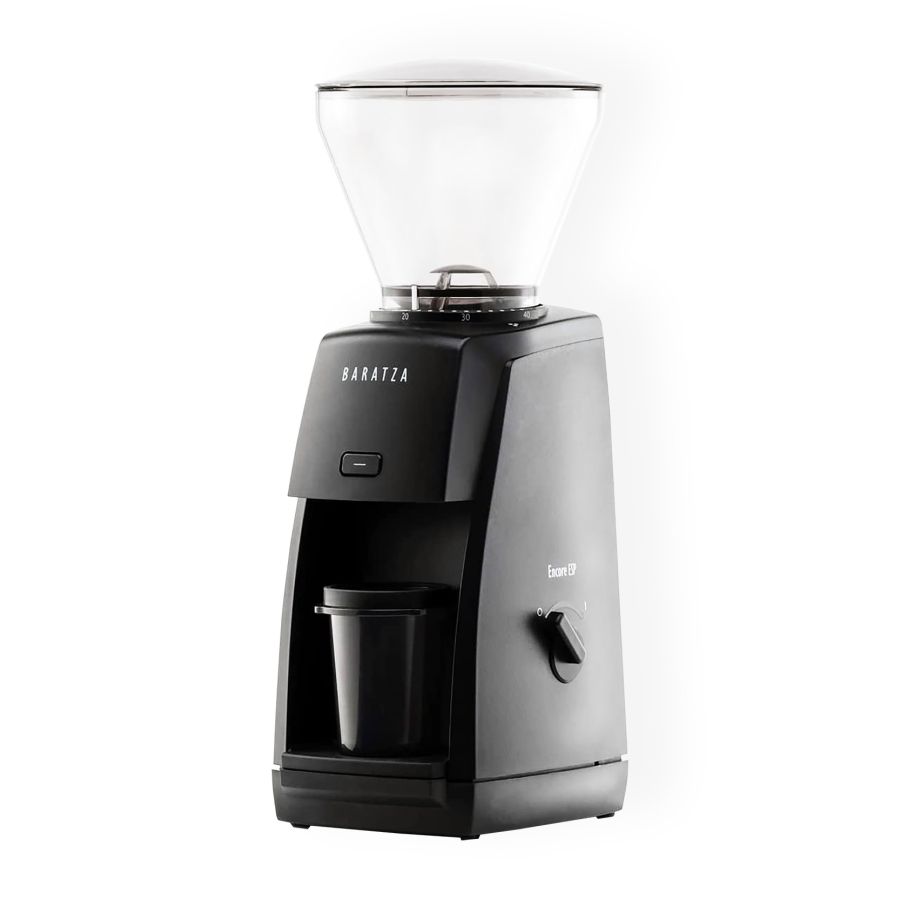
Our top pick: Baratza Encore ESP
Affiliate Disclosure: This post contains affiliate links. If you buy through them, we may earn a small commission at no extra cost to you. This never influences our rankings. Read our full disclosure →
⚡ Quick Verdict: The Baratza Encore ESP is the best burr grinder for espresso for most people: true espresso-range micro-steps, a 40 mm conical burr set and a dosing cup workflow, at a price that leaves room for good beans. Step up to the Eureka Mignon Specialita for flat-burr clarity and silent, timed dosing — and pick the Breville Smart Grinder Pro if you want the easiest first grinder.
Prices are ranges at time of writing and change frequently — check Amazon for the current price.
Pros & Cons
Pros
A burr grinder is the single biggest upgrade to home espresso — bigger than a new machine for most people
Fresh-ground beans keep their aroma; pre-ground coffee goes stale within days of opening
Fine adjustment steps let you dial in a shot by taste instead of guessing
Every pick here also grinds for pour-over and French press, so one grinder serves the whole kitchen
Cons
Good espresso grinders cost $160–$550 — as much as some espresso machines
Espresso-range grinding is loud, slow and messy on every grinder at this price
Cheap grinders cannot grind fine or evenly enough for espresso, no matter how good the beans are
Grinders need regular cleaning — stale grounds and rancid oils ruin flavour fast
What Is a Burr Grinder — and Why Does Espresso Demand One?
A burr grinder crushes coffee beans between two ridged metal surfaces — the burrs — set a precise distance apart. That distance sets the grind size, and because every bean passes through the same gap, the grounds come out far more uniform than anything a blade grinder can produce. A blade grinder, by contrast, chops beans at random: some pieces turn to dust while others stay in chunks. For filter coffee that inconsistency is forgiving; for espresso it is fatal, because water under pressure finds the path of least resistance and channels through the fine dust, over-extracting bitterness while the coarse chunks stay under-extracted and sour.
Espresso is uniquely demanding because the window is so narrow. The water passes through the puck in about 25–30 seconds, so the grind must be fine enough to slow it down but even enough to let it flow uniformly. That is why the adjustment range matters more than the motor or the looks: the Baratza Encore ESP divides its dial into a dedicated espresso range (settings 1–20, with close micro-steps) and a filter range (21–40), so a one-click change is small enough to fix a fast shot without overshooting. The Fellow Opus 2 takes a different route with a stepless side dial and 48 settings across the whole range, while the Eureka Specialita uses stepless micrometric adjustment — no clicks at all, just a smooth dial — paired with a touchscreen that doses by time.
Retention and static are the two quiet frustrations of home grinding. Retention is the ground coffee left inside the grinder after each dose; static makes fine grounds cling to the chute and spray across the counter. The Encore ESP tackles both with an anti-static dosing cup that drops grounds cleanly into the portafilter, and the Opus 2 adds an ioniser to cut static. These details sound minor until you grind every morning — then they decide whether the ritual feels calm or chaotic.
Baratza vs Eureka vs Breville vs Fellow: How the Four Compare
The Baratza Encore ESP is our top pick because it solves the actual problem — dialling in espresso — at the lowest price. Its 40 mm M2 conical burrs are the same hardened alloy steel design Baratza has refined for years, its dual-range dial makes the espresso zone easy to navigate, and its quick-release burr mount means cleaning takes minutes with no tools. At 70 W with a high-torque DC motor it grinds an 18-gram dose in roughly 8–12 seconds. The trade-off is the build: mostly ABS plastic, and it is louder than the Eureka. But Baratza's support and parts availability are the best in the category — a grinder you can keep running for a decade.
The Eureka Mignon Specialita is the connoisseur's pick. Its 55 mm flat burrs and stepless adjustment give the finest control here, and its touchscreen timed dosing — single and double shot timers, plus a manual mode — makes repeatable doses effortless. It is also notably quiet for an espresso grinder, which matters in a household that wakes at different hours. The price, $400–$550, is the objection, and it only makes sense once your machine and technique are already good: a Specialita cannot rescue stale beans or a bad tamp, but it will reward good ones. Pair it with a machine from our best espresso machine under $500 guide and the combination punches well above its price.
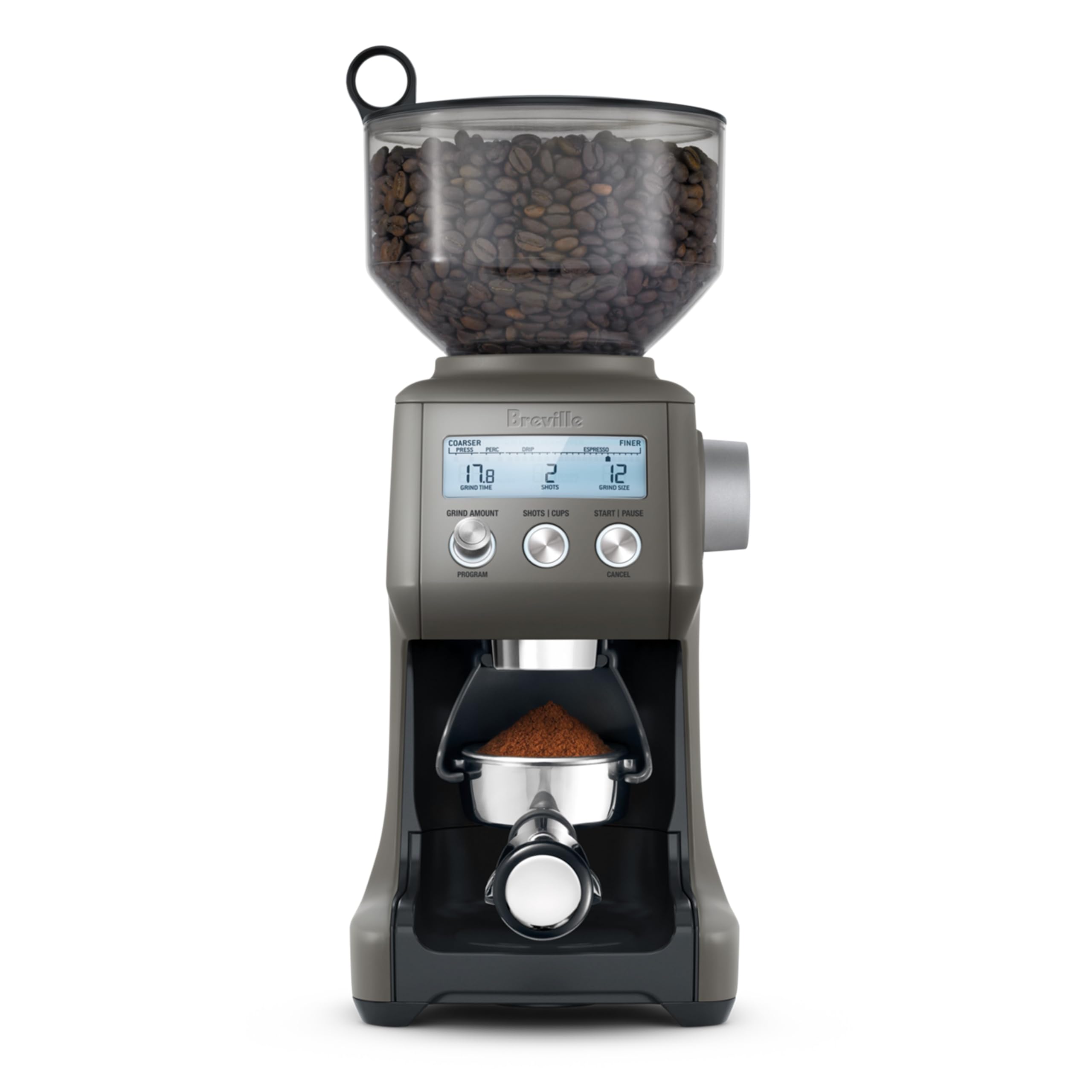
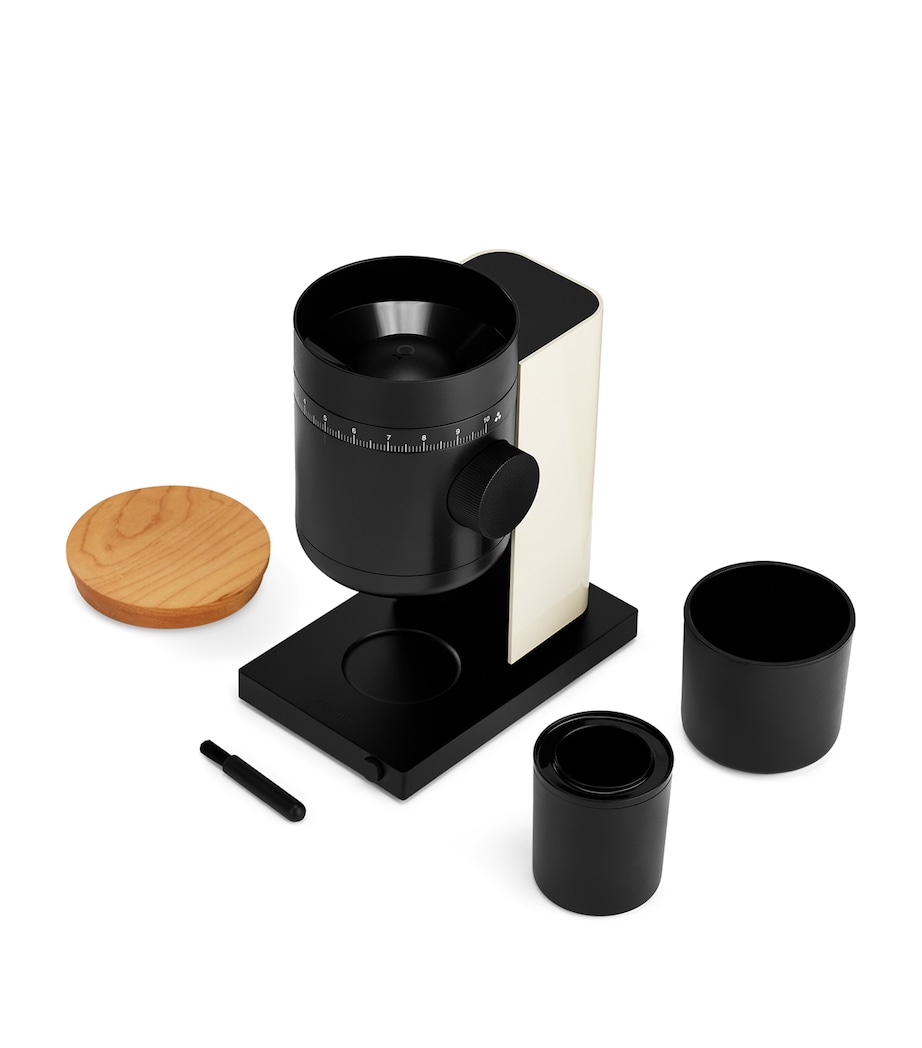
The Breville Smart Grinder Pro is the easiest first grinder. Its LCD shows grind time, shot count and grind size, it offers 60 stepped settings, and its portafilter cradle lets you grind hands-free directly into the basket — the workflow most beginners find most natural. It is a strong match for Breville machines, and if you already own a Barista Express with a built-in grinder, this is the upgrade path when you want a dedicated unit. The Fellow Opus 2 is the design-led alternative: 48 mm conical burrs, a full-spectrum grind range from espresso to cold brew, magnetic catch cups for both 54 mm and 58 mm portafilters, and a look that belongs on a modern counter. It is the current generation of the original Opus, with larger burrs and faster grinding, and it is the best pick if one grinder must serve espresso in the morning and pour-over in the afternoon. For gifting, see our best espresso machine gifts guide — a good grinder is often the most appreciated gift in a coffee lover's kitchen.
Dialling In Espresso: Grind Size, Dose and Freshness
Start with a dose: 18 grams of beans for a double shot is the standard starting point, and the Encore ESP's 24-gram dosing cup or the Specialita's timed dosing both make that repeatable. Grind, distribute the grounds evenly in the basket, tamp level with firm, even pressure, and pull the shot while timing it. Aim for roughly 36 grams of liquid espresso in 25–30 seconds. Faster and sour? Grind finer. Slower and bitter? Grind coarser. Change one variable at a time — grind size first — and keep notes for a few days. Most beginners fix their espresso within a week of this routine.
Freshness matters as much as grind. Coffee beans are at their best roughly 1–4 weeks after roasting, and grinding releases the aromatics immediately — ground coffee loses its best character within hours, not days. That is the real case for a grinder: not the gadget, but the habit of grinding each dose fresh. Store beans in an airtight container away from light, buy in small bags you will finish within two weeks, and never store beans in the freezer for daily use — the condensation on thawing does more harm than good. Our best espresso machine under $300 guide pairs budget machines with these grinders for a complete starter setup.
Buying Guide: What to Check Before You Buy
Espresso-range steps: the grinder must adjust finely enough in the espresso zone — micro-steps or stepless, not wide clicks.
Burr size and type: 40 mm conical is the proven minimum; 48–55 mm burrs grind faster and more evenly.
Dosing method: a dosing cup, timed dosing or a portafilter cradle — pick the workflow you will actually repeat.
Retention and static: look for anti-static features and easy burr access for cleaning.
Noise: if you brew before the household wakes, a quieter grinder like the Specialita is worth the premium.
Parts and support: Baratza and Eureka both sell spare burrs and parts — a grinder should last years, not one warranty period.
Espresso needs a fine grind — roughly the texture of fine sand or table salt — so that pressurised water takes about 25–30 seconds to pass through the puck. If your shot runs faster than 20 seconds and tastes sour, grind finer; if it drips slowly past 35 seconds and tastes bitter, grind coarser. The exact setting varies by bean and machine, so use the time and taste as your guide rather than a single number.
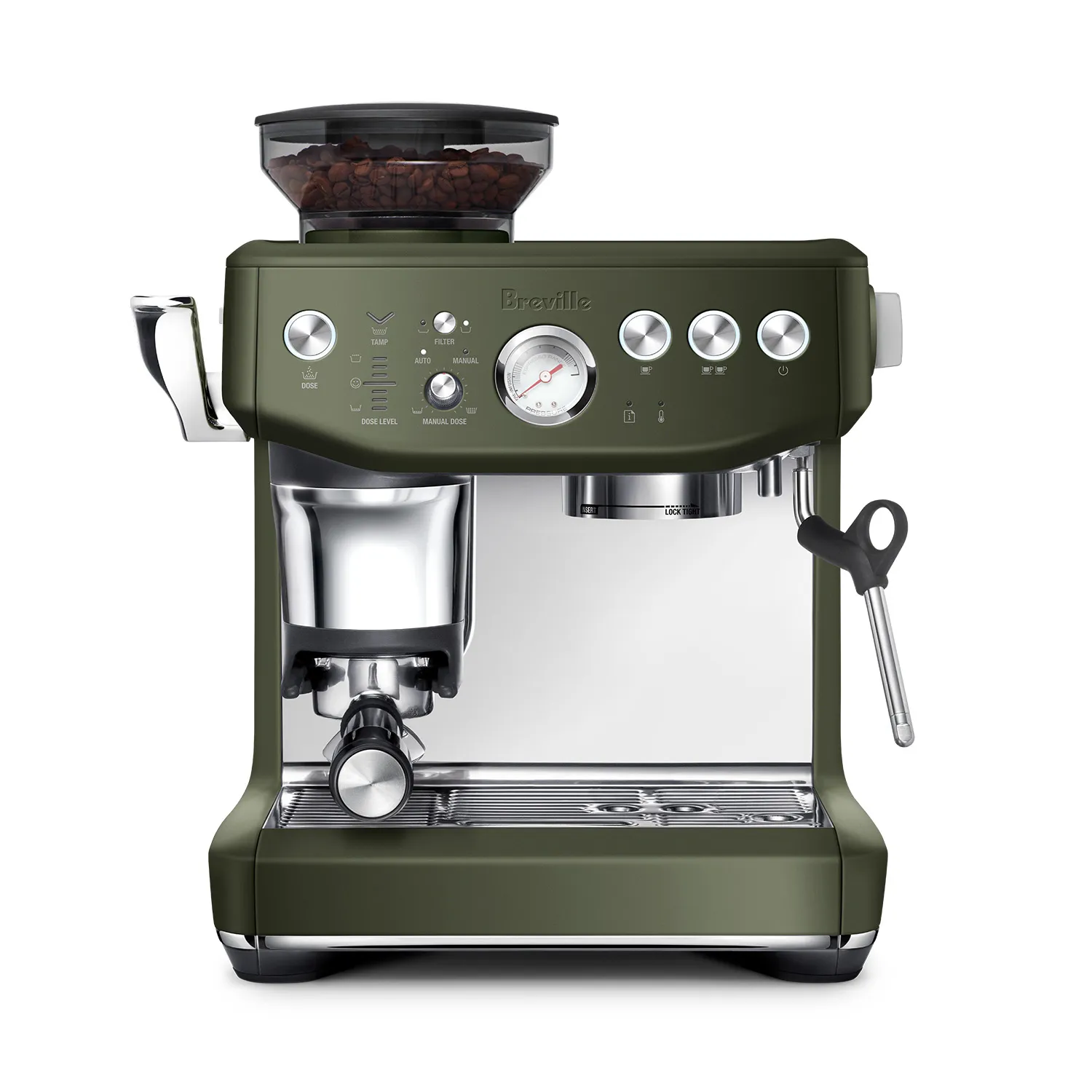
Not always. Built-in grinders, like the one on the Breville Barista Express, are well matched to their machines and are a great starting point. A separate grinder becomes worth it when you want finer adjustment steps, a quieter or faster grind, or the freedom to upgrade your machine and grinder independently. It also lets you grind for other brew methods without changing your espresso setup.
Both can make excellent espresso. Conical burrs, found in the Baratza Encore ESP and Fellow Opus 2, tend to produce a slightly wider range of particle sizes, which many drinkers describe as a sweeter, more forgiving shot. Flat burrs, like the 55 mm set in the Eureka Mignon Specialita, tend to produce a more uniform grind, which many drinkers associate with clarity and separation of flavours. At this price level, burr quality and adjustment precision matter more than the burr shape.
Brush out the burr chamber and chute weekly if you grind daily, and do a deeper clean — removing the burrs where the design allows it, as on the Encore ESP with its quick-release burr — every month or two. Coffee oils go rancid and stale grounds build up in the chute, so a clean grinder tastes noticeably better than a neglected one. Avoid water inside the burr chamber; use a dry brush and grinder cleaning tablets made for the purpose.
Final Verdict
Buy the Baratza Encore ESP if you want the best espresso grinder for the money — it is the only pick here built from the ground up for dialling in espresso at a price that leaves budget for fresh beans. Buy the Eureka Mignon Specialita when your machine and technique are ready for flat-burr precision and silent timed dosing. Buy the Breville Smart Grinder Pro for the friendliest first grinder, and the Fellow Opus 2 when one grinder must cover espresso and every other brew method. Whichever you choose, grind fresh, dose by weight, and change one variable at a time — the grinder is the upgrade your espresso has been waiting for.
We compared the best espresso machines under $500 for 2026 — built-in grinders, PID temperature control and steam power — to find the right machine for your budget.
Shopping for a coffee lover? We compared the best espresso machine gifts for 2026 — grinder-included Brevilles, a mod-friendly Gaggia and a compact Bambino Plus.
Find the best espresso machine under $300 in 2026. We compared shot quality, steam power, heat-up time and size to pick the best budget espresso machines.
 Eureka Mignon Specialita
 Breville Smart Grinder Pro
 Fellow Opus 2