
Kitchen · Espresso
Best Espresso Machine Under $300 (2026)
Real espresso on a tight budget. We compared shot quality, steam power, heat-up time and size to pick the best budget espresso machines.
Read Review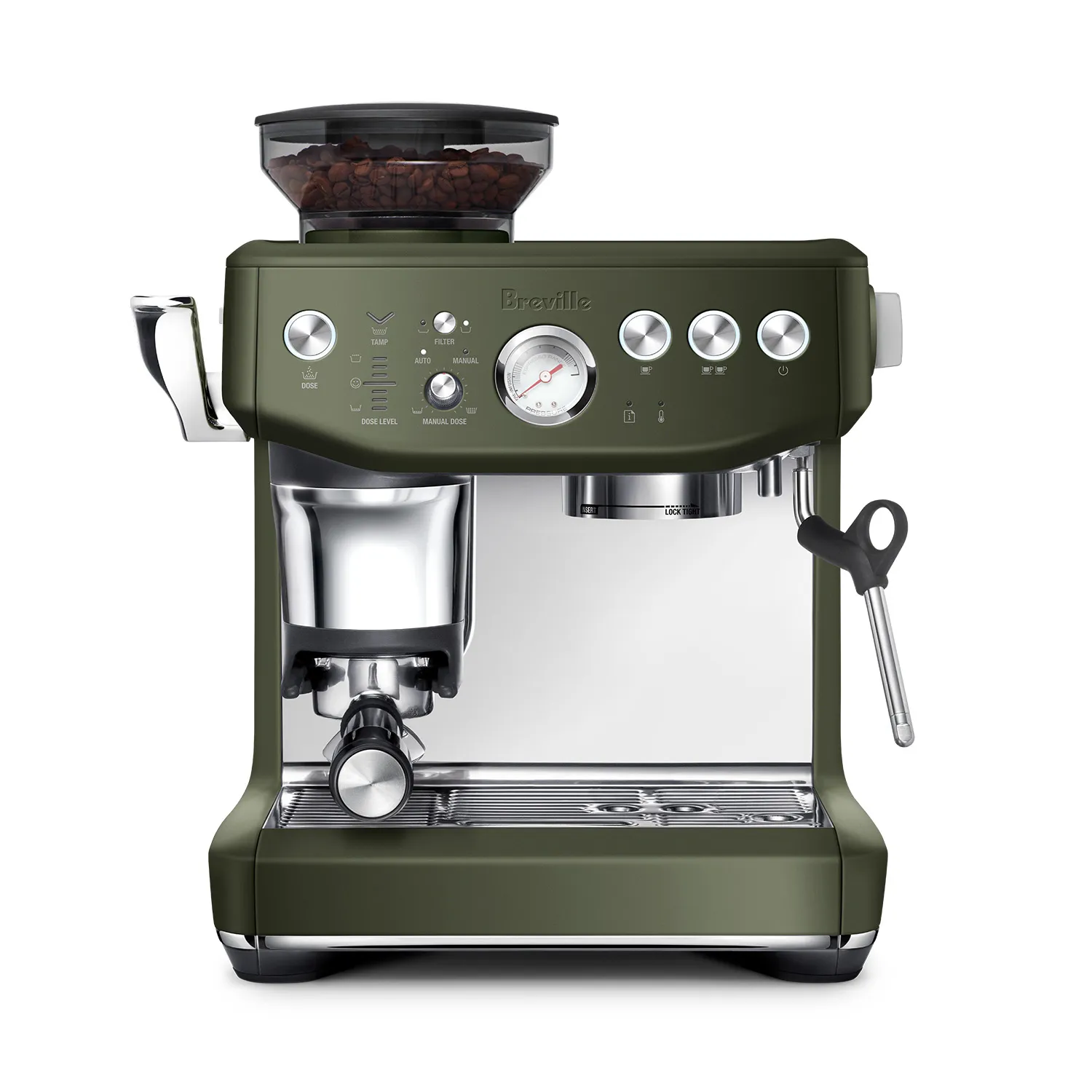
| Product | Best For | Key Feature | Price Range | |
|---|---|---|---|---|
| Breville Barista Express | Best overall | Built-in grinder, PID temp control | $495–$700 | Check Price on Amazon |
 De'Longhi La Specialista Arte Evo | Best for guided brewing | Cold brew capable, guided dosing | $450–$700 | Check Price on Amazon |
 Gaggia Classic Pro E24 | Best for enthusiasts | Commercial-style portafilter | $450–$550 | Check Price on Amazon |
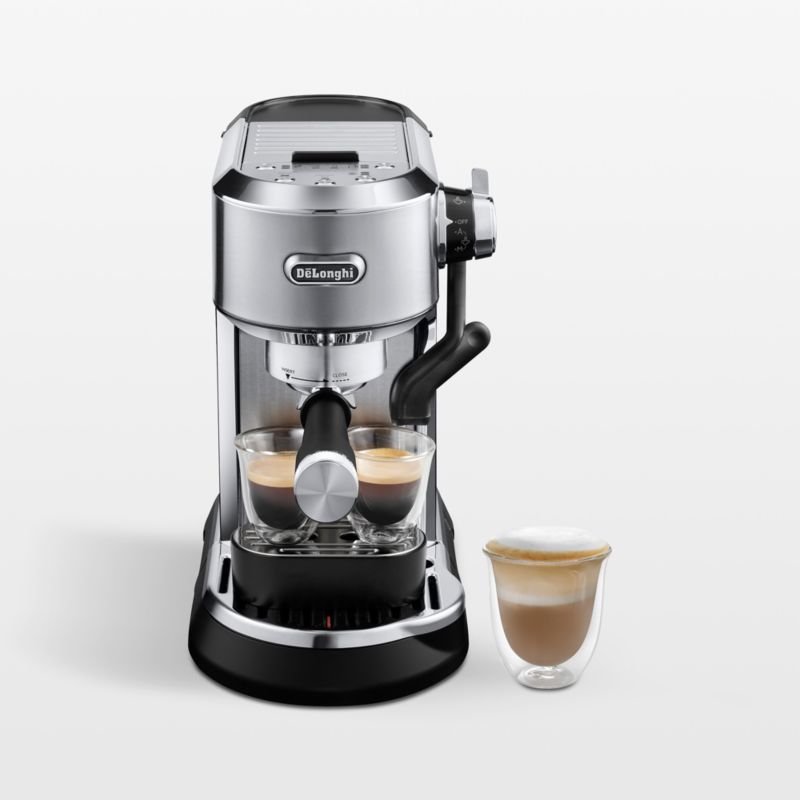 De'Longhi Dedica Maestro Plus | Best compact / budget | Slim 6-inch design, auto steam wand | $150–$250 | Check Price on Amazon |
Prices are ranges at time of writing and change frequently — check Amazon for the current price.
The Barista Express remains the default recommendation for a reason: it combines a conical burr grinder, PID temperature control, a low-pressure pre-infusion stage and a capable steam wand in one box. Based on our research of verified buyer feedback and expert coverage, it is the machine most new home baristas stick with longest, because it grows with you — you can start with the pressurized basket and move to the standard basket as your technique improves. Its usual street price sits just above $500, but Black Friday week frequently brings it down to around the $500 mark or below, which is when it becomes the obvious pick in this guide.
De'Longhi's La Specialista Arte Evo is built for people who want guidance without giving up control. Its dosing guide, tamping lever and temperature profiling take much of the guesswork out of pulling a shot, and it is one of the few machines in this price range that can also make cold brew. Verified buyers frequently praise its forgiving nature for beginners, while expert reviewers note that its steam wand produces genuinely silky microfoam for lattes and cappuccinos. If you mostly drink milk-based coffee and want a machine that coaches you, this is a strong choice.
The Gaggia Classic Pro E24 is the hobbyist's machine. It uses a commercial-style 58mm portafilter, a three-way solenoid valve and a solid, repairable build that has made the Classic line a favorite for decades. The E24 update adds a more modern look and improved steam performance. It has no built-in grinder, so you will need to budget for one separately, but buyers who enjoy the ritual — and the huge aftermarket of upgrade parts — consistently rate it among the best-value espresso machines ever made. Choose this one if you see espresso as a hobby, not just a morning routine.
At roughly six inches wide, the Dedica Maestro Plus fits kitchens where no other real espresso machine will. It heats up fast thanks to its thermoblock system, and its automatic steam wand textures milk with far less practice than a manual wand. The trade-off is a smaller water tank and a pressurized basket system that favors convenience over fine control. For apartment dwellers, occasional drinkers and anyone testing whether home espresso is for them, it is the lowest-risk way in — and at $150–$250 it leaves plenty of budget for good beans.
Five hundred dollars used to buy a compromise. In 2026, it buys a genuinely capable semi-automatic machine. The key specs to understand are pressure, temperature stability and the grinder. Real espresso needs around 9 bars of pressure at the puck; machines advertising 15 or 20 bars are usually quoting the pump's maximum, not what reaches your coffee, so do not let a bigger number impress you. Temperature matters more: water that swings several degrees between shots produces sour, then bitter coffee. That is why PID temperature control — once a feature of $1,000+ machines — is now the single most valuable spec to look for under $500.
Heating systems are the other big difference. Thermoblock machines like the Dedica heat up in under a minute and are ready almost instantly, which suits busy mornings. Single-boiler machines like the Gaggia take longer to heat and make you wait between brewing and steaming, but they deliver more stable temperatures and stronger steam. Neither is objectively better; it depends on whether you value speed or control. Finally, remember that the machine is only half the system. Freshly ground beans matter more than any feature on the box, which is why machines with a built-in grinder punch above their weight for beginners — they remove the most common point of failure.
If you are building out a home kitchen this holiday season, an espresso machine pairs naturally with other countertop upgrades. Our guide to the best stand mixer for bread covers another appliance where spending a little more buys years of use, and our best blender for smoothies roundup is worth a read if morning smoothies share your counter with morning espresso.
This is the first decision most buyers face, and it comes down to convenience versus flexibility. A built-in grinder, as on the Breville Barista Express and the La Specialista Arte Evo, means one box, one plug and beans-to-cup in a single workflow. You save counter space and typically $150–$300 compared with buying a decent standalone grinder, and for most people the grind quality is more than good enough. The downside is lock-in: if the grinder wears out or you outgrow it, replacing it means replacing the whole machine.
A separate grinder gives you a real upgrade path. You can start with an entry-level burr grinder and move up later without touching the machine, and dedicated grinders generally offer finer, more repeatable adjustment — which matters once you start dialing in light-roast beans. The Gaggia Classic Pro E24 is built around this philosophy: the machine itself is simple and repairable, and the grinder is yours to choose. Our research-based take is simple: if you want great coffee with minimal fuss, buy the built-in grinder. If you enjoy the process and expect your taste to evolve, buy the machine and grinder separately. Either way, avoid blade grinders entirely — they produce uneven particles that make consistent espresso nearly impossible.
If your daily order is a latte or flat white, steam power matters as much as the espresso itself. A strong steam wand heats milk quickly and creates the fine microfoam that makes latte art possible; a weak one leaves you with stiff, bubbly foam and lukewarm milk. The Barista Express and La Specialista Arte Evo both produce respectable microfoam, while the Gaggia's commercial-style wand rewards practice with genuinely café-level texture. The Dedica Maestro Plus takes a different approach with an automatic steam wand that does the work for you — less control, but far less to learn.
Be honest with yourself about the learning curve. Every semi-automatic machine in this guide requires a week or two of practice: dosing, tamping, timing your shots and steaming milk are all skills, not buttons. Verified buyer feedback consistently shows the same pattern — people who expect instant café results get frustrated, while people who treat the first two weeks as practice end up loving their machine. Budget for a bag or two of beans to practice with, watch a few tutorials on dialing in, and keep a simple rule in mind: if your shot runs in under 20 seconds it is probably too coarse or under-dosed; over 35 seconds and it is likely too fine. Small adjustments, one variable at a time, will get you there faster than changing everything at once.
Yes. A good machine under $500 with a 9-bar pump, a capable grinder and stable temperature can pull shots that rival many cafés. The biggest quality jump comes from fresh beans and a consistent grind, not from spending more on the machine itself.
A built-in grinder is more convenient and cheaper overall, which is why machines like the Breville Barista Express are so popular. A separate grinder gives you a better upgrade path and finer grind control, but adds cost and counter space.
PID (proportional-integral-derivative) control keeps the brew water at a steady temperature, shot after shot. It matters because temperature swings of even a few degrees change extraction and taste. For beginners it mostly means more consistent results with less guesswork.
Usually yes. Black Friday week (Nov 19–30, 2026) regularly brings $50–$150 off popular models like the Barista Express and De'Longhi machines, which can push a $600 machine into the under-$500 bracket. Check the current price before you buy, as deals sell out fast.
For most buyers, the Breville Barista Express is the best espresso machine under $500 — especially during Black Friday week, when it often dips to the $500 mark. It is the only pick here that solves the grinder problem and the temperature problem in one box. If you love milk drinks and want guidance, the De'Longhi La Specialista Arte Evo is the friendlier choice. If espresso is a hobby you want to grow into, the Gaggia Classic Pro E24 plus a decent grinder will reward you for years. And if space or budget is tight, the De'Longhi Dedica Maestro Plus proves you do not need $500 to make a genuinely good latte at home. Whichever you choose, buy fresh beans, give yourself two weeks to learn the machine, and check the current price before you order — holiday deals change fast.
Kitchen · Espresso
Real espresso on a tight budget. We compared shot quality, steam power, heat-up time and size to pick the best budget espresso machines.
Read ReviewKitchen · Baking
Heavy dough needs a heavy-duty mixer. We compared bowl-lift power, dough capacity and durability to find the best bread mixers.
Read ReviewKitchen · Blenders
Silky smoothies start with real power. We compared motor strength, blade design and presets across the top smoothie blenders.
Read Review