Sleep · Mattresses
Best Mattress for Hot Sleepers (2026) — Top Picks
The best mattress for hot sleepers in 2026: Brooklyn Bedding Aurora Luxe, Saatva Classic and Purple RestorePremier compared on cooling and comfort.
Read Review
| Product | Best For | Key Feature | Price Range | |
|---|---|---|---|---|
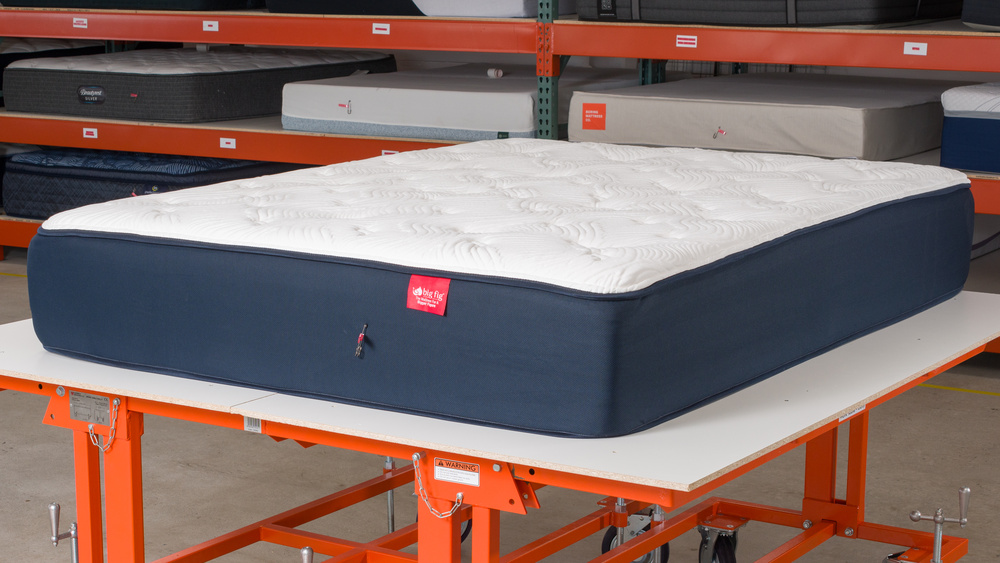 Big Fig Classic Mattress | Highest weight capacity | Up to 1,200 lbs total; latex layer + up to 1,600 coils | $1,200–$1,900 | Check Price on Amazon |
 Titan Plus Luxe Mattress | Medium-firm comfort | Up to 1,000 lbs total; six layers of high-density foam | $900–$2,200 | Check Price on Amazon |
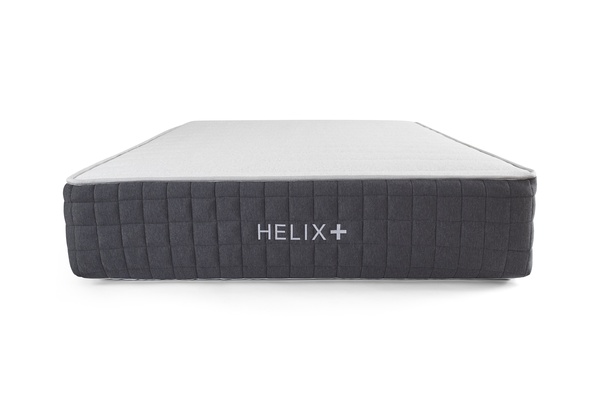 Helix Plus Mattress | Best value | Up to 1,000 lbs total; firm 7/10 hybrid, strong edge support | $650–$1,450 | Check Price on Amazon |
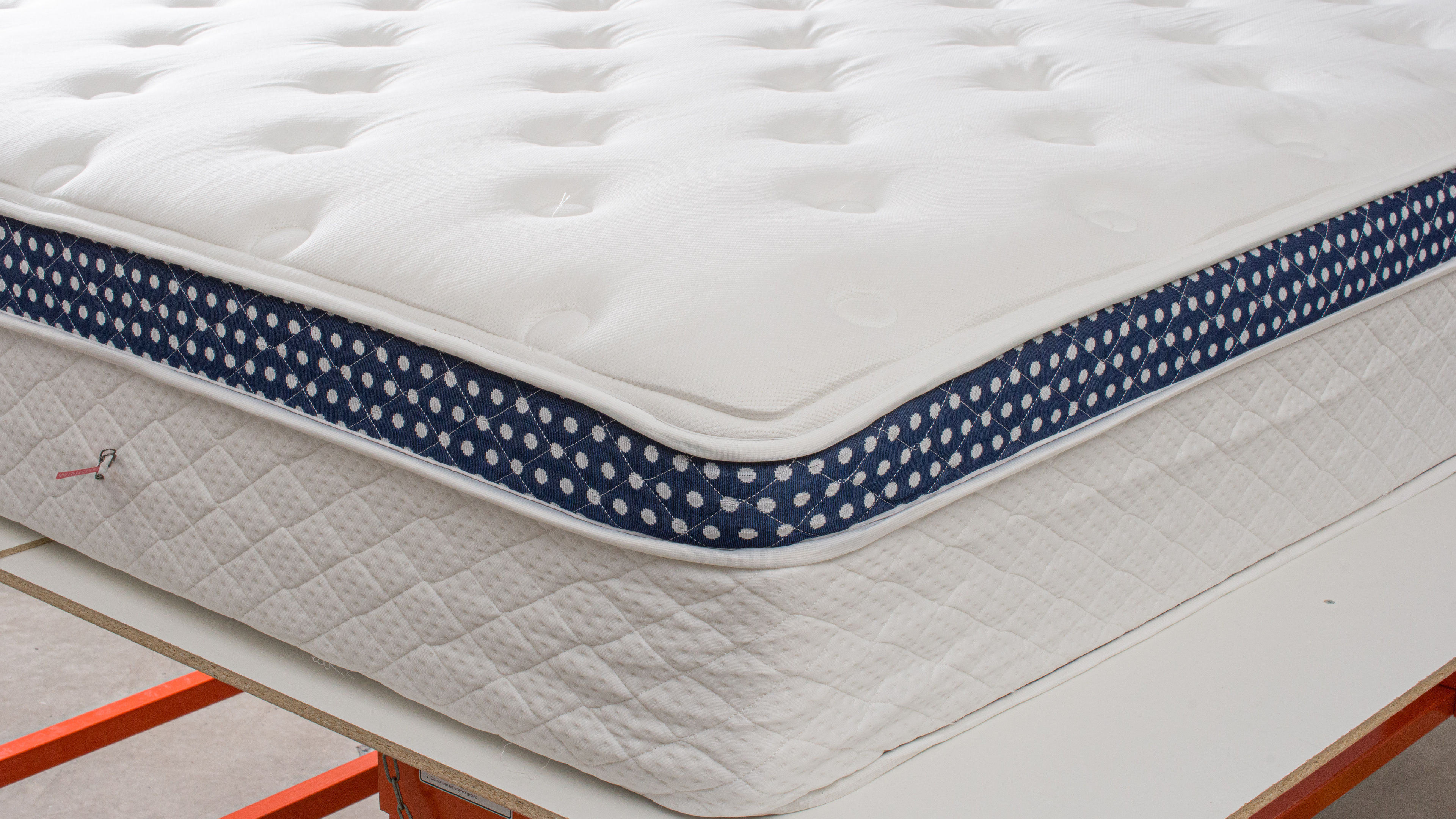 WinkBed Plus Mattress | Latex durability | Up to 900 lbs total; 2.5″ latex over zoned pocketed coils | $1,350–$2,300 | Check Price on Amazon |
A standard mattress is designed around an average-weight sleeper, and that assumption breaks down once body weight rises. Sleep experts generally treat 230 pounds and above as the heavyweight category, and above that line the same mattress behaves differently: foams compress further, a "medium-firm" feel turns soft, and the hips sink lower than the shoulders, which can pull the spine out of alignment. That is why the best mattress for heavy people is not simply a firmer version of a normal bed — it is built differently from the inside out.
The first thing our research looked at is support, which is not the same as firmness. Firmness is how hard the surface feels when you lie down; support is how well the mattress keeps your spine in a neutral line and resists bottoming out over time. A heavy sleeper needs both: enough firmness to stay on top of the bed rather than sinking into it, and a support core strong enough to hold that position night after night. In practice, that means a hybrid construction — comfort foam on top of a coil unit — rather than an all-foam bed. Coils push back against weight in a way foam alone cannot, and they let air move through the mattress, which helps with cooling.
Foam density is the second key factor. Low-density foam softens and develops body impressions quickly under heavy weight, while high-density foam holds its shape far longer. Big Fig, for example, states that its comfort foam has a minimum density of 1.8 pounds per cubic foot, which it describes as over 50 percent denser than the foam in a standard innerspring mattress. Coil strength matters just as much: thicker-gauge steel coils and a higher coil count spread weight more evenly, and individually wrapped coils let each spring respond on its own, which also limits motion transfer between partners.
Edge support deserves special attention. On a standard mattress the perimeter is often the weakest part, and heavier sleepers notice it first — the edge dips when you sit to put on shoes, and the usable sleep surface shrinks because the outer few inches feel unstable. Heavy-duty models reinforce the perimeter with denser foam rails or thicker coils around the edge. The Helix Plus, for instance, uses thicker coils around its reinforced perimeter, and independent lab testing highlighted its edge support as a standout strength. Finally, look at durability evidence and warranty length: a 20-year or lifetime warranty is a meaningful signal that the manufacturer expects the materials to hold up, and Big Fig goes further, stating that it third-party tested the Classic to simulate 20 years of use with a 350-pound weight.
Cooling is the last piece of the puzzle. Heavier bodies press deeper into comfort layers, which reduces airflow and traps more heat, so a mattress that sleeps cool for an average-weight person can sleep warm for a heavier one. Open coil systems, breathable covers, gel-infused latex and optional cooling pillow tops all help — and if you tend to sleep hot, our guide to the best mattress for hot sleepers covers cooling designs in more depth.
Big Fig Classic — our top pick. Big Fig is the only company in this guide that builds mattresses exclusively for heavier people, and that focus shows in the construction. The 13-inch hybrid combines a layer of perforated, gel-infused latex with three layers of high-density foam over up to 1,600 individually wrapped 15-gauge coils (in king size), and every mattress is hand-tufted so the layers cannot shift. Big Fig states the Classic supports up to 1,200 pounds total — 600 pounds per sleeper — the highest figure we found, and it rates the feel at 7 to 8 out of 10 on its firmness scale. The cover uses ThermoGel cooling technology, the edges are reinforced with the firmest foam in the build, and the package includes a 120-night sleep trial and a 20-year warranty. The trade-offs are real: buyers report that it feels firm, especially for side sleepers, and at around 100 pounds or more in queen size it is a two-person job to set up. The queen carries a manufacturer list price of $1,899, with sale prices commonly lower.
Titan Plus Luxe — best medium-firm feel. From Brooklyn Bedding, the Titan Plus Luxe is a 13-inch hybrid built around six layers of high-density foam over individually wrapped TitanCore steel coils, and the manufacturer rates it for up to 1,000 pounds total (500 pounds per side). Expert reviewers describe it as a true medium-firm at about 6.5 out of 10, which makes it the most forgiving option here for heavy side sleepers and combination sleepers who change position during the night. It also earns praise for responsiveness and motion isolation, and for working well for heavier couples. The price range runs $899 to $2,198 before discounts, with the queen listed at $1,599 before the brand's frequent sales, and current Titan listings include a 365-night trial. One honest drawback reported by reviewers: edge support scores are weaker than the rest of the bed, so test the perimeter if you sleep near it.
Helix Plus — best value. The Helix Plus is the most affordable way into a genuinely heavy-duty mattress. This 11.5-inch hybrid pairs two foam comfort layers with thick pocketed coils and extra reinforcement in the hip and shoulder zones, and Helix states it is designed to support up to 1,000 pounds combined. Independent lab testing rated it firm at 7 out of 10 and found it especially strong for side sleepers over 230 pounds, with excellent edge support and above-average temperature control thanks to airflow through the open coil system. It comes with a 365-night sleep trial and a lifetime warranty, and an optional GlacioTex cooling pillow top adds about an inch of height for hot sleepers. The price range is $649 to $1,449, with the queen typically around $1,199. The main compromise is motion transfer: the bouncy, responsive build means you may feel a partner moving on the other side.
WinkBed Plus — best latex durability. The WinkBed Plus takes a different route to the same goal, swapping soft top foam for 2.5 inches of dense latex over extra-strong zoned pocketed coils, with an anti-sag foam layer on top. Latex springs back quickly under heavy weight instead of holding a body impression, which is why it is a smart pick for sleepers worried about long-term sagging. WinkBeds designs it for sleepers from 250 to over 500 pounds, and expert coverage puts its combined weight capacity at up to 900 pounds (450 pounds per side). It also includes the brand's 3-Step Back Relief System and LumbarLayer for spinal alignment, which is why it is a strong option if back pain is part of the picture — see also our guide to the best mattress for back pain. It stands 13.5 inches tall, comes with a 120-night trial and a lifetime limited warranty, and the queen lists at $1,999, with $300-off promotions common. Note that WinkBeds says it durability-tested the model by simulating 20 years of use by a 350-pound person. The firm-supportive feel can be too rigid for lightweight side sleepers, so it is best suited to the heavier sleepers it was built for.
Sleep position changes the answer more than most buyers expect, because the same body weight loads a mattress very differently on your side, back or stomach. Side sleepers press their weight into a small area at the shoulders and hips, so they need enough cushioning to avoid pressure points — and heavy side sleepers often do better on the slightly softer end of the heavy-duty range, such as the Titan Plus Luxe or the Helix Plus, which lab testing found especially comfortable for side sleepers over 230 pounds. If you sleep mainly on your side, our guide to the best mattress for side sleepers goes deeper on pressure relief.
Back sleepers have the easiest brief: a firm, flat surface that keeps the lower back supported without letting the hips sink. All four mattresses in this guide suit back sleepers, and the Big Fig Classic and WinkBed Plus are particularly strong here because their firm support and lumbar reinforcement hold the spine level. Stomach sleepers need the firmest support of all, since a soft surface lets the abdomen drop and bends the lower back into a U shape; the Big Fig Classic and the Titan Plus Luxe (in its firmer core form) are the safest choices, while the plushest options in any range should be avoided.
Couples should weigh two extra factors: combined weight capacity and motion isolation. Add both partners' weights together and check the total against the manufacturer's figure — a 900-pound combined limit is plenty for most couples, but two heavier partners should aim for the 1,000- or 1,200-pound models. Motion isolation matters too: the Big Fig's individually wrapped coils and the Titan Plus Luxe's dense foams both limit how much one partner's movement reaches the other, while the Helix Plus is bouncier and transfers more motion. Finally, remember that firmness is relative to body weight. Expert coverage notes that the WinkBed Plus, rated 8 out of 10, feels closer to 6.5 to sleepers over 300 pounds — so if you are on the heavier end, choose a firmer model than your instincts suggest, and use the sleep trial to confirm the feel at home.
Check the stated weight capacity first. Only trust a number the manufacturer itself publishes, and check whether it is per sleeper or combined. Big Fig states up to 1,200 pounds total, the Titan Plus Luxe and Helix Plus up to 1,000 pounds combined, and the WinkBed Plus up to 900 pounds combined. If a brand will not state a number at all, treat that as a warning sign.
Choose hybrid over all-foam. Every mattress in this guide is a hybrid, and that is no accident: a coil support core resists sagging, sleeps cooler and makes it easier to change position than a thick stack of foam. All-foam beds can work for lighter sleepers, but heavier bodies tend to sleep "in" them rather than "on" them, and body impressions form faster.
Match firmness to your weight and position. As a rule of thumb, sleepers from 230 to 300 pounds do well at medium-firm (around 6 to 7 out of 10), while sleepers above 300 pounds should look at firm (7 to 8 out of 10). Side sleepers can go a touch softer; stomach sleepers should go firmer. Remember that the same mattress feels softer the heavier you are.
Do not skip the foundation. A heavy-duty mattress still needs a strong base. Use a solid platform, a heavy-duty metal or wood frame with center support legs, or the manufacturer's own foundation — Big Fig, for example, builds its foundation with 18 slats and double center rails and says it supports five times the weight of a standard foundation. A weak or widely spaced slatted base can void the warranty and cause sagging that is not the mattress's fault.
Use the trial and read the warranty. Every model here offers a long sleep trial — 120 nights for the Big Fig Classic and WinkBed Plus, 365 nights for the Titan Plus Luxe and Helix Plus — so give the mattress at least 30 nights before judging it, since foam and coils need a break-in period. On warranties, note the length (10 years, 20 years or lifetime) and the sagging threshold: most warranties only cover impressions deeper than a stated measurement, so keep your receipt and foundation details.
Budget realistically. Heavy-duty mattresses cost more than standard ones because they use denser foam, thicker steel and more coils. Expect roughly $650 to $2,300 across sizes, with queens typically running $1,000 to $2,000. Sales are frequent — all four brands run near-constant promotions — so compare the sale price, not the list price, and confirm the price before ordering, since prices change often.
Sleep experts generally treat 230 pounds and above as the heavyweight category. Above that weight, standard mattresses tend to feel softer than advertised, sag sooner, and lose edge support, which is why manufacturers build dedicated heavy-duty models with denser foam and stronger coils.
It depends on the model, and you should always use the manufacturer’s stated figure. Big Fig states its Classic supports up to 1,200 pounds total (600 pounds per sleeper). The Titan Plus Luxe and the Helix Plus are both rated for up to 1,000 pounds combined, and the WinkBed Plus is rated for up to 900 pounds combined (450 pounds per side).
In most cases, yes — a medium-firm to firm feel (roughly 6 to 8 on a 10-point firmness scale) works best, because it keeps the hips and lower back supported instead of sinking. Firmness is also relative to body weight: a bed that feels like an 8 out of 10 to a lighter sleeper can feel closer to a 6.5 to someone over 300 pounds, so heavier sleepers should choose a firmer model than they think they need.
A well-built heavy-duty hybrid should last longer than a standard mattress for the same sleeper, because high-density foam and strong pocketed coils resist the compression that causes sagging. Big Fig says it third-party tested the Classic to simulate 20 years of use with a 350-pound weight. Warranties are a useful signal: the models in this guide carry 10-year, 20-year or lifetime warranties, but always read the warranty terms, since sagging is usually only covered beyond a stated depth.
For most heavy sleepers, the Big Fig Classic is the best mattress for heavy people in 2026. It is the only option here designed from the ground up for plus-size bodies, it carries the highest manufacturer-stated weight capacity at up to 1,200 pounds total, and its latex-and-coil hybrid build, hand-tufted construction and 20-year warranty are all aimed squarely at long-term durability. If the budget is tight, the Helix Plus delivers the same 1,000-pound rating and strong edge support for hundreds less, and it is the best value pick in this guide. If you want a softer, more forgiving medium-firm feel, choose the Titan Plus Luxe, and if long-term sag resistance and lumbar support matter most, the latex-built WinkBed Plus is the pick. Whichever you choose, confirm the manufacturer's weight rating, put it on a strong foundation, and use the full sleep trial before deciding — a mattress is only the right one if it still feels supportive after a month of real nights.
Sleep · Mattresses
The best mattress for hot sleepers in 2026: Brooklyn Bedding Aurora Luxe, Saatva Classic and Purple RestorePremier compared on cooling and comfort.
Read ReviewSleep · Mattresses
Wake up pain-free. We compared firmness, lumbar support and pressure relief across top hybrids to find the best mattresses for back pain.
Read ReviewSleep · Mattresses
Side sleepers need pressure relief at the shoulders and hips. We compared the best mattresses for side sleeping — comfort, support and cooling.
Read Review