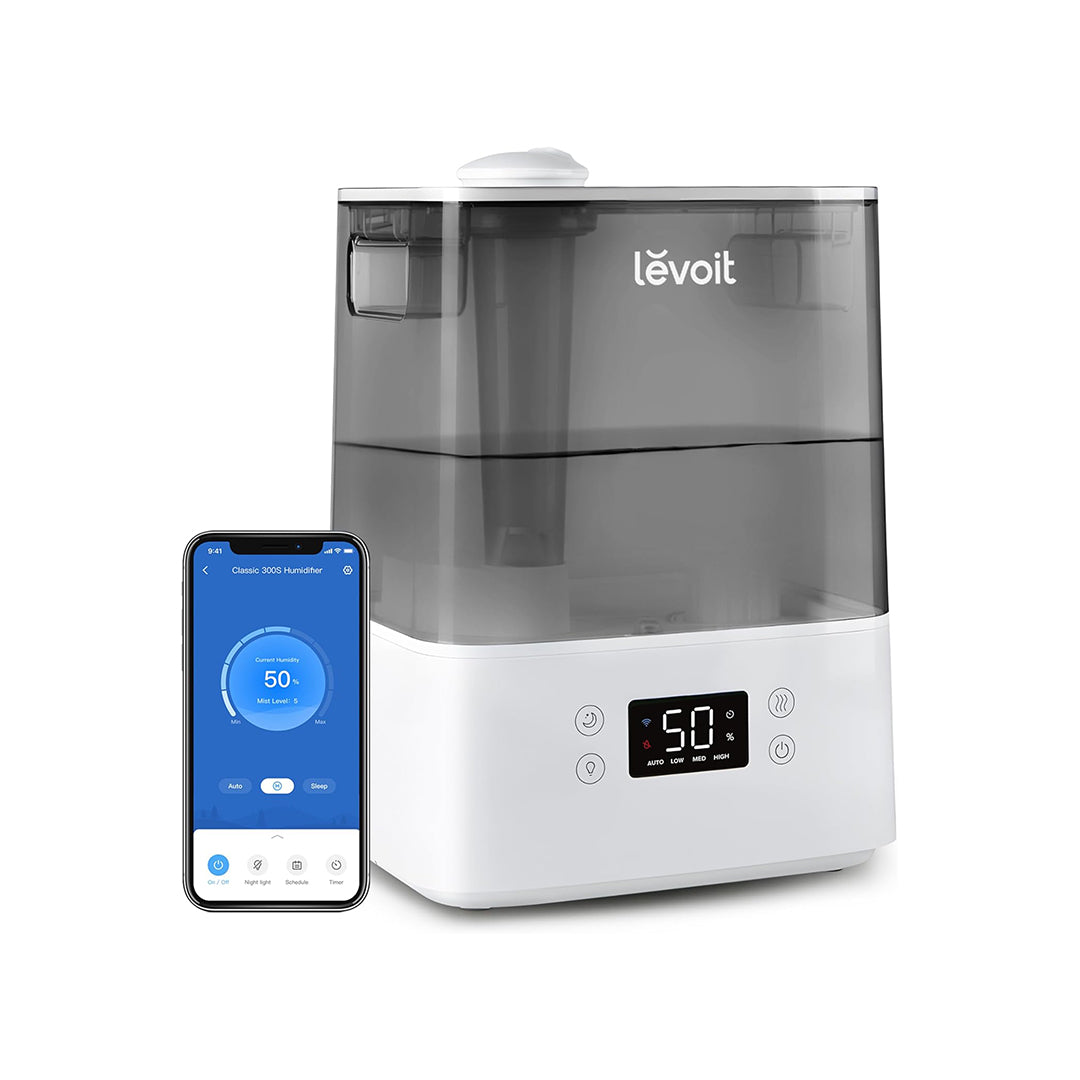
Home Comfort · Air Quality
Best Humidifier for Bedroom (2026)
Quieter sleep, easier breathing. We compared tank size, runtime, mist type and smart controls to find the best bedroom humidifiers.
Read Review
| Product | Best For | Key Feature | Price Range | |
|---|---|---|---|---|
| Dreo Solaris Max | Best space heater for large rooms overall | 1,500 W, 70° oscillation, 100–270 sq ft, 32 dB, ECO mode | $75–$100 | Check Price on Amazon |
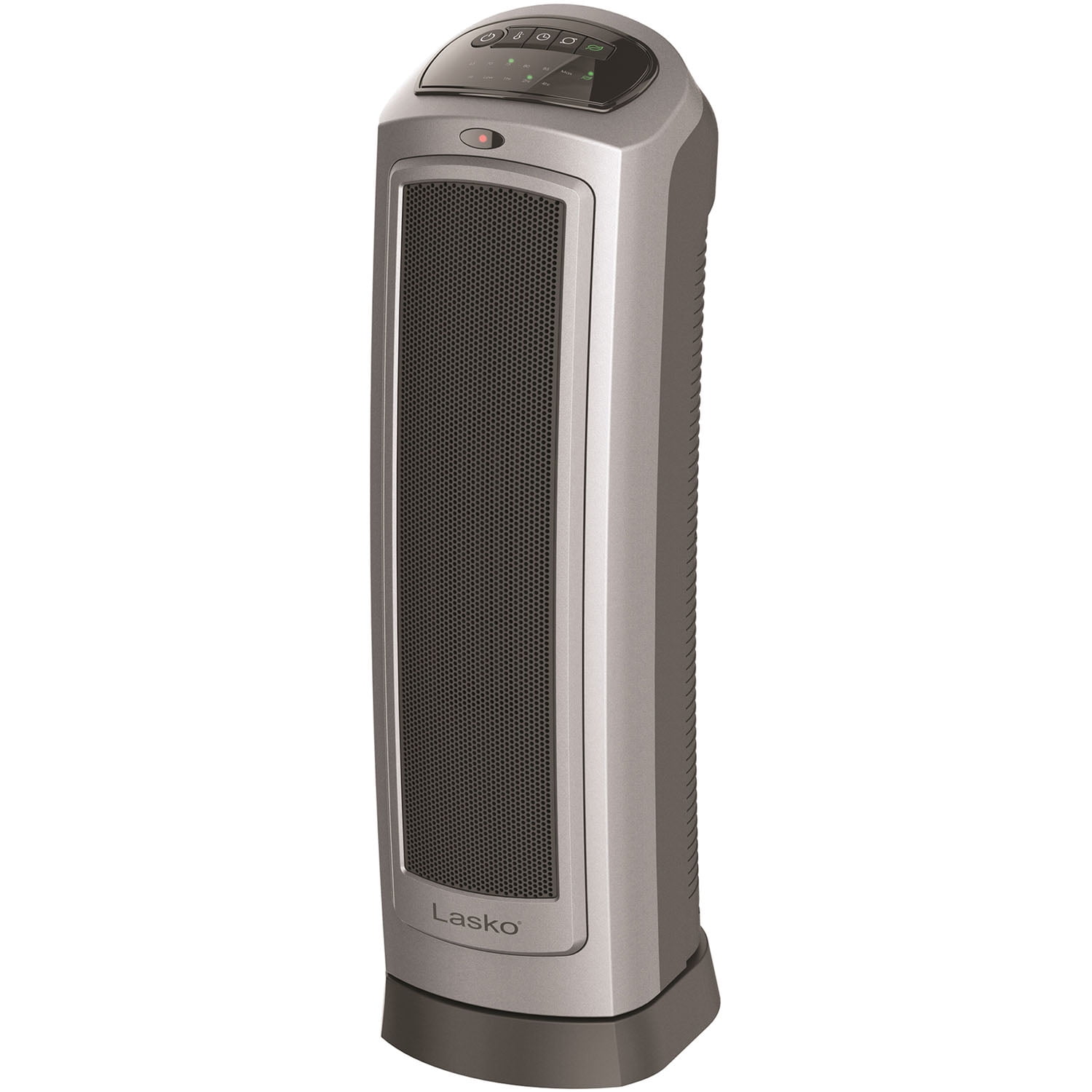 Lasko Oscillating Ceramic Tower Heater | Best budget tower heater | 1,500 W ceramic, remote control, 7-hour timer, 3-year warranty | $55–$80 | Check Price on Amazon |
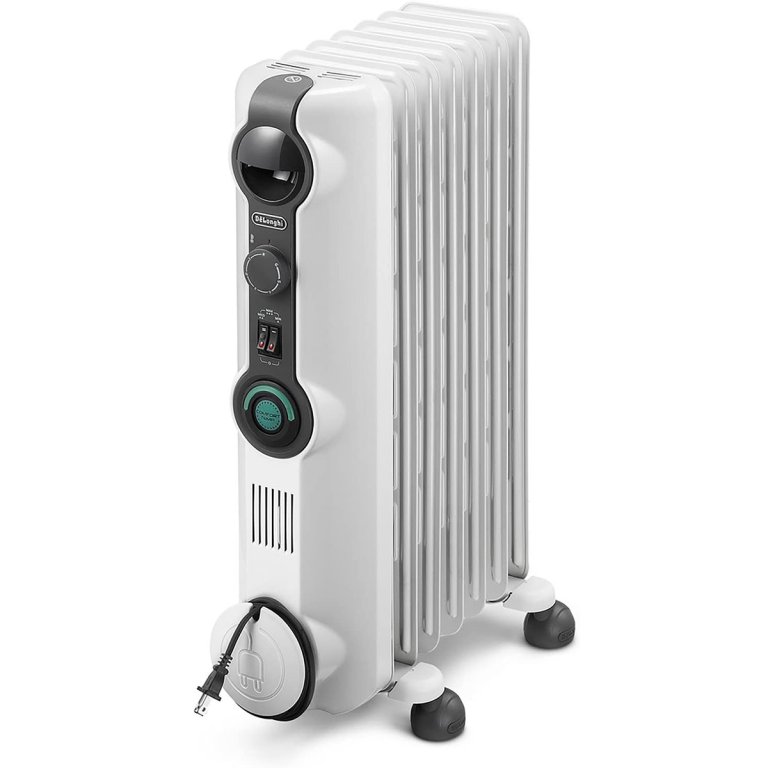 De'Longhi Oil-Filled Radiator Heater | Best silent heater for bedrooms | Dragon TRD40615E, 1,500 W, 24-hour timer, ECO Plus, no fan noise | $150–$190 | Check Price on Amazon |
Prices are ranges at time of writing and change frequently — check Amazon for the current price.
We compared manufacturer specifications and published expert coverage, weighting coverage and heat distribution (30%), noise (20%), safety features (20%), controls and timers (15%) and value (15%). This is a research-based comparison of specs and published test results, not a hands-on test. One fact frames the whole guide: a standard 15-amp household outlet caps any plug-in electric heater at 1,500 W, about 5,118 BTU per hour. Every heater in this guide runs at that ceiling, so wattage cannot separate them — what matters is how the heat is distributed, how quietly, and how safely.
That is why the three picks use three different heating strategies. The Dreo Solaris Max is a ceramic fan tower: a PTC ceramic element heats up in about two seconds and a brushless DC fan pushes warm air across the room at up to 11.5 feet per second, sweeping it with 70-degree oscillation. The Lasko is the same idea at a lower price — a 1,500 W elongated ceramic element with widespread oscillation and a remote. The De'Longhi Dragon is the opposite approach: sealed oil inside steel fins is heated and radiates warmth passively, with no fan at all, so the heat is slower, steadier and completely silent. For a large room you use in the evening, the fan tower wins on speed; for a bedroom you sleep in, the radiator wins on silence. Safety was a hard filter for all three: the U.S. Consumer Product Safety Commission estimates portable heaters are involved in an average of 1,600 fires a year, causing about 70 deaths and 150 injuries annually, so every pick here carries tip-over and overheat protection and certification from a nationally recognized testing laboratory.
The Dreo Solaris Max (2nd gen, model DR-HSH013) is the most capable large-room heater here. It lists at $89.99, runs 1,000–1,500 W across four heating modes plus fan-only, and Dreo rates it for 100–270 sq ft — the widest coverage claim in this guide, and the only one aimed squarely at large rooms. Its thermostat adjusts from 41 to 95 degrees in 1-degree increments, the 1–12 hour timer and remote control (26-foot range) come in the box, and at 32 dB on its spec page it is the quietest fan heater of the three. The tower stands 26.77 inches tall on an 8.66-inch base and weighs 8.83 lb, with a V-0 flame-retardant shell, tip-over shutoff and overheat protection. The ECO mode steps power automatically to hold your target temperature instead of cycling on and off at full power. The trade-off is the 12-month warranty, the shortest here, and a footprint that tips more easily than a low, wide radiator — give it a clear spot away from chair wheels and foot traffic.
The Lasko Oscillating Ceramic Tower Heater (CT22539) is the budget pick and one of Amazon's best-selling space heaters, with tens of thousands of five-star ratings. It lists around $60, runs 1,500 W on high and 900 W on low, and pairs an elongated ceramic element with widespread oscillation, a digital thermostat adjustable from 60 to 85 degrees, a 7-hour timer and a multi-function remote. It is 22.5 inches tall, weighs under 6 lb by some listings (about 8.8 lb by others — the weight varies by listing), and carries a 3-year limited warranty, the longest here. The honest limitation is coverage: the listing rates it for up to 150 sq ft, which makes it a large-bedroom heater rather than a great-room heater, and its fan is noticeably louder than the Dreo's at full power. Buy it for a bedroom or home office; buy the Dreo for a living room. Check the Lasko Tower Heater Price on Amazon
The De'Longhi Dragon TRD40615E is the premium silent option, listing at $189.95. It is a 1,500 W oil-filled radiator with De'Longhi's Dragon4 chimney fins, which the maker says give 75% more radiant surface area than its older RadiaS line. The digital LED panel offers three heat settings, an adjustable thermostat, a 24-hour programmable timer and an ECO Plus mode that steps between power levels to hold temperature, plus a child lock, thermal cut-off and anti-freeze mode that switches the heater on if the room drops below 41 degrees. It weighs 26.6 lb and rolls on pre-assembled SmartSnap caster wheels. The silence is the reason to buy it — there is no fan, so there is no noise at all — and the heat lingers after the element cycles down. The price is a 20–30 minute warm-up from cold, so the 24-hour timer is not a luxury: set it to start half an hour before you need the room warm. Check the De'Longhi Dragon Price on Amazon
A space heater is a portable electric heater that warms one room rather than a whole house, and there are three ways it does the job. Ceramic fan heaters pass air over a heated ceramic element and blow it into the room — fast, directional, and the only type that can spread heat across a large space quickly, especially with oscillation. Oil-filled radiators heat sealed diathermic oil inside steel fins, which radiates warmth passively — slow to start, silent, and even. Infrared heaters warm people and objects directly rather than the air, which feels immediate but covers a narrow area. For a large room, the ceramic tower with oscillation is the practical default, and the oil-filled radiator is the specialist for bedrooms and long, quiet sessions.
The running cost is the same for all three at full power, because the physics is fixed: 1,500 W at the U.S. average of about $0.17 per kWh costs roughly $0.26 an hour. The difference is how often the heater runs at full power. A thermostat and an ECO mode that steps power down once the room reaches temperature cut the average draw sharply — which is why the Dreo's ECO mode and the De'Longhi's ECO Plus matter more than their headline wattage. Close the doors, draw the curtains, and let the thermostat do its job; heating a room with the door open to the hallway is heating the hallway. If the room is genuinely large — an open-plan living and dining area over 300 sq ft — one 1,500 W heater will not hold the temperature on a cold night, and two smaller heaters placed at opposite ends beat one big one in the middle. For the other half of winter comfort, our best humidifier for bedroom guide covers why heated winter air feels dry and what fixes it.
Space heater safety is not a footnote — it is the first thing to get right, because the CPSC's numbers are stark. Portable heaters, including electric space heaters, are involved in an average of 1,600 fires per year, resulting in an average of 70 deaths and 150 injuries annually from 2020 to 2022. The Commission's guidance is specific and worth following exactly: keep portable heaters at least three feet away from drapes, furniture, bedding and other combustible materials; plug electric space heaters directly into a wall outlet, never into an extension cord or power strip; place the heater on a stable, level, hard surface where it cannot be knocked over; turn heaters off when sleeping or leaving the room; and never place a heater close to a sleeping person. Keep children and pets away, and make sure working smoke alarms are installed on every floor, outside all sleeping areas and inside each bedroom.
When you buy, choose a heater that has been tested to the latest safety standards and certified by a nationally recognized testing laboratory — all three picks here are ETL-listed or equivalent — and look for a guard around the heating element, a tip-over switch and overheat protection. Never use a portable electric heater in a bathroom unless it is specifically designed for that use, and never leave any space heater running unattended in a confined space around infants or people with reduced mobility. The 3-foot rule is the one to remember: three feet of clear space in every direction, every time. For homes where damp is the winter problem rather than cold, our best dehumidifier for basement guide covers the other side of winter air, and our best air purifier for pets guide covers the dander that a dry, heated room stirs up.
The Dreo Solaris Max (2nd gen) is the best space heater for most large rooms — 1,500 W, 70-degree oscillation covering 100–270 sq ft, a thermostat adjustable in 1-degree steps, and just 32 dB of noise. The De'Longhi Dragon TRD40615E is the best silent choice for bedrooms, with no fan at all. The Lasko Oscillating Ceramic Tower Heater is the best budget pick, but its listing rates it for up to 150 sq ft, so it suits large bedrooms better than great rooms.
A standard 15-amp household outlet caps any plug-in electric heater at 1,500 W, about 5,118 BTU per hour, and all three picks here run at that maximum. Wattage alone does not heat a large room — oscillation, fan airflow and heat type matter more. A 1,500 W ceramic tower with 70-degree oscillation spreads heat across 100–270 sq ft, while a 1,500 W oil-filled radiator warms the same space more slowly and evenly. For a very large open-plan room, one heater is rarely enough.
No — the U.S. Consumer Product Safety Commission advises turning space heaters off when you sleep or leave the room, and never placing one close to a sleeping person. Portable heaters are involved in an average of 1,600 fires a year, causing about 70 deaths and 150 injuries annually. Keep the heater at least three feet from bedding, drapes and furniture, plug it directly into a wall outlet — never an extension cord or power strip — and use a model certified by a nationally recognized testing laboratory.
A ceramic fan heater like the Dreo Solaris Max warms a room in minutes and spreads heat with oscillation, so it is better for a living room you want warm quickly. An oil-filled radiator like the De'Longhi Dragon is silent and gives steady, even heat that lingers after it switches off, so it is better for a bedroom or home office where you sit for hours. The radiator takes 20–30 minutes to reach full output from cold, so use its 24-hour timer to start it before you need the warmth.
Buy the Dreo Solaris Max for a living room or large open space: the widest coverage, the quietest fan, the finest thermostat control, and the best price for what it does. Buy the De'Longhi Dragon for a bedroom: silent, steady, and safe to run for hours while you sleep nearby — just set the timer 30 minutes early. Buy the Lasko tower for a bedroom or home office on a budget: it does the same job as the Dreo in a smaller space, with the longest warranty of the three. Whichever you choose, respect the 3-foot rule, plug it straight into the wall, and switch it off when you leave the room or go to sleep — the best space heater is the one that keeps you warm without ever becoming a fire risk.
Home Comfort · Air Quality
Quieter sleep, easier breathing. We compared tank size, runtime, mist type and smart controls to find the best bedroom humidifiers.
Read ReviewHome Comfort · Air Quality
The best air purifier for pets in 2026: Levoit Core P350, Winix 5500-2 and Blueair 211i Max compared on pet dander, odour and room coverage.
Read ReviewHome Comfort · Gift Guide
The gift of easier breathing: True HEPA purifiers from Coway, Levoit, Blueair and Winix, compared on verified CADR, noise and room size.
Read Review
