Kitchen · Espresso
Best Espresso Machine Under $300 (2026)
Real espresso on a tight budget. We compared shot quality, steam power, heat-up time and size to pick the best budget espresso machines.
Read Review
This guide is research-based. We compared manufacturer specifications, aggregated verified-buyer feedback and reputable expert coverage for each machine, then scored them on the same criteria: brew quality and temperature stability, ease of use for a first-timer, milk frothing, build quality and value for money. We did not hands-on test these machines — where a verdict rests on research rather than first-hand use, this guide says so, and every specification below comes from the manufacturer's own product page (linked in Sources & Further Reading). Prices are shown as ranges only, because street prices change often; check the live price on Amazon before you buy. Our full method is set out in our Editorial Policy.
| Product | Best For | Key Feature | Price Range | |
|---|---|---|---|---|
| Breville Bambino | Most beginners | 3-second ThermoJet heat-up, PID temperature control | $250–$350 | Check Price on Amazon |
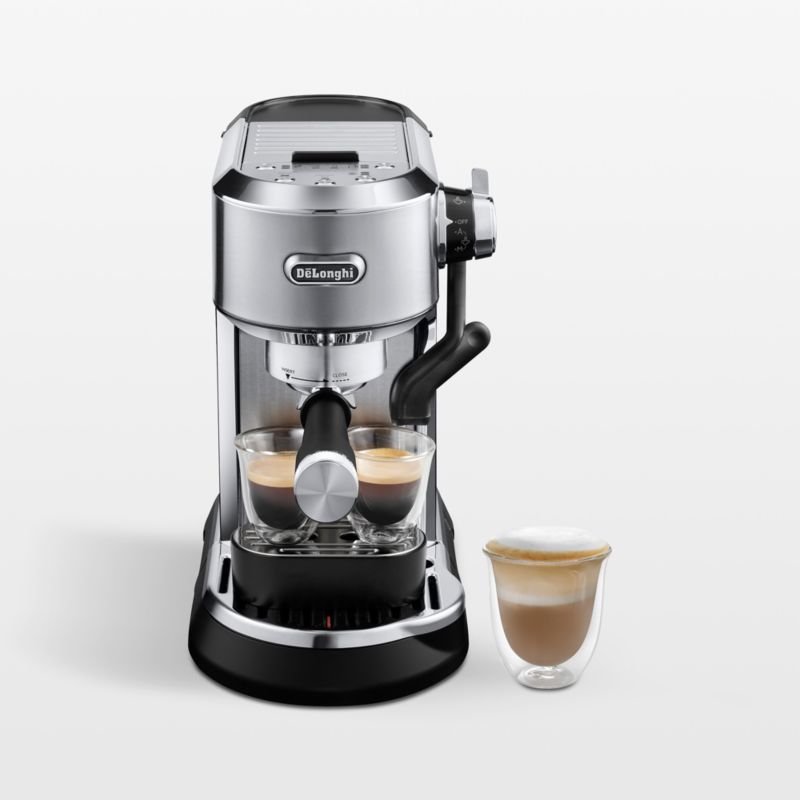 De'Longhi Dedica Maestro Plus | Hands-off milk drinks | Auto LatteArt steam wand, 3 brew temperatures | $200–$500 | Check Price on Amazon |
 Gaggia Classic Pro E24 | Learning real barista skills | 58mm commercial portafilter, brass boiler, 9-bar OPV | $400–$550 | Check Price on Amazon |
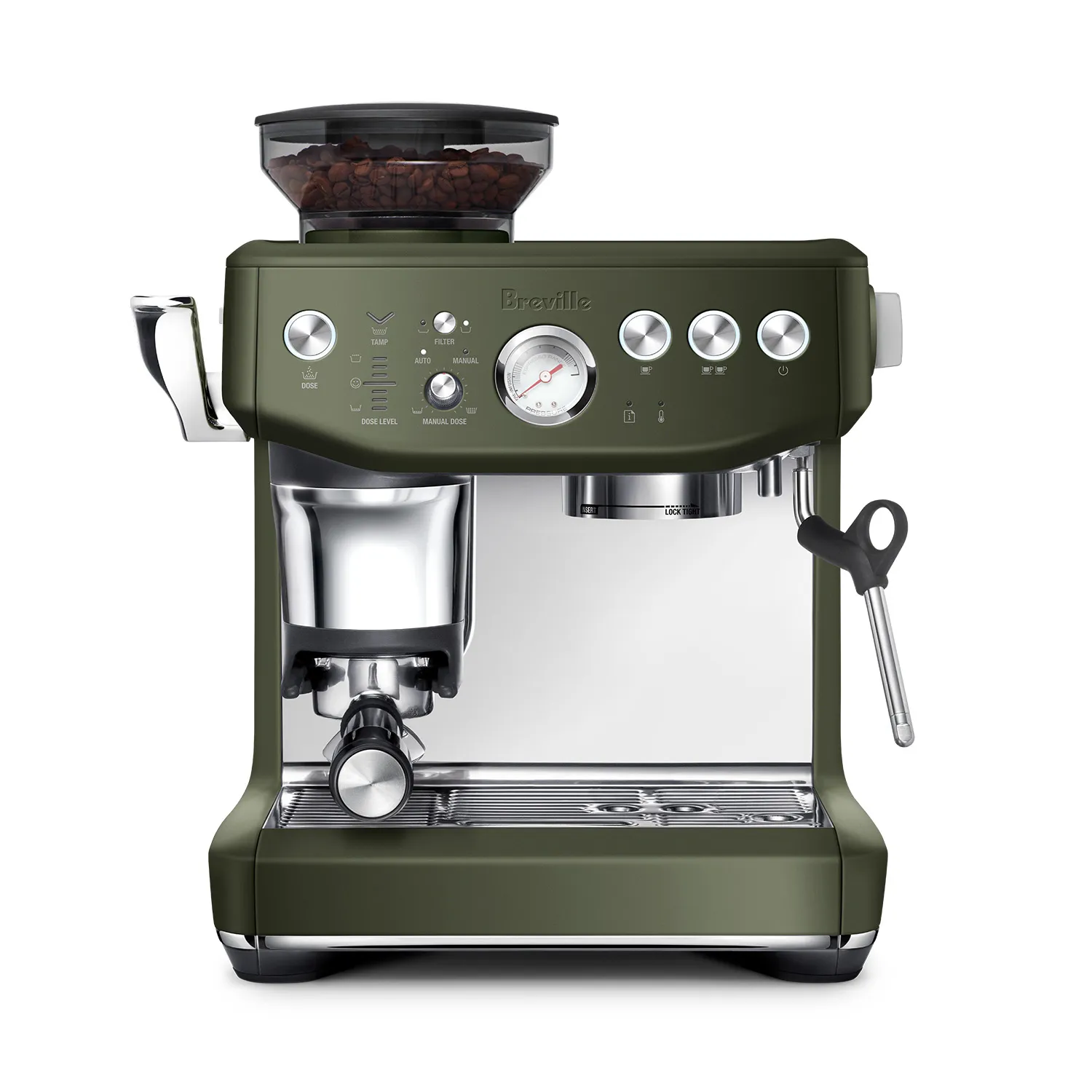
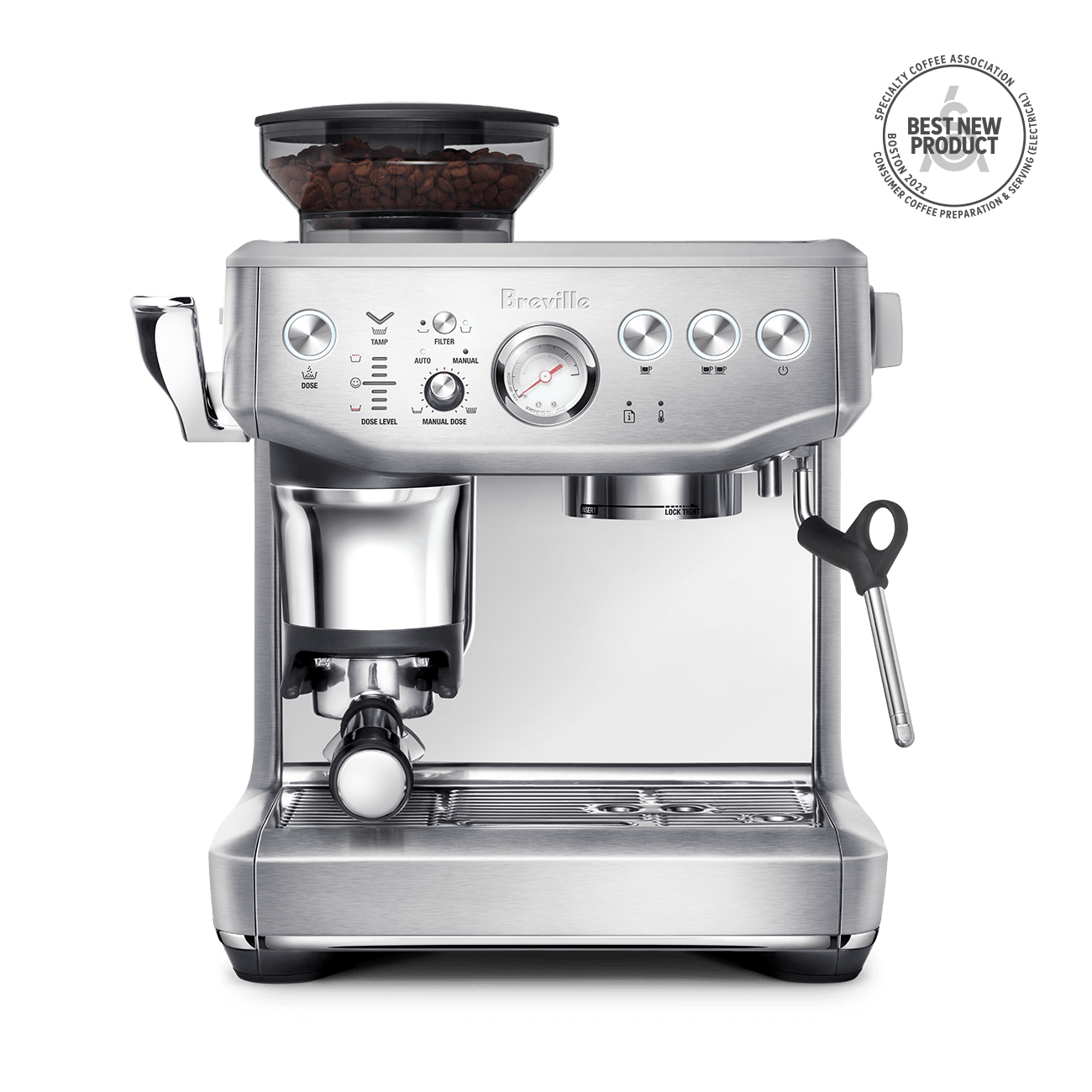 Breville Barista Express Impress | All-in-one convenience | Built-in grinder with assisted dosing and tamping | $700–$850 | Check Price on Amazon |
| Machine | Portafilter | Water Tank | Heating System | Built-in Grinder | Warranty |
|---|---|---|---|---|---|
| Breville Bambino | 54mm | 47 oz | ThermoJet, ~3-second heat-up, PID | No | 1 year |
| De’Longhi Dedica Maestro Plus | 51mm | 54 oz | Thermoblock, heat-up time not published | No | — |
| Gaggia Classic Pro E24 | 58mm | 72 oz | Brass boiler, thermostat (no PID) | No | 2 years |
| Breville Barista Express Impress | 54mm | 2 litres | Thermocoil, PID | Yes — 25 grind settings | 2 years |
Specifications from the manufacturers' product pages, checked November 2026. Warranty for the Dedica Maestro Plus varies by retailer — confirm at checkout.
An espresso machine is a coffee maker that forces hot water through finely ground coffee under high pressure. That pressure — about 9 bar at the coffee puck, roughly nine times normal atmospheric pressure — is what separates espresso from every other brewing method. Drip coffee makers and pour-over brewers let water flow through grounds by gravity alone. An espresso machine pushes water through instead, and that forced extraction is what produces espresso's defining traits: a small, intense shot topped with crema, the reddish-brown foam that forms when pressurised water emulsifies the coffee's oils.
Here is what happens inside the machine during a typical shot. First, you grind beans very fine — finer than table salt — and dose about 18 grams into a portafilter, the handled metal basket that locks into the machine's group head. You tamp the grounds down into a flat, level puck. Then the machine's pump drives water heated to around 93°C (200°F) through that puck. Most good machines start with a short low-pressure pre-infusion stage, gently wetting the grounds so water spreads evenly, before ramping up to full pressure for roughly 25 to 30 seconds. The result is about 36 grams of liquid espresso from that 18-gram dose — a ratio beginners can use as a starting point while they learn to adjust by taste.
Three parts of the machine matter most for a beginner. The heating system decides how fast the machine is ready and how stable the water temperature stays from shot to shot. Breville's ThermoJet system, found in the Bambino, heats water on demand as it flows through, which is why the manufacturer states a 3-second heat-up time. A traditional single boiler, like the one in the Gaggia Classic Pro E24, takes longer to reach temperature and needs a pause between brewing and steaming, but its heavier brass boiler holds heat steadily once it is up to temperature. The pump and its over-pressure valve (OPV) decide the brewing pressure: many machines advertise a 15-bar pump, but the OPV regulates that down to about 9 bar at the puck, which is the pressure that actually matters. Finally, the steam wand decides how your milk drinks turn out. A manual wand gives you full control once you learn the technique; an automatic wand, like the one on the De'Longhi Dedica Maestro Plus, textures the milk for you at the touch of a button.
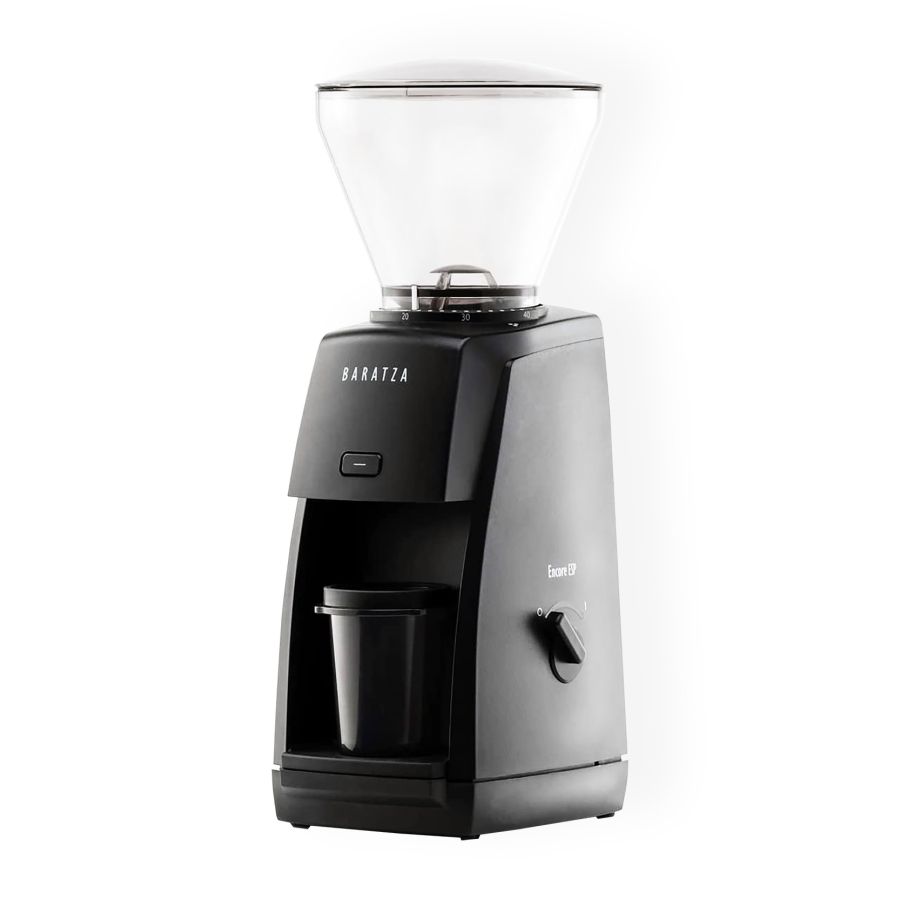
One honest point that surprises many first-time buyers: the machine is only about half the equation. The grinder matters at least as much, because espresso needs a very fine, very even grind, and small changes in grind size swing a shot from sour to bitter. That is why three of the four machines in this guide ship without a grinder — manufacturers expect you to pair them with a dedicated burr grinder — and why our guide to the best burr coffee grinder for espresso is worth reading alongside this one. If the idea of buying two pieces of equipment puts you off, the all-in-one Breville Barista Express Impress, with its built-in grinder, is the simpler route.
Espresso is also the base for almost every café milk drink. A latte is espresso plus a large amount of steamed milk with a thin layer of foam; a cappuccino uses equal parts espresso, steamed milk and foam; a flat white uses a double shot with velvety microfoam and very little froth. All of them start with the same well-pulled shot, so learning to brew good espresso first — before worrying about latte art — is the fastest path to café-quality drinks at home.
The Breville Bambino is our top pick for most beginners because it removes the two biggest frustrations of a first machine: waiting and inconsistency. According to Breville, the ThermoJet heating system reaches brewing temperature in about 3 seconds, so the machine is ready almost as soon as you switch it on. PID temperature control holds the water at a steady temperature, and low-pressure pre-infusion wets the puck before full extraction, which forgives the uneven tamping that every beginner does at first. Buyers report that the automatic shot-volume buttons, which stop the shot at a programmed amount, make repeatable results much easier in the first weeks.
The Bambino is a semi-automatic machine with a 54mm portafilter and a 47-ounce water tank, and it ships with both single-wall baskets for freshly ground coffee and dual-wall (pressurised) baskets for pre-ground coffee. That second set of baskets matters: it means you can start with a bag of pre-ground espresso coffee and upgrade to a grinder later without buying a new machine. The manual steam wand can produce genuine microfoam for latte art, but buyers report it takes a week or two of practice to get there. In the $250–$350 range, it sits in the sweet spot for a first machine — serious enough to make real espresso, cheap enough that you have budget left for a grinder. Our research found it consistently recommended as the entry point into home espresso, and it is also the machine we feature in our best espresso machine under $300 guide.
If your morning drink is a latte or cappuccino rather than a straight shot, the De'Longhi Dedica Maestro Plus (model EC950M) deserves a close look. Its headline feature is the Auto LatteArt steam wand, which De'Longhi states offers three milk temperatures and three foam textures, so you can choose between a flat white, a latte and a cappuccino at the touch of a button. The wand also works in manual mode, so you can learn to steam by hand later without buying a second machine. De'Longhi also gives this model three brew temperatures through its Active Temperature Control, which lets you run lighter roasts hotter and darker roasts cooler — a useful bit of flexibility that most beginner machines do not offer.
The Maestro Plus is slim at about 8.15 inches wide, with a large 54-ounce removable water tank, and De'Longhi includes a professional metal tamper, a stainless steel portafilter and a milk jug in the box. Like the Bambino it has a 15-bar pump with low-pressure pre-infusion and brews at about 9 bar, and it ships with single-wall baskets for fresh grounds and double-wall baskets for pre-ground coffee. Its list price sits near $500, but it is frequently discounted well below that — its price range in our comparison table is $200–$500, so check the live price before you buy. When discounted, it is one of the best-value beginner machines available. The trade-off is a 51mm portafilter, smaller than the café-standard 58mm, and a thermoblock heater whose heat-up time De'Longhi does not publish — so it is not as quick off the mark as the Bambino.
The Gaggia Classic Pro E24 is the pick for the beginner who wants to learn the craft properly and keep the same machine for years. It is built in Italy from commercial-grade components: a one-piece steel frame, a 58mm commercial portafilter — the same size cafés use, so tampers and baskets are easy to find — a three-way solenoid valve that dries the puck after brewing, and a brass boiler that Gaggia introduced with the E24 revision for better temperature stability. The over-pressure valve is factory-set to 9 bar, which is the correct brewing pressure, so unlike older entry-level machines it does not need to be modified to brew properly.
The trade-offs are real and a beginner should go in with eyes open. The Classic Pro E24 has no PID temperature control — it uses a thermostat, so brew temperature rises and falls within a range — and it is a single-boiler machine, which means you pull the shot, wait for the boiler to climb to steam temperature, and then steam your milk. There is no automatic frothing and no built-in grinder, and the only included tamper is a basic plastic one that most buyers replace. Expert coverage consistently describes it as the best espresso machine under $500 for someone willing to put in the work, and in the $400–$550 range it is the most "grown-up" machine in this guide. If you enjoy the process as much as the coffee, this is the machine that rewards you for learning. It also appears in our best espresso machine under $500 roundup, where it competes directly with the Barista Express.
The Breville Barista Express Impress is the simplest way for a beginner to start making espresso, because it is the only machine here that includes everything in one box. It combines a steel conical burr grinder with 25 grind settings, a 54mm portafilter and a manual steam wand in a single unit. Its signature feature is the Impress Puck System: the grinder measures each dose and automatically adjusts the next one, and an assisted lever tamps the puck with a steady 10kg of pressure and finishes with a 7-degree twist. Dosing and tamping are the two steps beginners get wrong most often, so automating them removes the steepest part of the learning curve.
Underneath, the Impress brews the same way as Breville's long-running Barista Express: a Thermocoil heater with PID control, low-pressure pre-infusion, a 15-bar pump that extracts at about 9 bar, and a 2-litre water tank. It also carries a two-year limited warranty, double the one year on the standard Barista Express. It sits in the $700–$850 range, which makes it the most expensive pick in this guide — but it replaces a separate grinder that would cost $150 to $300 on its own, so the total cost of getting started is closer to the other picks than the price tag suggests. Buyers report that it is the best choice when you want good espresso with the least fuss, and when counter space is tight enough that a separate grinder is not practical.
Answer in order — the first question that fits you picks your machine:
The most common beginner mistake is buying a machine without budgeting for a grinder. A blade grinder, or pre-ground coffee from the supermarket, will not produce the fine, even grind espresso needs, and no machine can fix a bad grind. If your budget is tight, buy the Bambino and a capable burr grinder rather than spending the whole budget on a fancier machine and grinding with the wrong tool. The second mistake is chasing the biggest bar number on the box. A 15-bar or even 20-bar pump rating describes the pump's maximum pressure, not the brewing pressure; every well-designed machine regulates that down to about 9 bar at the puck. Judge a machine by its temperature control, its pre-infusion and its build quality, not by the number printed largest on the packaging.
A third mistake is buying a super-automatic machine when what you actually want is to learn. Super-automatics grind, brew and froth at the touch of a button, and for some households that convenience is exactly right. But they cost more, give you less control over the result, and are harder and more expensive to repair when something goes wrong. A semi-automatic machine asks more of you in the first month and gives you far more back over the years. Finally, do not ignore the running costs. Fresh beans, a water filter, descaling solution and the occasional replacement basket add up to a modest but real yearly cost, and a machine that is easy to clean — with a removable water tank and dishwasher-safe parts, like the Dedica Maestro Plus — is a machine you will actually maintain. Espresso machines that are not descaled regularly lose temperature stability and eventually fail, so build a simple cleaning routine from day one.
Start with the grinder question, because it decides your budget. If you already own a burr grinder that grinds fine enough for espresso, any of the first three picks will serve you well. If you do not, either budget $150 to $300 for a grinder or choose the Barista Express Impress, which has one built in. Next, think honestly about milk drinks. If you drink straight espresso or Americanos most days, a manual steam wand is fine and you will learn it quickly. If you are still torn between espresso and drip coffee altogether, our espresso machine vs drip coffee maker comparison lays out which brewing style fits which morning routine. If lattes and cappuccinos are your daily drink, the automatic milk system on the Dedica Maestro Plus — or the automatic wand on the Bambino Plus, the Bambino's sibling — will save you frustration every morning.
Then check the practical details. Measure your counter: the Bambino is just 6.1 inches wide, the Dedica Maestro Plus about 8.15 inches, and the Gaggia about 8 inches wide but 14.2 inches tall, so check the clearance under your cabinets. Look at the water tank size and whether it lifts out for filling at the sink — the Dedica's 54-ounce tank and the Gaggia's 72-ounce tank both mean fewer refills than the Bambino's 47 ounces. Check the warranty: Breville covers the Bambino for one year and the Barista Express Impress for two, while the Gaggia carries a two-year manufacturer warranty through its retailers. Finally, confirm the machine uses standard baskets and portafilters you can replace later. The Gaggia's 58mm commercial portafilter is the easiest to buy accessories for, while Breville's 54mm and De'Longhi's 51mm sizes mean shopping in the manufacturer's own ecosystem.
For most beginners, the Breville Bambino is the best espresso machine to start with. It heats up in about 3 seconds, holds brew temperature with PID control, and uses a 54mm portafilter with both single-wall and dual-wall baskets, so it works with fresh-ground or pre-ground coffee. The main thing to know is that it has no built-in grinder, so you will need a separate burr grinder or pre-ground coffee.
It depends on the machine. The Breville Bambino, De'Longhi Dedica Maestro Plus and Gaggia Classic Pro E24 do not include a grinder, so you need a separate burr grinder that can grind fine enough for espresso, or you can start with pre-ground espresso coffee and the pressurised baskets these machines include. The Breville Barista Express Impress has a built-in conical burr grinder, so it is the only pick in this guide that needs nothing else to start brewing.
Most beginners should budget roughly $250 to $500 for the machine itself, plus $150 to $300 for a capable burr grinder if the machine does not include one. Machines below about $150 usually rely on steam pressure rather than a real pump, which makes consistent espresso hard to achieve. Spending more mainly buys convenience, such as a built-in grinder or automatic milk frothing, rather than dramatically better espresso.
A semi-automatic machine is usually the better choice for a beginner who wants to learn and get café-quality espresso at a fair price. You control the grind, dose and shot timing, which takes a little practice but produces better coffee and teaches you the craft. A super-automatic machine is easier because it grinds, brews and froths at the touch of a button, but it costs more, offers less control over the result, and is harder to repair.
For most beginners, the Breville Bambino is the best espresso machine to buy first. It is fast, consistent and compact, it pulls genuine 9-bar espresso, and in the $250–$350 range it leaves room in your budget for the burr grinder that matters just as much as the machine. Pair it with a good grinder and fresh beans, and you will be making café-quality drinks within a couple of weeks. If milk drinks are your daily habit and you would rather not learn to steam by hand, the De'Longhi Dedica Maestro Plus is the smarter pick — especially when it is discounted well below its list price. If you want to learn proper barista technique on hardware that will last for years, the Gaggia Classic Pro E24 is the enthusiast's choice. And if you want the simplest possible start, with the grinder, dosing and tamping all handled in one box, the Breville Barista Express Impress is worth the extra money. Whichever you choose, remember the real secret of good home espresso: fresh beans, a fine even grind, and a little patience while you learn.
Kitchen · Espresso
Real espresso on a tight budget. We compared shot quality, steam power, heat-up time and size to pick the best budget espresso machines.
Read ReviewKitchen · Espresso
Barista-level shots without the café price — we compared grinders, temperature control and milk frothing across the best sub-$500 machines.
Read ReviewKitchen · Espresso
Best burr coffee grinder for espresso 2026: Baratza Encore ESP, Eureka Mignon Specialita, Breville Smart Grinder Pro and Fellow Opus 2 compared.
Read Review