Kitchen · Blenders
Best Blender for Smoothies (2026)
Silky smoothies start with real power. We compared motor strength, blade design and presets across the top smoothie blenders.
Read Review
| Product | Best For | Key Feature | Price Range | |
|---|---|---|---|---|
| Breville Control Grip Immersion Blender | Best immersion blender for soup overall | 280W, 15 speeds, anti-suction bell, whisk + chopper + 42 oz jug included | $130–$150 | Check Price on Amazon |
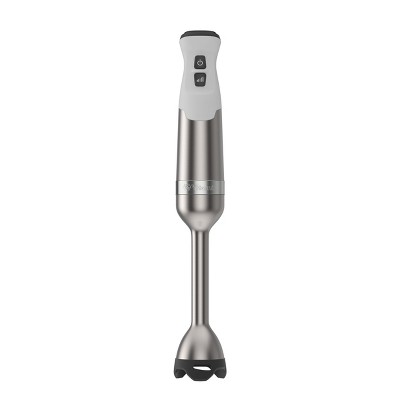 Vitamix Immersion Blender | Best power for thick soups | 625W, 5 speeds, 4-prong blade, 5 ft cord, 3-year warranty | $145–$170 | Check Price on Amazon |
 KitchenAid Variable Speed Corded Hand Blender | Best budget immersion blender | 180W, variable trigger, 8 in arm, 3-cup BPA-free jar + pan guard | $49–$70 | Check Price on Amazon |
Prices are ranges at time of writing and change frequently — check Amazon for the current price.
We compared manufacturer specifications, speed-control design and verified buyer feedback across the immersion blender market, weighting soup performance (35%), speed and texture control (25%), build and pot safety (20%) and value (20%). This is a research-based comparison of specs and owner feedback, not a hands-on test. Soup is the hardest job a stick blender does regularly: it means hot liquid, a deep pot, fibrous vegetables and a texture target that changes by recipe — silky for tomato bisque, chunky for minestrone.
Speed control is the first filter for soup. A blender with one speed either purees too fast and splashes, or cannot finish a thick pot. The Breville's 15 speeds are the finest control in this class, and the KitchenAid's variable-pressure trigger is the most intuitive way to start slow and avoid a splash. Power is the second filter, but wattage alone misleads: the Breville's 280 watts looks weak next to the Vitamix's 625, yet its blade geometry and bell guard make it the better soup tool for most pots — wattage matters most when the soup is thick with beans, squash or root vegetables. The third filter is the bell guard: a wide, ribbed guard stops the blender suctioning itself to the bottom of the pot and protects nonstick and enamel coatings from scratches. All three picks have one, which is why they made the list. For the rest of a soup-first kitchen, see our best food processor for home cooks guide — a processor handles the chopping before the soup ever reaches the pot.
The Breville Control Grip BSB510XL is the precision pick. Fifteen speeds on a top dial, a trigger grip that keeps your wrist straight during long purees, an 8-inch stainless shaft that reaches the bottom of a tall stockpot, and the fullest box of the three: a whisk, a chopper and a 42-ounce jug. Its anti-suction bell has internal ribs that break the vacuum that makes cheaper sticks cling to the pot. The trade-off is the 280-watt motor — the weakest of the three — which is plenty for cooked vegetables and cream soups but slow on frozen fruit and raw carrots. At around $130–$150 it is the most expensive of the three by a small margin, and the one most soup cooks should buy.
The Vitamix 5-Speed is the power pick. Its 625-watt motor is more than double the Breville's, and it shows in thick blends: split-pea soup, butternut squash, bean soups that would stall a weaker motor. Five speeds selected with a single button and LED indicators, a four-pronged stainless blade, a 5-foot cord that reaches across a stove top, and a 3-year limited warranty — the longest cover here. The catch is the box: motor body and wand only, no whisk, no jar, no chopper. Vitamix sells the whisk and a 32-ounce blending jar separately for about $20 each, so the real price creeps toward $190 if you want the full set. It also works only in containers with a 3-inch or wider opening. For silky smoothies as well as soup, our best blender for smoothies guide covers the countertop machines that pair with it.
The KitchenAid KHBV53 is the value pick. A variable-speed trigger — squeeze harder, blend faster — instead of fixed steps, an 8-inch removable arm with a 4-point stainless blade, a 3-cup BPA-free blending jar with lid and a removable pan guard, all for around $50. At 180 watts it is the least powerful here, and it will bog down in the thickest soups, but for a pot of soup a couple of times a month it is genuinely all most people need. KitchenAid also sells replacement parts for it, which is rare at this price, and it comes in a dozen colours to match a KitchenAid kitchen. If you bake bread to go with your soup, see our best stand mixer for bread guide.
An immersion blender — also called a stick blender or hand blender — is a long wand with a motor in the handle and a blade inside a bell-shaped guard at the bottom. You lower it directly into the pot, bowl or jug and blend where the food already is. The bell guard does two jobs: it keeps the blade from touching the pot, and it shapes the flow of liquid so food is drawn down into the blades instead of spraying up the sides. The best guards, like the Breville's ribbed bell and the Vitamix's bell, also break the suction that can glue a cheap stick blender to the bottom of a pot mid-blend.
For soup, the advantage is practical, not theoretical. A countertop blender forces you to ladle hot soup into a jug in batches, vent the lid so steam does not blow it off, and then wash the jug, the lid and the base. An immersion blender purees the whole pot in place in about a minute, and you control the texture by feel — pulse for chunky, hold for silky — then rinse the shaft and put it away. The technique matters: keep the head fully submerged, start on the lowest speed, tilt the blender slightly to pull food through the blades, and never lift it while the motor is running. That is the whole skill, and it takes one pot of soup to learn. The same tool also makes mayonnaise, whipped cream with the whisk attachment, and smoothies in a jar — but soup is where it earns its drawer space.
The Breville Control Grip BSB510XL is the best immersion blender for soup for most cooks — 15 speeds, an anti-suction bell guard and an 8-inch shaft that reaches deep into a stockpot. The Vitamix 5-Speed is the most powerful option at 625 watts, and the KitchenAid KHBV53 is the best budget pick at around $50.
Yes — that is exactly what immersion blenders are made for. Blend directly in the pot, keep the blending head fully submerged to avoid splashing, start on the lowest speed, and move the blender slowly. Never lift the head above the surface while the motor is running, and leave the pot off the heat while you blend.
For soup, yes. An immersion blender purees directly in the pot, so there is no hot liquid to transfer, no extra jug to wash, and you can stop the moment the texture is right — chunky or silky. A countertop blender gives a smoother result for very large batches, but it means handling hot soup in batches and washing more parts.
About 180 watts is enough for cooked vegetables and most soups — the KitchenAid KHBV53 proves it. More power helps with thick, fibrous blends: the Vitamix at 625 watts powers through root vegetables and beans with ease. For soup alone, blade design and speed control matter more than raw wattage.
Buy the Breville Control Grip if you make soup often and want the finest control over texture — 15 speeds and the anti-suction bell make it the easiest blender to live with. Buy the Vitamix if your soups are thick, fibrous and frequent, and you want the strongest motor and the longest warranty. Buy the KitchenAid if you make soup a couple of times a month and want to spend around $50 on a tool that does the job well. Whichever you choose, start slow, keep the head submerged, and your next pot of soup will be the smoothest you have made.
Kitchen · Blenders
Silky smoothies start with real power. We compared motor strength, blade design and presets across the top smoothie blenders.
Read ReviewKitchen · Prep
Chop, slice and knead in seconds. We compared bowl size, motor power, blades and ease of cleaning to pick the best food processor for every kitchen.
Read ReviewKitchen · Baking
Heavy dough needs a heavy-duty mixer. We compared bowl-lift power, dough capacity and durability to find the best bread mixers.
Read Review
